

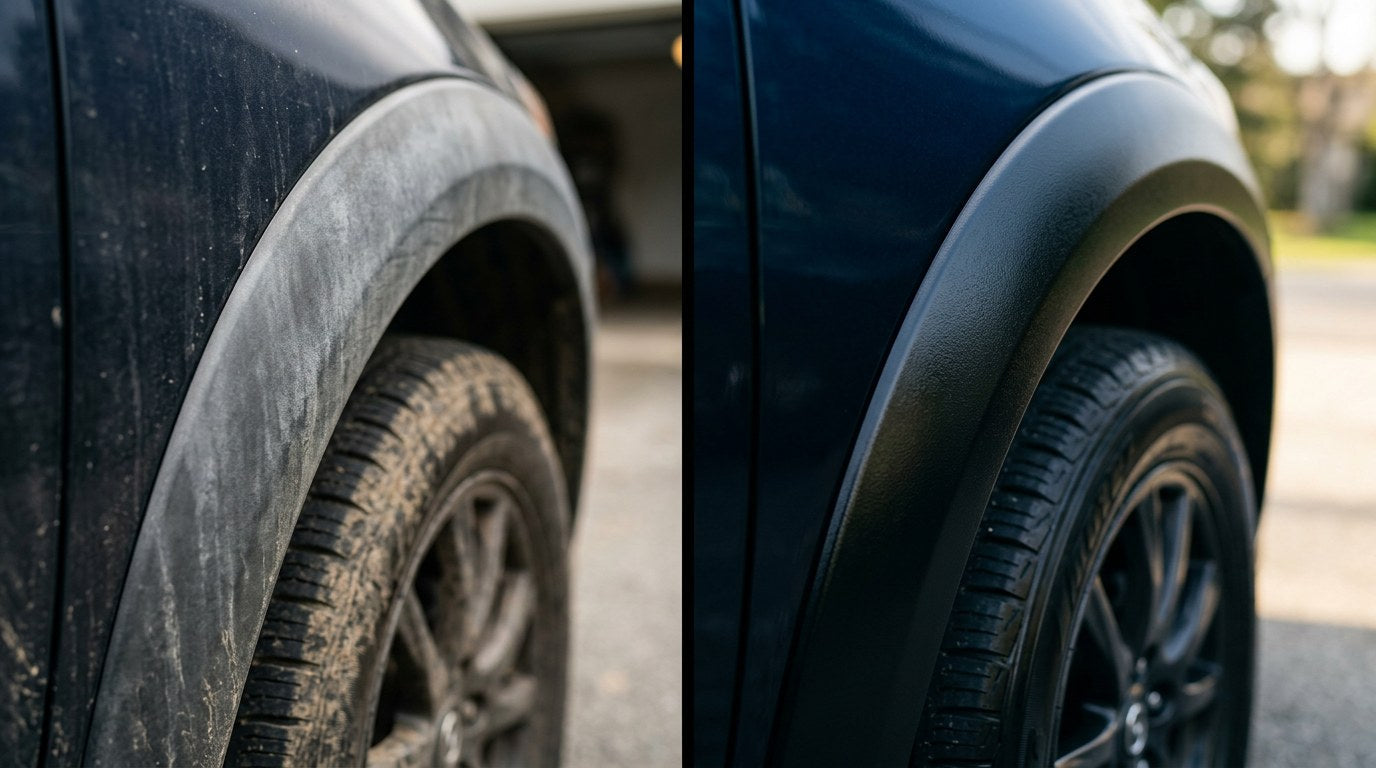
Faded black plastic trim is UV-oxidized plastic — the pigment binders and plasticizers on the surface have been broken down by sunlight, leaving a chalky grey layer that light penetrates and scatters instead of reflecting. To restore it properly you need to strip the oxidation with isopropyl alcohol, then either apply a bonding trim restorer that chemically renews the surface for 6–12 months, or seal it with a durable ceramic like HCC for multi-year protection. Skip the dressings that just soak in and evaporate — they look great for a week and fade the trim faster over time.

Why Black Plastic Trim Fades in the First Place
Exterior plastic trim — fender flares, bumper covers, rocker panels, mirror caps, door handles, roof rails, cowl panels — is usually molded from TPO (thermoplastic olefin), PP (polypropylene), or ABS. Manufacturers add carbon black pigment for color and UV stabilizers and plasticizers to keep the plastic flexible. Over time, ultraviolet radiation breaks down the polymer chains and consumes the UV stabilizers on the outermost few microns of the surface. The result: a chalky, greyed layer that no longer reflects light uniformly.
This is a photodegradation process well-documented in polymer science — UV radiation initiates free-radical oxidation in polyolefins, and the affected layer grows deeper the longer the plastic bakes in the sun. It's why a car parked outdoors in Arizona or Hawaii fades trim in two years, while a garaged car in Seattle holds trim color for a decade.
Practically speaking, you can't stop UV. What you can do is remove the oxidized layer, restore the surface, and put a protective coating over it so the damage clock restarts.

The 3 Categories of Trim Restoration (And Why Most People Pick Wrong)
Every trim restoration product on the market falls into one of three buckets. Knowing which is which is the difference between real restoration and a two-week cosmetic fix.
1. Silicone-Based Trim Dressings (The Short-Term Fix)
These are the classic "back-to-black" sprays and gels. They deposit a silicone or oil-based film that saturates the porous, oxidized plastic and makes it look wet and dark. Cheap, easy, and they photograph well. The problem: they don't fix anything. As the silicone evaporates or gets washed off over the next 1–4 weeks, the chalky layer returns. Repeat applications can actually accelerate fade because most contain solvents that leach the plastic's remaining stabilizers.
2. Bonding/Reactive Trim Restorers (The Real Fix)
These products chemically react with the oxidized plastic surface and restore the black color at the polymer level, not just on top of it. Applied correctly on cleaned plastic, they last 6–18 months per application (Auto Obsessed). This is what you want if you're not going to coat the trim afterward.
3. Ceramic Coatings on Trim (The Long-Term Fix)
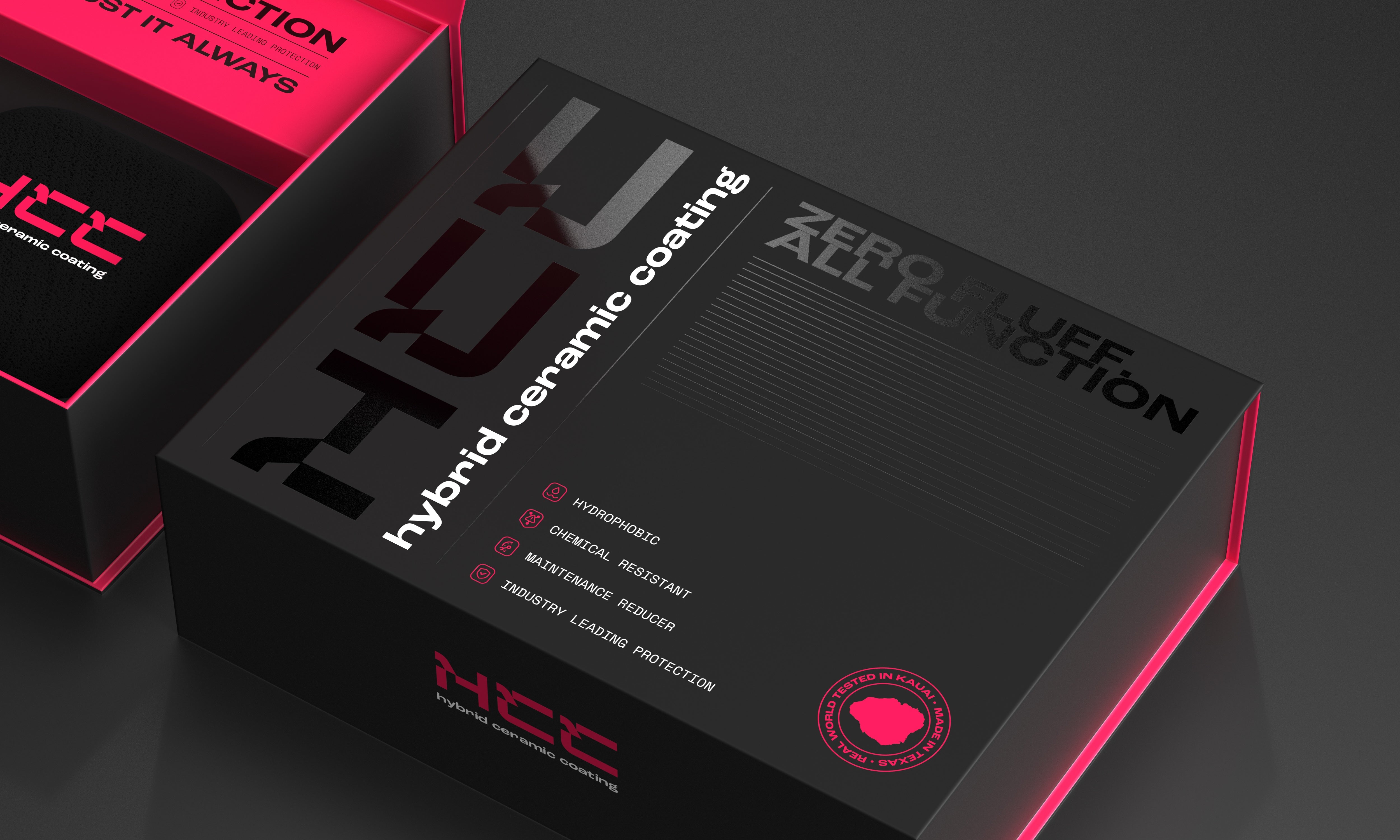
Coating the restored trim with a real ceramic like HCC extends the restoration to multi-year protection. HCC bonds to plastic, glass, painted metal, and gel coat — most consumer coatings only bond to clear-coated paint. This is what the professional detailers do when they want the restoration to stick.
Once you understand these three categories, product decisions get simple: use a dressing if you want a quick pre-show shine that you'll redo next weekend. Use a bonding restorer for real annual maintenance. Coat with HCC over the restored trim if you want the longest-lasting, lowest-effort result.
What You'll Need
- Isopropyl alcohol 70–99% (higher percent works faster, both fine)
- Clean microfiber towels — dedicated for trim, don't reuse on paint
- Small foam applicator pads or a dedicated trim brush
- Nitrile gloves
- Undrdog Soap for the wash phase
- Painter's tape (optional, to mask paint edges when using aggressive restorer)
- A bonding trim restorer OR HCC for the final protective step
- Shade — never do this in direct sun on hot plastic
Step-by-Step: Restore Faded Plastic Trim the Right Way
Step 1: Wash the Trim With pH-Neutral Soap
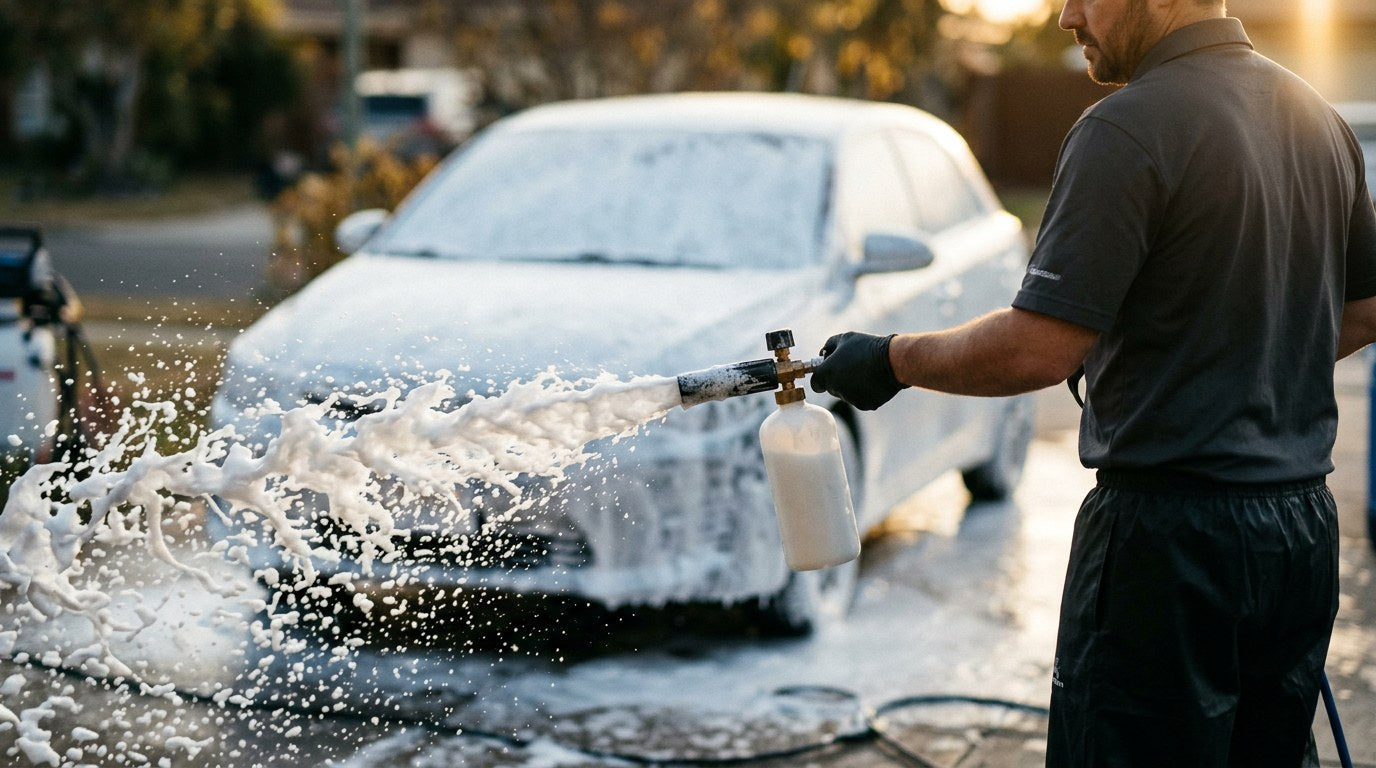
Start with clean plastic. Wash the entire vehicle — or at minimum, all the trim areas — with Undrdog Soap and a dedicated trim brush or wash mitt. Get any road grime, wax residue, and old dressing off. Rinse thoroughly and dry with a clean microfiber. If the trim has heavy embedded iron fallout (common near disc brakes), a decontamination pass with The Purps is worth it — see our paint decon order guide for the full workflow.
Step 2: Strip Existing Dressings With Isopropyl Alcohol
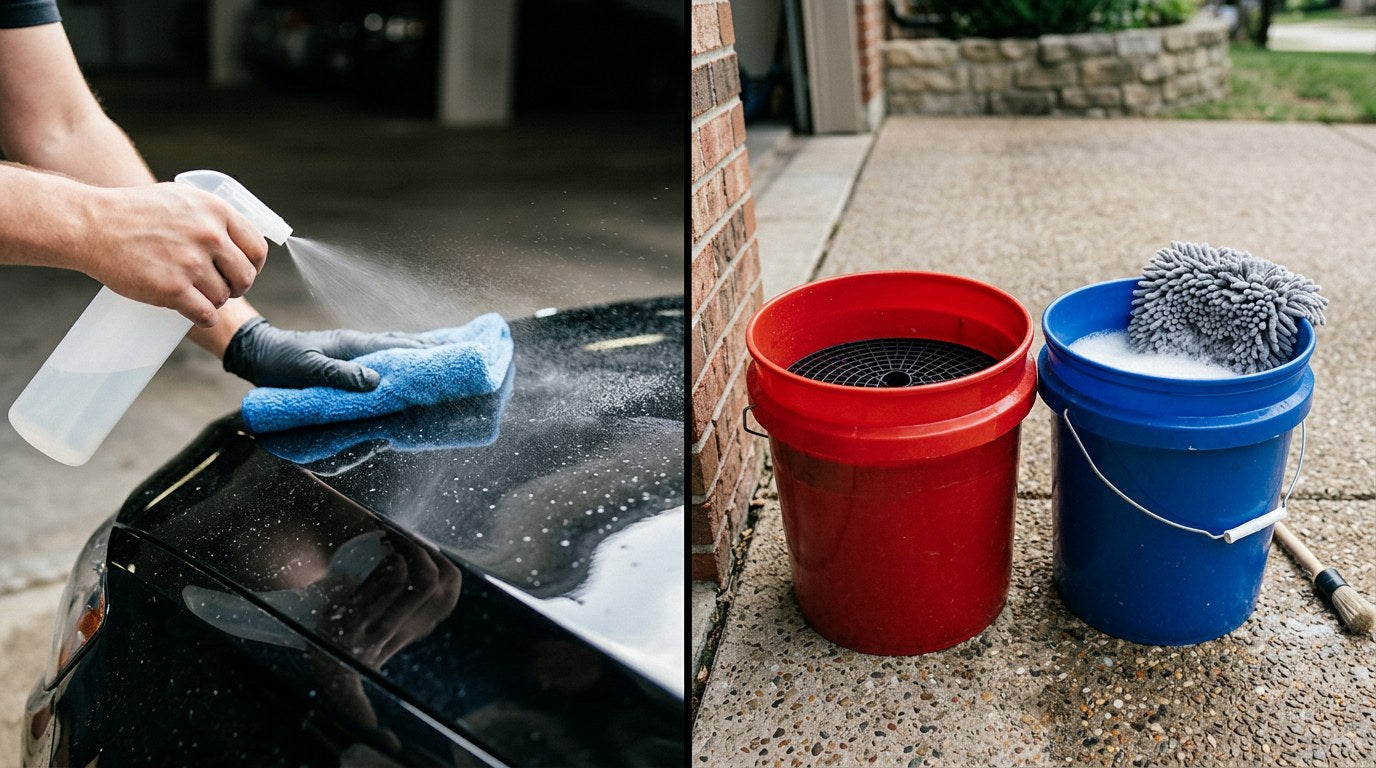
Soak a clean microfiber with 70% isopropyl alcohol and wipe the trim thoroughly. This removes any silicone dressings, oils, cleaners, and detailing sprays that would prevent a real restorer or coating from bonding. The towel will pull off old dressing residue — often a surprising amount, even on trim that looks "clean." Flip to a fresh section as it gets dirty. Let the alcohol flash off completely (30–60 seconds).
This IPA wipedown is the step 90% of DIYers skip, and it's the single biggest reason trim restorers fail early. If you don't have bare plastic, nothing new can chemically bond to it.
Step 3: Assess What You're Working With
After the alcohol strip, look at the trim. There are three possible states:
- Mildly faded, still mostly black: Skip to Step 5 — you can coat directly with HCC.
- Moderately faded, grey but smooth: Continue to Step 4 with a bonding restorer.
- Severely faded, chalky, texture damaged: Continue to Step 4, and expect to do a second application after 24 hours.
Step 4: Apply a Bonding Trim Restorer
Work in the shade on cool plastic. Squeeze a small amount of restorer onto a foam applicator pad — don't pour directly on the trim. Wearing nitrile gloves (most bonding restorers stain skin and clothing), spread the product in thin, even passes along the length of the trim panel. Don't scrub. Don't puddle. If restorer touches paint, wipe it off immediately with a clean microfiber — some products can stain clear coat if left to dry.
After coverage, wait 5–10 minutes and then wipe off any excess with a clean microfiber. The trim should look uniformly dark and matte-to-satin, not glossy-wet. Let it cure for 6–24 hours before exposing to water. On very faded plastic, apply a second coat after the first has fully cured — this is normal on 5+ year old sun-baked trim.

Step 5: Optional But Highly Recommended — Seal With HCC
This is the step that turns a 6-month fix into a 3-year fix. Once the bonding restorer has fully cured (24+ hours) — or if you're starting from mildly faded, still-black trim — apply a thin coat of HCC to the trim. HCC's hybrid formula bonds to plastic, adds real UV protection, and locks in the restored color under a hydrophobic ceramic layer that also protects the rest of the vehicle.
Application: shake the bottle, drop 5–10 dots onto a coating applicator with a suede microfiber, wipe onto trim in overlapping straight lines, then flash-wipe with a clean plush microfiber after 30–90 seconds. Same technique as coating paint, just on plastic. Full guide over on how to apply a DIY ceramic coating without streaks or high spots.
Comparison: Trim Restoration Options at a Glance
| Method | Time Investment | Longevity | Cost per Application | Best For |
|---|---|---|---|---|
| Silicone dressing spray | 10 min | 1–4 weeks | Low | Show-day quick fix |
| Water-based trim gel | 15 min | 2–6 weeks | Low | Weekly maintenance layer |
| Bonding trim restorer | 30–45 min | 6–18 months | Medium | Annual restoration DIY |
| Bonding restorer + HCC top coat | 60–90 min | 2–4 years | Higher one-time | Long-term set-and-forget protection |
| Heat gun / torch method | 20 min | Days to weeks; damages plastic | Free | Not recommended |
Mistakes That Kill Trim Restoration Longevity
Torching or Heat-Gunning Plastic
You'll see this on YouTube. Someone runs a propane torch over grey trim and the surface darkens on camera. What's actually happening: heat is bringing the remaining plasticizers to the surface. The trim looks dark for a few days, then fades back — and the plastic itself has been damaged. Repeat torching cooks the trim beyond restoration and forces panel replacement. This is a short-term cosmetic trick, not a fix (Auto Obsessed).
Applying Over Dirty or Dressed Trim
If you skip the isopropyl alcohol strip, the bonding restorer is landing on top of silicones and oils instead of bare plastic. It won't bond. It'll flake or wash off within weeks. Every restoration product manufacturer, without exception, calls out the IPA prep step in their instructions. Do it.
Working in Hot Direct Sun
Hot plastic flash-dries restorers and coatings unevenly, causing streaks and blotches. Work in the shade, on cool trim. If the panel is too hot to comfortably rest your hand on for 5 seconds, wait.
Using Interior Dressings on Exterior Trim
Interior-formulated dressings usually don't have the UV package for exterior use. They'll evaporate faster and can even attract dirt. Use products labeled for exterior plastic.
Overspreading
More product doesn't mean more longevity. Overspread bonding restorers puddle in trim texture, look glossy for a day, then leach out and streak. Thin even coats always beat heavy coats.
How Often to Redo Trim Restoration
Depends entirely on climate, storage, and what you finished with:
- Silicone dressing: Reapply every wash to every 2 weeks.
- Bonding restorer alone, garaged car in mild climate: 12–18 months.
- Bonding restorer alone, outdoor-parked car in high UV climate: 6–9 months.
- Bonding restorer + HCC top coat, garaged: 3–4 years, with HCC refresh at year 2.
- Bonding restorer + HCC top coat, outdoor high-UV: 2–3 years, with HCC refresh at year 18–24 months.
Regular pH-neutral washes with Undrdog Soap extend the restoration significantly compared to harsh degreaser washes that strip protection.
Extending Trim Life: Prevention for New or Restored Cars
If your trim is still dark and healthy, don't wait until it fades to protect it. A single HCC application on brand-new plastic trim can hold that as-delivered look for years. See our full pre-ceramic prep guide for the exact preparation before coating.
For daily habits: park in shade when possible, wash regularly with pH-neutral soap, avoid all-purpose cleaners on trim (they strip the surface layer), and avoid pressure-washing at close range on trim edges. The goal is to slow UV exposure and physical wear so your coating has a longer runway.
Restore Trim Once. Protect It For Years.
HCC bonds to plastic, glass, and paint — one coating locks in restored trim, adds UV protection, and beads water on the whole vehicle. That's the long-term fix.
Shop HCC Hybrid Ceramic Coating →Frequently Asked Questions
Can you really restore faded plastic trim, or does it always come back?
You can restore it in a way that lasts if you strip old dressings first with isopropyl alcohol, then use a bonding restorer that chemically renews the surface — not a silicone dressing that just soaks in and evaporates. Sealing with a ceramic coating like HCC extends the fix from months to years.
What causes plastic trim to turn grey?
UV radiation breaks down the polymer's UV stabilizers and pigment binders on the surface. The oxidized top layer becomes chalky and scatters light instead of reflecting it, so it reads grey. This is photodegradation of polyolefins — a well-documented polymer aging process.
Is a heat gun a good way to restore faded trim?
No. Heat brings remaining plasticizers to the surface temporarily, so the trim darkens for days to weeks and then fades again — usually worse than before. Repeated heat treatment damages the plastic and can force panel replacement. Skip it.
Will Undrdog HCC work on plastic trim?
Yes. HCC is a hybrid ceramic formulated to bond to plastic, glass, painted metal, and gel coat — not just clear-coated paint. Apply to freshly cleaned or freshly restored trim using the same technique as paint: thin even wipe-on, flash-wipe with a clean plush microfiber after 30–90 seconds.
Do I need to strip old dressings before applying a restorer?
Yes, and it's the single most important step. Wipe the trim thoroughly with 70–99% isopropyl alcohol on a clean microfiber until no more residue transfers. Only then does the bonding restorer have bare plastic to react with.
How long does bonding trim restorer last?
Six to eighteen months per application depending on climate, storage, and how aggressively you wash. Garaged cars in mild climates hold longer. Outdoor-parked cars in Arizona, Hawaii, or Florida sun fade faster. Topping with HCC extends the effective life to 2–4 years.
Can I use tire shine on plastic trim?
Some tire dressings are actually formulated for trim as well — read the label. But most tire-only sprays are silicone-heavy dressings that give a wet look for a few days and then evaporate. Better to use a purpose-made bonding trim restorer.
What's the difference between a dressing and a restorer?
A dressing sits on top of the surface as a temporary silicone or oil film — it fades in days to weeks. A bonding restorer chemically reacts with the oxidized layer to restore color at the polymer level — it lasts months to over a year and doesn't just wash off.
Should I tape off the paint around the trim?
With most quality bonding restorers, careful application is enough. If the restorer is aggressive or your trim gaps are tight, painter's tape along the paint edge is cheap insurance — some restorers can stain clear coat if left to dry on it.
Will restoring trim make it feel greasy or attract dust?
A properly applied bonding restorer dries to a matte-to-satin finish that's not greasy. If your trim feels wet or oily after application, you left too much product on the surface — wipe off the excess with a clean microfiber. Silicone dressings, on the other hand, do tend to attract dust because they stay tacky.

Leave a comment
This site is protected by hCaptcha and the hCaptcha Privacy Policy and Terms of Service apply.