


Compare ceramic coating financing by the complete amount you will pay for the same service, not just the monthly installment. Get the cash price, upfront payment, full repayment schedule, interest and fees, promotional conditions, and cancellation process before accepting an offer.
A payment plan can be convenient without being the best purchase for your budget. The right comparison separates two questions: do you want the detailer's proposed work at its actual price, and do you want the credit agreement used to pay for it? A small payment does not answer either question by itself.
This is a U.S.-focused buying checklist, not a lender ranking, market-rate survey, or individualized financial or legal advice. It does not establish that Undrdog or any independent installer offers financing. The photographs show authentic Undrdog vehicle-care context, not customers' loan agreements, earnings, or purchase decisions.
Keep the coating quote separate from the payment offer
First ask for the service you would buy without a financing presentation attached. Record the vehicle, surfaces, preparation, correction scope, coating, exclusions, handover expectations, and complete price including applicable taxes and quoted charges. Our recommendation is to settle that scope before discussing how to spread the payment.
This is not an argument that a professional installation should cost the same as a bottle. Ask the detailer to explain the inspection, preparation, application, and follow-up included in your particular quote. Evaluate that work on its own terms rather than treating every dollar beyond the product price as unnecessary.
If the financing presentation changes the package, ask for both versions in writing. Perhaps one includes glass or wheel work and another does not. Our coating add-on decision guide helps separate those choices. You cannot isolate the cost of borrowing when the underlying purchase changes at the same time.
Identify the seller, the business doing the installation, and the company named in the credit agreement. Ask whom you contact about workmanship, billing, a postponed appointment, and repayment. Do not assume one person's ability to explain the coating also makes that person the authority on every lender term.
Keep the complete proposal and the actual credit documents, not only a screenshot of a monthly-payment advertisement. The CFPB specifically recommends checking lender documents for fees, charges, and costs before agreeing to a BNPL loan (CFPB loan guidance). We recommend the same document-first habit when comparing a payment option for detailing.
Identify what kind of credit you are being offered
Do not treat “pay later,” “installments,” and “no interest” as interchangeable descriptions. The CFPB describes BNPL as a type of installment loan, with several possible structures; one common arrangement has four interest-free biweekly payments, while other online installment products involve larger amounts and longer repayment periods (CFPB explanation of BNPL). Read your actual offer rather than assigning it the features of a familiar checkout button.
For each option, ask for the lender's name, amount financed, annual percentage rate where disclosed, finance charges, fees, payment dates, and final payment. If an amount or condition is unclear, mark it unresolved. Do not replace a missing term with what a different lender offered a friend.
| Offer description | Question to resolve | Document to keep |
|---|---|---|
| Fixed installment offer | How many payments, how much each, and what additional amounts are due? | Full repayment schedule and loan agreement |
| Pay-in-four or other BNPL option | When is the first payment, what are the due dates, and which fees or credit-reporting terms apply? | The specific purchase's terms, not just the platform's general advertisement |
| 0% introductory APR | How long does the rate last, what conditions apply, and what happens to any remaining balance? | Promotion details and applicable account agreement |
| No interest if paid in full | Is this deferred interest, and what happens if the promotional balance is not fully paid by the deadline? | Payoff deadline, conditions, and interest disclosures |
| Existing credit card | How will this purchase interact with the account's current balances, rates, and payment allocation? | Account terms and relevant statements |
This table is a question checklist, not a claim that every listed product is available for a coating purchase. The distinction between deferred-interest promotions and qualifying 0% APR offers is addressed in the CFPB's published Regulation Z text and interpretation (section 1026.16(h)). The actual agreement determines which description fits.

Add up the payments without counting anything twice
For a fixed schedule, start with the amount paid upfront, add every future scheduled payment, then add any separately payable mandatory charge not already included. Compare that sum with the complete cash price for the unchanged service. This is a scheduled-outlay comparison, not a calculation of APR or a prediction of late charges.
Here is a deliberately fictional example. All three choices buy the same hypothetical $1,200 service, including any applicable tax; there is no down payment, no additional fee, and no late payment in this simplified illustration. These are not actual loan offers, Undrdog prices, market averages, or a recommendation to borrow.
| Hypothetical choice | Payment schedule | Scheduled total | More than the $1,200 cash price |
|---|---|---|---|
| Pay the complete price now | One payment of $1,200 | $1,200 | $0 |
| Illustrative plan A | 12 monthly payments of $110 | $1,320 | $120 |
| Illustrative plan B | 24 monthly payments of $60 | $1,440 | $240 |
Plan B's fictional monthly payment is $50 lower than plan A's, but its total is $120 higher. That arithmetic is the point: the installment is one piece of the price, not the whole price. We have not inferred an interest rate from these simplified schedules.
Now reconcile deposits. If you already paid a booking deposit, ask whether it reduces the balance being financed, remains separate, or will be returned through a documented process. Our coating deposit checklist covers the booking terms. Count each dollar once; do not add the deposit to a total that already includes it or subtract it from a loan balance that has already been reduced.
Apply the same discipline to fees. If a charge is embedded in scheduled payments, do not add it again. If it is payable separately, include it in the comparison. For a variable or revolving balance without a fixed payoff schedule, request a clearly stated repayment illustration rather than pretending the fixed-payment formula settles every possible outcome.
Read the “if” in deferred-interest promotions
Deferred interest is not the same mechanism as a true 0% promotional rate. In the relevant open-end credit context, Regulation Z defines deferred interest as accrued finance charges that are waived or refunded when the balance is paid in full by a specified date; its interpretation distinguishes qualifying 0% APR offers where no interest attributable to that promotional period is owed under any circumstances (CFPB regulation and interpretation).
The practical question is whether missing the payoff deadline can trigger interest dating back to the purchase, rather than interest only on a remaining balance going forward. Ask the lender to identify the applicable clause and explain the outcome using your proposed balance. Do not infer the answer from a headline that omits the conditions.
The CFPB's archived 2017 explanation illustrates this distinction and warns that the minimum payment may not clear a promotional balance by the end of the period (archived promotional-financing explainer). We use it for the mechanism, not as a current rate quote or a substitute for today's agreement.
Write down the exact deadline, required payments, and how payments are allocated if the account has other balances. Ask the lender what amount and timing would satisfy the promotion. A personal reminder before the deadline can support your plan, but it does not change the contract or guarantee that a payment will be processed in time.
Also separate financing duration from coating durability. A loan term is a repayment schedule; this article does not treat it as a product-performance measurement. Do not make the cost look smaller by assuming a particular number of protection years or resale dollars that you have not established.
Check the payment calendar, fees, and credit questions
Put every proposed due date on a calendar beside your other obligations before accepting. If the plan uses biweekly payments, do not casually translate that into “twice a month.” Confirm the first payment and the exact sequence, then assess the actual dates rather than an averaged monthly figure.
Interest is not the only potential charge. The CFPB notes that BNPL terms vary, late fees may apply, and an automatic debit without sufficient funds can also trigger an overdraft or non-sufficient-funds fee from the bank (CFPB fee guidance). These are possibilities to investigate, not charges we assume every buyer or lender has.
Our recommendation is to test the payment plan against a less comfortable month, not only the day you are excited about the appointment. Ask whether you could still meet the schedule after an ordinary unexpected expense. If the purchase depends on everything going perfectly, postponing an optional coating service is a reasonable choice.
Ask about credit checks and reporting before applying. The CFPB distinguishes typical BNPL practices from other installment products and recommends reading the details before applying and again before accepting, because credit inquiries and reporting can differ (CFPB application guidance). Do not assume a particular product has no credit impact because another offer advertised a soft check.
If repayment becomes difficult, contact the provider promptly for its available options. The CFPB warns that unpaid BNPL debt can reach collections and that reporting of missed payments may affect credit history or scores (CFPB repayment cautions). A detailing purchase should not be evaluated as though the only possible downside is paying a little longer.
Resolve postponements and refunds before the appointment
Ask what happens if the appointment moves, inspection changes the scope, or an agreed cancellation produces a refund. Who initiates the credit? Which account receives it? What remains due while it is being processed? Request the seller's procedure and the lender's procedure separately instead of assuming a message to the shop changes a payment schedule.
For a credit-card purchase problem, the CFPB recommends contacting the seller first and then contacting the card company about available dispute options; it also distinguishes credit-card situations from independent BNPL arrangements (CFPB refund guidance). This article does not promise identical rights, automatic refunds, or a universal right to stop payments across all financing products.
Keep the proposal, accepted scope, payment receipt, credit agreement, and written changes together. If a refund is agreed, retain the amount, date, reference, and confirmation from the relevant parties, then check the account record. Seek timely, product-specific guidance on disputes and applicable deadlines rather than relying on a generic blog checklist.
Before authorizing extra work, request a revised service total and, if needed, revised financing information. Treat approval of additional correction or another surface treatment as a new spending decision. It should not become invisible merely because it adds a small amount to each installment.

How Undrdog does it
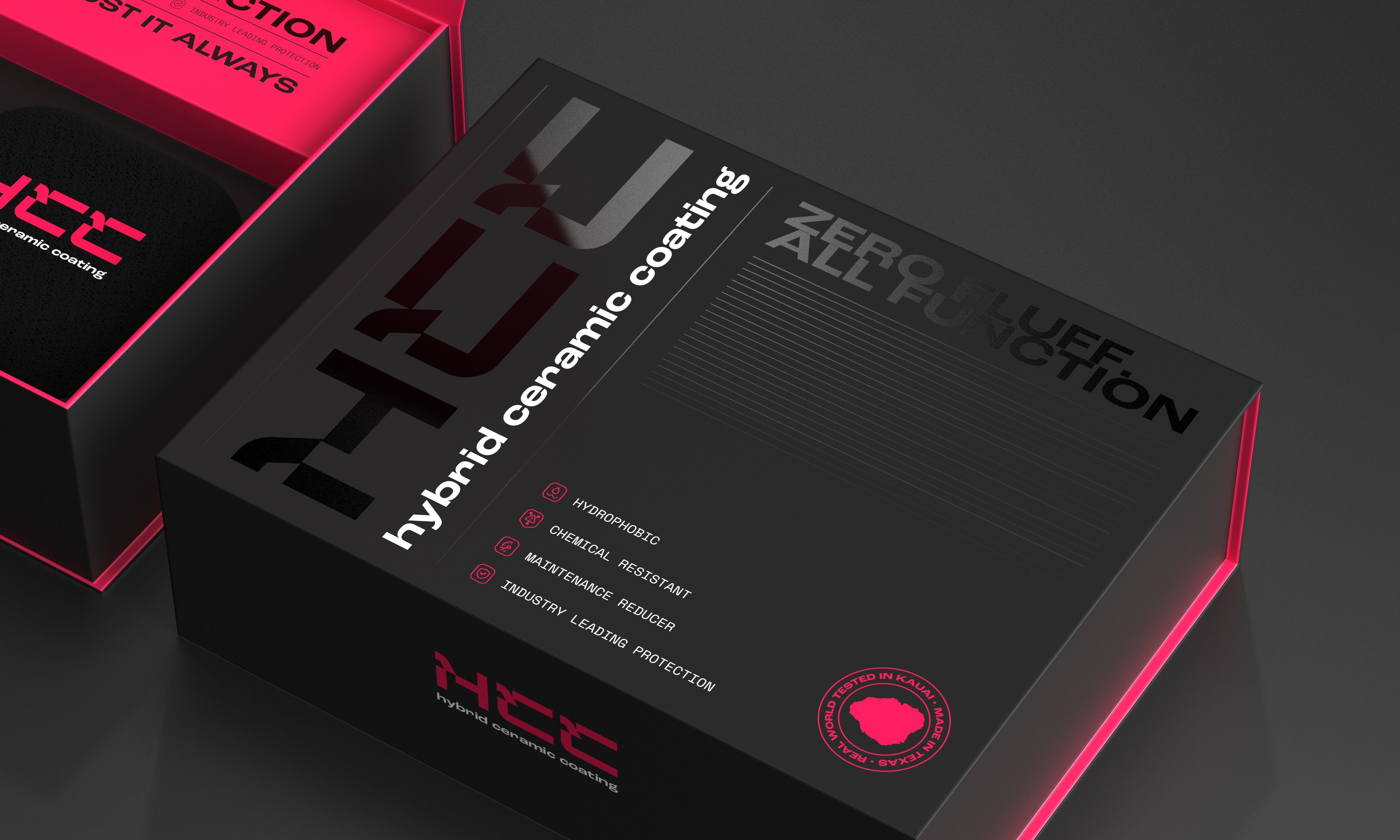
HCC Hybrid Ceramic Coating is Undrdog's all-surface flagship for cars, boats, planes, and bicycles. It is positioned for multi-year protection, with service life dependent on preparation, exposure, use, and maintenance, rather than a fixed year count inserted into a repayment calculation (HCC product information).
Undrdog makes HCC available to detailers and DIY buyers without a certification class or minimum purchase requirement. Buying directly through the product page is a product purchase, not a quotation for an independent shop's preparation, installation, or financing.
For a suitable new coating project, HCC is our starting recommendation. Check the surface, condition, application and safety instructions, workspace, and realistic preparation requirements before choosing DIY or professional work. Do not use the bottle price as the entire DIY budget or as a reason to dismiss the value of an installer's work.
This guide does not offer a credit product, approve a borrower, promise a rate, or set an independent installer's policies. Review whatever payment terms are actually offered at the time of purchase. If the complete project and repayment obligations do not fit comfortably, wait or ask whether a smaller, clearly defined service meets your current goal.
Frequently asked questions
Is ceramic coating financing worth it?
That depends on the service you want, its complete price, the credit terms, and your budget. Our recommendation is to compare the same job across payment options and consider postponing if the payment schedule leaves too little room for ordinary expenses.
Does a lower monthly payment mean a cheaper coating?
No. In the fictional example above, 24 payments of $60 total $1,440, while 12 payments of $110 total $1,320. Compare the full schedule and separate charges, not only one installment.
Is deferred interest the same as 0% APR?
No. The CFPB's regulation distinguishes deferred finance charges that depend on full repayment by a deadline from qualifying 0% promotional offers. Read the actual conditions and what happens if a balance remains (CFPB section 1026.16(h)).
Can a no-interest payment plan still have fees?
Yes, depending on the agreement and payment circumstances. The CFPB identifies possible BNPL late fees and possible bank overdraft or non-sufficient-funds fees from automatic repayment; check your exact terms rather than assuming every plan is identical (CFPB fee guidance).
Will applying affect my credit?
Ask the lender before applying. Credit checks and payment reporting differ across BNPL and other installment products, so do not assume that a familiar checkout label answers the question (CFPB application guidance).
Does canceling the coating appointment cancel the loan?
Do not assume that it does. Ask the seller and credit provider how cancellation, refunds, account credits, and remaining payments are handled, and retain written confirmation. This guide does not determine your refund entitlement or authorize stopping payments.
Should I include my deposit in the total?
Include it once. Reconcile the deposit with the service invoice and amount financed so it is neither omitted nor counted twice. Ask for clarification if the credit agreement and booking record do not match.
Does this article mean Undrdog offers the example loans?
No. The payment examples are fictional arithmetic, not Undrdog financing offers or installer quotes. Check the actual product purchase or service proposal and any separately offered credit agreement before committing.
Choose the project before the payment plan
Review HCC for a suitable coating project, then budget for the complete preparation, application, and care without relying on an invented lifespan or return.
Shop HCC Hybrid Ceramic Coating

Leave a comment
This site is protected by hCaptcha and the hCaptcha Privacy Policy and Terms of Service apply.