
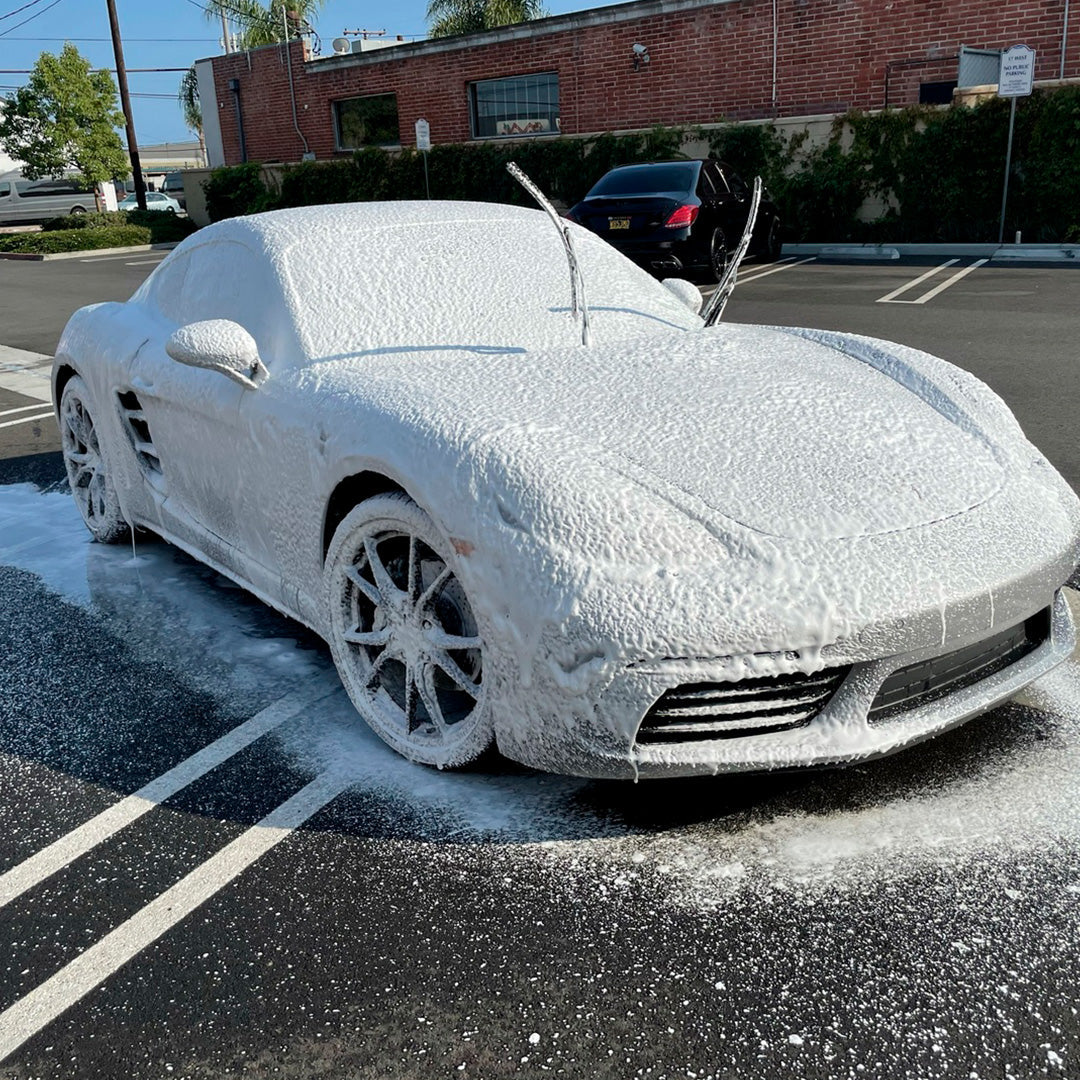
For routine car washing, choose a dedicated car shampoo that is compatible with your vehicle's finish and existing protection, and use it at the labeled dilution. Do not make dish soap your default substitute: Ford's Bronco care guidance specifically warns against dishwashing liquid and recommends a neutral-pH shampoo. Your vehicle's own instructions should govern the final choice, not a rule borrowed from a different model. See Ford's Bronco cleaning guidance.
That recommendation does not require claiming that one accidental dish-soap wash destroys every clear coat or removes every ceramic coating. Those are separate claims that would need evidence about the exact product, surface, and exposure. The useful comparison is about choosing a suitable wash process, not making the kitchen sink sound like a paint emergency.
Car shampoo versus dish soap: the useful comparison
Start with intended use and instructions. A product described for vehicle washing gives you a relevant place to check finish compatibility, dilution, application, rinsing, and safety precautions. A household product should not be treated as interchangeable simply because it makes suds. Our recommendation is to require specific compatibility guidance rather than infer it from cleaning power or how the liquid feels.
Undrdog Soap is our pH-neutral wash option for cars and boats, positioned for regular cleaning before or after coating application. Its product page includes application and residue-removal instructions, along with safety precautions. Use that information together with the vehicle and coating maker's directions, rather than treating a product category as approval for every surface.
| Question | Dedicated car shampoo | Dish soap considered for car washing |
|---|---|---|
| Is this the intended job? | Check that the exact product is specified for the vehicle surface and wash method. | Do not assume household-cleaning instructions establish automotive compatibility. |
| What dilution should I use? | Follow the current label for the actual bucket or equipment setup. | Do not invent a vehicle-wash ratio from dishwashing directions. |
| Will it suit existing protection? | Check the coating, wax, sealant, film, or finish's care requirements. | Do not infer either safety or complete removal from the name “dish soap.” |
| Does foam prove it is better? | Judge the instructions and finished wash, not a foam photograph alone. | Foam is not a substitute for documented suitability. |
| What if instructions conflict? | Ask the product or vehicle manufacturer before proceeding. | Choose a clearly compatible alternative rather than guessing. |
Use this table as a decision checklist, not a laboratory ranking. We are not reporting a controlled comparison of detergency, friction, wax removal, or coating durability. A recommendation to buy the right product for the job is useful without pretending those measurements have been performed.
Why the vehicle manual matters more than a blanket rule
Ford's Bronco page says, “Never use strong household detergents or soap (for example, dishwashing or laundry liquid). These products can discolor and spot painted surfaces.” The same page calls for cool or lukewarm water and a neutral-pH shampoo. That is concrete, vehicle-specific guidance and a good reason not to substitute dishwashing liquid on the vehicle covered by those instructions. Read Ford's complete directions.
There is also an important counterexample. An archived Honda exterior-care manual page says, “Mix in a mild detergent, such as dishwashing liquid or a product made especially for car washing.” That same page restricts cleaners to those recommended in its owner's manual and warns that strong cleaners can damage paint, metal, and plastic. See the Honda exterior-care page, page 214.
Do not turn either document into a statement about every vehicle ever built. The Honda passage is not approval for every current dishwashing formula, every coating, or every new vehicle. The Ford passage should not be paraphrased as proof that all manufacturers have always prohibited mild dishwashing liquid.
Our practical approach is to check the care instructions for your actual model and finish first. If the vehicle has aftermarket film, a wrap, a coating, or a refinished area, check the relevant care instructions as well. When you cannot resolve a conflict, ask before washing that surface. Choosing a suitable automotive wash is simpler than assembling a justification from unrelated manuals.
Do not use pH or foam as a complete compatibility test
Neutral pH is part of Ford's recommended shampoo description, and Undrdog describes Soap as pH-neutral. Neither statement is a published head-to-head test showing how every dishwashing liquid behaves on every protective finish. Keep the conclusion within what the vehicle guidance and Soap product information actually establish.
We recommend avoiding shortcuts such as “all dish soaps have the same pH” or “neutral means suitable everywhere.” Read the exact product's intended uses and precautions. Do not use a pH label to approve an otherwise undocumented application on matte paint, sensitive trim, an aftermarket finish, or a freshly treated surface.

The Soap page says that more product makes more foam. It also instructs users to remove soap residue and dry with a clean microfiber towel. We therefore recommend following its measured directions rather than adding concentrate until the bucket looks impressive; foam volume is not the completion criterion. See Undrdog Soap's application instructions.
For a comparison of two products you already own, put their labels side by side. Identify the approved surfaces, wash method, dilution, rinse requirement, and precautions. If one leaves those questions unanswered for vehicle use, do not fill the gaps with an assumed equivalence.
Choose a maintenance wash, not an improvised stripping process
Decide what you are trying to accomplish before choosing a cleaner. For an ordinary wash, we recommend removing dirt using a method permitted for the existing finish and protection. If you are preparing for a new coating, follow that coating's complete preparation procedure instead of treating a dish-soap wash as proof that the surface is ready.
Do not assume a change in beading after one wash proves complete coating removal. Without a relevant test, that observation alone does not establish which material remains on the surface or why the water behavior changed. Similarly, continuing to see beads should not be your only evidence that preparation for a new product is complete.
Keep separate jobs separate. If ordinary washing leaves a specific contaminant, identify it and choose a compatible, targeted process. Our recommendation is not to keep increasing the wash concentration, scrubbing harder, or adding household chemicals until the mark disappears. Stop when the task moves beyond the instructions you can verify.
If coating condition is uncertain, document what you see and ask the installer or manufacturer how to evaluate it. There is no need to promise that dish soap either always removes protection or never affects it. Both absolutes avoid the actual question: what happened with this product on this surface?
Build a controlled car-shampoo wash routine
Work on a cool vehicle in shade. Ford's Bronco instructions prohibit washing when the vehicle is hot to the touch or in strong or direct sunlight; the archived Honda page also instructs owners to move into shade and allow the exterior to cool. Both support a cooler, controlled setup rather than racing soap drying on a hot panel. See Ford's washing advice and Honda's exterior-care instructions.
- Confirm the surface: Check the vehicle, finish, and any aftermarket protection's care requirements before selecting the wash product.
- Set out clean equipment: Use wash and drying tools appropriate for the finish. Keep visibly dirty tools out of the wash process.
- Measure the solution: Follow the current shampoo directions for your water volume and method. Do not treat a foam-cannon reservoir and a wash bucket as interchangeable volumes.
- Remove loose dirt first: Use the vehicle-approved rinse method before contact washing. Do not begin by rubbing a dry, dirty panel.
- Work manageable sections: Use gentle contact and rinse frequently, keeping product from drying on the surface.
- Remove residue and dry: Complete the rinse, then use a clean, suitable drying towel and inspect the result.
This is a practical workflow, not a replacement for the relevant labels. Honda's cited instructions specifically call for an initial rinse, top-down washing, frequent rinsing, and drying with a soft towel or chamois. Keep those steps in their proper scope and adapt equipment only within the requirements for your vehicle. See the Honda washing sequence.
Undrdog Soap's public instructions include an approximate dilution of one ounce per one to one-and-a-half gallons, alongside bucket and foam-cannon guidance. Follow the current bottle directions for your setup, and ask if the equipment instructions leave the mix unclear. The page also warns about eye irritation and swallowing and calls for protective clothing and gloves. Read the complete application and safety directions before use.

For the drying stage, our car-drying towel guide covers towel choices and care. If you are continuing into the door openings, use the separate door-jamb cleaning guide; do not carry an exterior rinse method into wiring, trim, and the open cabin without checking the differences.
What if you already washed the car with dish soap?
Do not diagnose permanent damage from the product category alone. Our recommended first step is to stop adding products, check the vehicle's care guidance, and remove remaining residue using a compatible rinse process. Dry and inspect the finish before deciding whether any additional work is needed.
Record the detergent's exact name, approximate amount, whether the surface was hot, and whether it dried before rinsing. Photograph any remaining marks under consistent lighting. That information gives a detailer or manufacturer something more useful to assess than “I used the wrong soap.”
If discoloration, haze, unusual texture, or another concern remains, ask for a surface-specific assessment. Do not start polishing, applying strong cleaners, or recoating simply to hide an uncertain problem. The sensible response is proportionate to the observed condition, not an automatic assumption that the car is ruined or that everything is unaffected.
Where Undrdog Soap and HCC fit
For the routine wash decision, Soap is the relevant Undrdog product. Its current information identifies it as a pH-neutral cleaner for cars and boats, including coated and uncoated vehicles. We recommend checking compatibility and following the full directions, especially residue removal and drying, rather than relying on promotional wording about outdoor use. See Undrdog Soap.
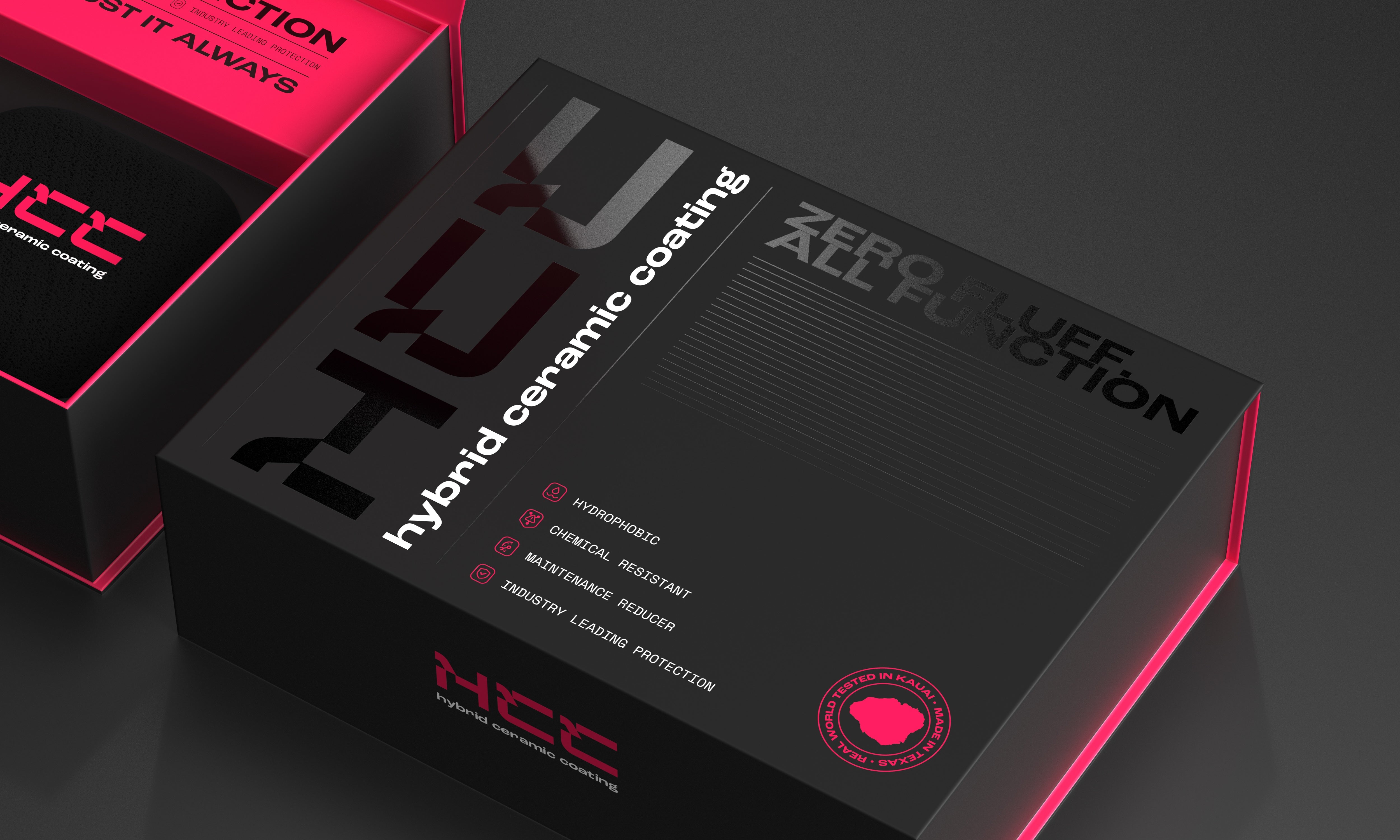
HCC Hybrid Ceramic Coating is our flagship all-surface coating for cars, boats, planes, and bicycles. It is a protection choice, not a wash detergent; multi-year protection depends on preparation, exposure, use, and maintenance. Confirm suitability and the complete application procedure for the exact surface before coating.
You do not need to turn a soap question into a coating purchase. Choose the correct wash first. Consider protection separately when the surface is ready and the product fits your goals.
Frequently asked questions
Should I use car shampoo or dish soap to wash my car?
Choose a dedicated car shampoo compatible with your vehicle's finish and existing protection, and follow its dilution. Check the vehicle's care instructions rather than treating household soap as an automatic substitute.
Do all vehicle manufacturers prohibit dishwashing liquid?
No universal claim is justified by the guidance reviewed here. Ford's Bronco page warns against it, while an archived Honda manual page permits a mild dishwashing liquid. Follow the instructions for your actual vehicle and finish.
Does one dish-soap wash definitely remove ceramic coating?
Do not assume complete removal from one wash or from a change in water behavior. Assess the exact product, exposure, and surface with the coating maker or installer instead of diagnosing the result from the category name.
Does more foam mean a safer or better car wash?
Do not use foam volume as proof of compatibility or a completed wash. Follow measured product directions, use appropriate contact technique, remove residue, and inspect after rinsing and drying.
Can I mix dish soap into car shampoo?
Do not improvise that mixture. Use one suitable wash product according to its instructions; adding another cleaner introduces an undocumented application rather than resolving a compatibility question.
Can I use dish soap as a coating-preparation shortcut?
Do not treat it as proof that existing protection has been removed or the surface is ready. Follow the new coating's complete preparation instructions and resolve uncertain surface conditions before applying it.
What should I do after accidentally using dish soap?
Remove remaining residue using a vehicle-compatible rinse process, dry, and inspect. Record the product and exposure details. If a concern remains, seek a surface-specific assessment before polishing, using stronger chemicals, or recoating.
Is ceramic coating a replacement for car shampoo?
No. HCC is a protective coating, not a wash detergent. Choose compatible cleaning products and follow the coating's maintenance instructions; consider a new coating separately from the routine washing decision.
Choose a wash made for the job.
Review Undrdog Soap's application and safety directions, confirm compatibility, and build a measured wash routine.
Shop Undrdog Soap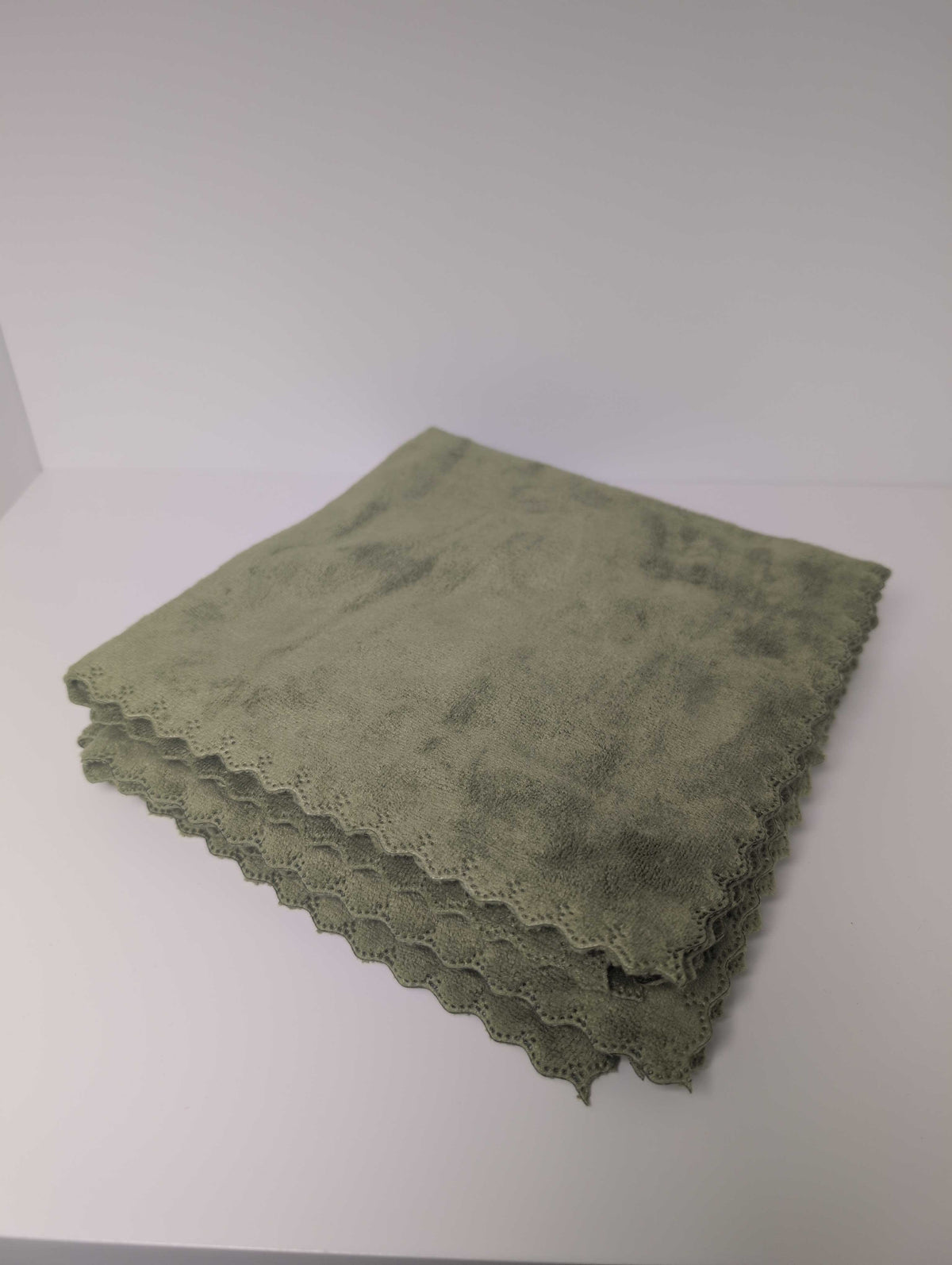

Leave a comment
This site is protected by hCaptcha and the hCaptcha Privacy Policy and Terms of Service apply.