
The short answer: you wash a black car without swirl marks by never letting grit move across the paint. Rinse before anything touches the car, wash with a pH-neutral soap that keeps the surface slippery, use clean microfiber and a two-bucket setup, work top-down in straight passes, keep the panels cool and never let water or soap dry on them, then dry with a plush towel instead of dragging a chamois. Protect the paint afterward so dirt lets go with less rubbing next time. You do not need a black-car soap to do any of this. Undrdog sells a Soap for every color, and we say so on our own Midnight Black Car Soap page, where the "special" product is openly described as our regular Soap in disguise.
Why black paint shows every swirl (and why it is not weaker)
Swirl marks are fine, shallow scratches that sit in the clear coat, the transparent top layer of the paint, and they are most visible on dark cars such as black, navy or deep red, according to the RACV. Every one of them scatters light. On a white or silver car the scattered light blends into a bright, diffuse background. On black, that same scratch reads as a pale line against a dark mirror, which is why a black car and a white car with identical wash damage look nothing alike in the sun.
That contrast is the whole story. Black paint is not softer because it is black. The clear coat does the protecting, and paint gauge maker DeFelsko notes that factory paint varies widely by manufacturer and model with no single "right" thickness. The same guide puts a typical clear coat at only 1.5 to 2.0 mils (35 to 50 microns) out of a 4 to 7 mil total film. Polishing removes some of that thin layer every time, so the goal on a black car is to prevent swirls rather than keep correcting them.
Heat adds a second black-car problem. In a Berkeley Lab test of two otherwise identical Honda Civics, the black car's shell reflected 5 percent of sunlight versus 58 percent for the silver car, and at peak the black roof ran as much as 25°C (45°F) hotter (Lawrence Berkeley National Laboratory). Hot panels flash water and soap dry in seconds, and dried minerals and residue show on black the same way swirls do. That is why time of day and shade matter more on a black car than on any other color.
None of this is a niche concern. Black was the world's second most popular new-vehicle color in 2025 at 23 percent, behind only white, per Axalta's 2025 Global Automotive Color Popularity Report.
Does a black car need a special soap?
No. A car wash soap has three jobs on any color: loosen dirt, keep the surface lubricated so the mitt glides instead of grinds, and rinse away clean without residue. Those jobs do not change when the paint is black. What changes is how obvious it is when a soap fails at them.
A soap also cannot remove a scratch. If a product makes swirls seem to vanish at the wash stage, it is filling or masking them until the next wash, not fixing them. That is the honest reason we built a Midnight Black Car Soap page that calls the color-specific soap category a myth and points you back to the standard bottle. The page exists to make a point, not to sell you a second soap.
The bottle it points to is Undrdog Soap: pH-neutral, coating-safe, with a two-ingredient label (sodium tallowate and water) and a dilution of about 1 ounce per 1 to 1.5 gallons of warm water in a bucket or foam cannon. The product page also carries the one instruction that matters most on black paint: do not let the surface dry in direct sunlight, because rapid drying leaves residue and can damage the finish.

The swirl-free wash routine for black paint
1. Pick the time and the place
Wash early, late, or in the shade, and start only when the panel is cool to the back of your hand. The RACV's prevention advice is the same: hand wash in the shade and avoid automatic brush washes. Those brushes carry grit from every car that went through before yours. On a black car in full sun you are racing evaporation on every panel, and you will lose.
2. Wheels and tires first, with their own tools
Brake dust and road grit live on the wheels. Clean them first with a separate bucket, brushes and towels so that none of that abrasive material ends up in your paint mitt.
3. Rinse before anything touches the paint
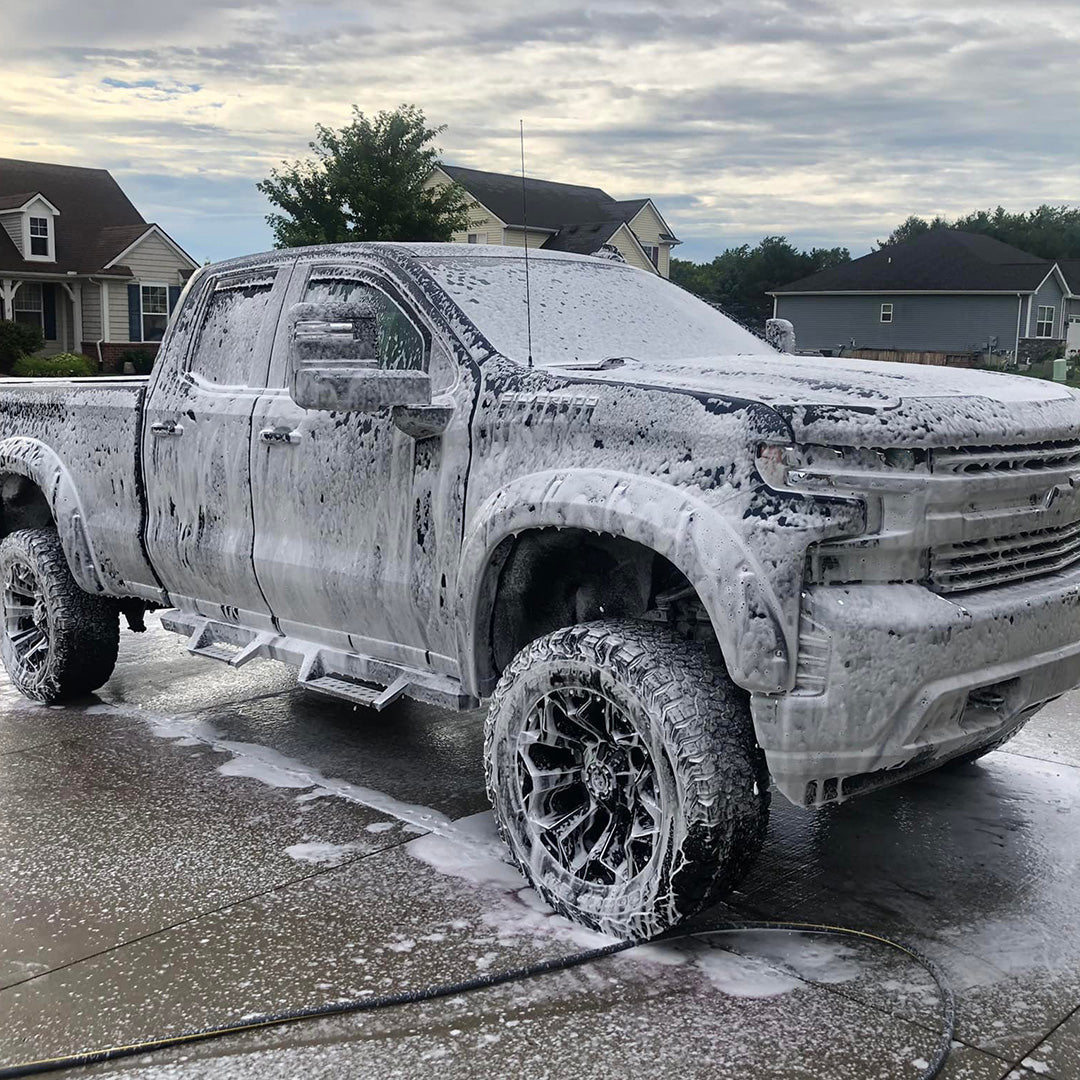
Rinse top-down with a steady stream until the water running off the lower panels is clear. A foam cannon or pump sprayer with Soap is a useful extra here because the foam loosens dirt and lets more of it slide off before contact. The point is simple: grit that is rinsed off cannot be dragged across the paint.
4. Two buckets, one clean mitt, straight passes
Fill one bucket with Soap solution and one with plain rinse water, ideally with a grit guard in each. Load a clean plush microfiber mitt, wash one panel at a time from the roof down with light pressure in straight, overlapping passes, then rinse the mitt in the clean-water bucket before it goes back into the soap. The lower third of the car carries the heaviest grit, so do it last or with a second mitt. Our wash mitt vs sponge comparison covers why plush media matters more on dark paint. If the mitt touches the ground, it is done for the day.
5. Rinse each panel before the soap dries
On black paint, rinse as you go rather than soaping the whole car first. A dried ring of soap or water on the hood of a black car will be visible from across the driveway, and wiping it off dry is exactly how fresh marks happen.
6. Dry by blotting, with a drying aid or a blower
Use a plush microfiber drying towel laid flat and pulled gently in a single direction, or blotted, rather than scrubbed. Misting a drying aid on the wet panel adds lubrication under the towel. Undrdog Quick Detail is made to be used as a drying aid after a wash or on a dry car, on a cool, shaded surface, and the product page notes each application lasts about a month. An electric blower removes water from mirrors, trim and badges without any towel contact at all. Our drying towel guide explains weave and weight if you are choosing new towels.
7. Inspect under good light
Walk the car with a flashlight or under garage lights. Catching a missed water run or a dusty towel streak now takes thirty seconds. Finding it tomorrow in the sun means another wipe on a dry panel.
| Wash method | Best for on a black car | Swirl risk | Undrdog fit |
|---|---|---|---|
| Two-bucket hose wash | Normal road dirt, pollen, full washes | Lowest when the rinse is thorough and media stays clean | Soap in bucket and foam cannon |
| Rinseless bucket wash | Light to moderate dirt, no hose access | Low with plenty of solution and frequent towel rotation | Rinseless Wash Concentrate at 128:1 |
| Ready-to-use rinseless spray | Dust, fingerprints, a single dirty panel | Low on light soil; do not use on caked mud | Rinseless Wash Spray |
| Automatic brush wash | Nothing on dark paint | High, grit from other cars rides in the brushes | Not recommended |
No hose? Rinseless washing suits black paint
A rinseless wash is a bucket wash with a high-lubricity solution and no rinse step, and it is often gentler on black paint than a rushed hose wash because you handle one small section at a time with a fresh towel face. Use Undrdog Rinseless Wash Concentrate at about 4 ounces in 4 gallons of water (128:1), wash one panel at a time, and dry each panel immediately with a clean microfiber. For dust and fingerprints between washes, Rinseless Wash Spray is the same formula pre-diluted at 10:1 in a ready-to-use bottle: spray a section liberally, wipe top-down in straight passes with light pressure, dry with a second towel, and rotate towels as they load up. It is not a tool for a mud-caked truck, which needs a pre-rinse first. The full technique is in our rinseless wash guide.

Protect the paint so dirt lets go
The RACV lists paint protection as a prevention step because wax, sealants and ceramic coatings reduce friction and make dirt easier to remove, which lowers the chance of swirls on the next wash. On black paint that effect is worth more than on any other color, because every wash you make easier is a wash with less rubbing.
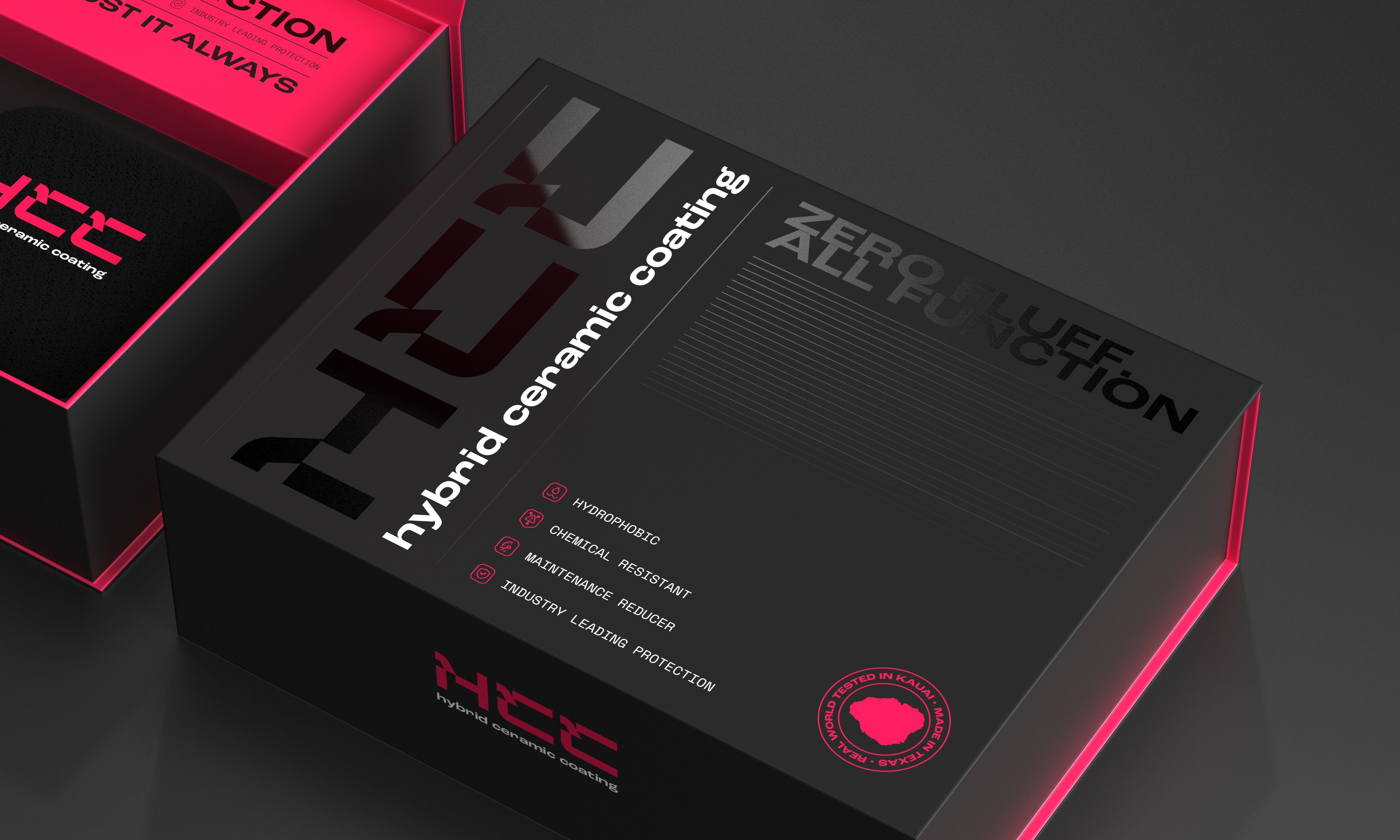
For a black car we recommend starting with Undrdog HCC Hybrid Ceramic Coating, our flagship coating for paint and every other exterior surface. Its product page describes less bonded contamination between washes, which means less decontamination and fewer wash-induced swirls over time, and durability measured in years rather than months, with the real figure depending on prep, exposure and how the car is maintained. Application is deliberately simple: wash and decontaminate, wipe the panel with Wax & Grease Remover, then work HCC in with The Pad until the product disappears. It is dust-free in about four hours and reaches full chemical resistance in five to seven days, so it is sensible to give it that window before the first soap wash. If you want a lower-cost entry point, Undrdog Pro uses the same applicator, with its own flash-and-wipe steps spelled out on its product page.
Be clear about what a coating does and does not do. It makes paint slicker, more hydrophobic and easier to clean. It does not make black paint scratch-proof, and a coated black car washed with a gritty mitt will still swirl. The routine above still applies; the coating just makes it faster and more forgiving.

Already swirled? Fix it once, then protect it
If the paint is already hazy in the sun, no wash will fix it. Light swirls come out with a machine polish, and our swirl mark removal guide walks through inspecting the paint, choosing a pad and polish, and knowing when a professional detailer is the better call. Correct it once, coat it, and then let the wash routine keep it that way. Water spots are a separate problem on black paint: if mineral rings have set, Undrdog Water Spot Remover is applied to a damp towel, tested in an inconspicuous spot first, buffed lightly over the stain and rinsed, which beats trying to scrub a spot out with a wash mitt.
The habits that swirl black paint fastest
- Automatic brush washes, which the RACV calls a major contributor to swirl marks.
- One bucket, so the grit you just removed goes straight back onto the paint.
- Wiping dust, pollen or bird droppings off a dry panel with a dry towel.
- Washing in full sun and chasing dried soap and water with a towel.
- A dropped mitt or towel that goes back to work instead of into the laundry.
- Circular scrubbing with pressure, especially on the lower panels.
- Drying with bath towels or a dragged chamois instead of plush microfiber.
Frequently asked questions
Do black cars need a special car wash soap?
No. A soap needs to lubricate, clean and rinse clean on any color, and nothing about black paint changes those requirements. Undrdog's Midnight Black Car Soap page says plainly that it is the regular Soap in disguise, and the regular bottle is the one to buy.
Can I wash a black car in the sun?
Avoid it when you can. Black panels absorb far more sunlight than light colors and run much hotter, so soap and water dry almost immediately and leave residue and spots. If you have no choice, work one small panel at a time, keep it wet, rinse immediately and dry right away.
Does a ceramic coating stop swirl marks on a black car?
It reduces them by making the surface slicker and easier to clean, so less rubbing is needed, but it does not make paint scratch-proof. A coated black car still needs a clean mitt, two buckets and light pressure.
Is black paint softer than other colors?
Not because of the color. Clear coat thickness and hardness depend on the manufacturer and model, and there is no single standard value. Black simply shows defects that lighter colors hide.
How often should I wash a black car?
Wash when it is dirty rather than on a fixed calendar, and remove bird droppings, bugs and sap promptly. Letting dust build up and then wiping it off dry does more harm than one extra careful wash.
Wash it right, then lock in the gloss
Undrdog Soap handles the wash on any color. HCC makes every wash after that faster and gentler on black paint.
Shop Undrdog Soap → Shop HCC →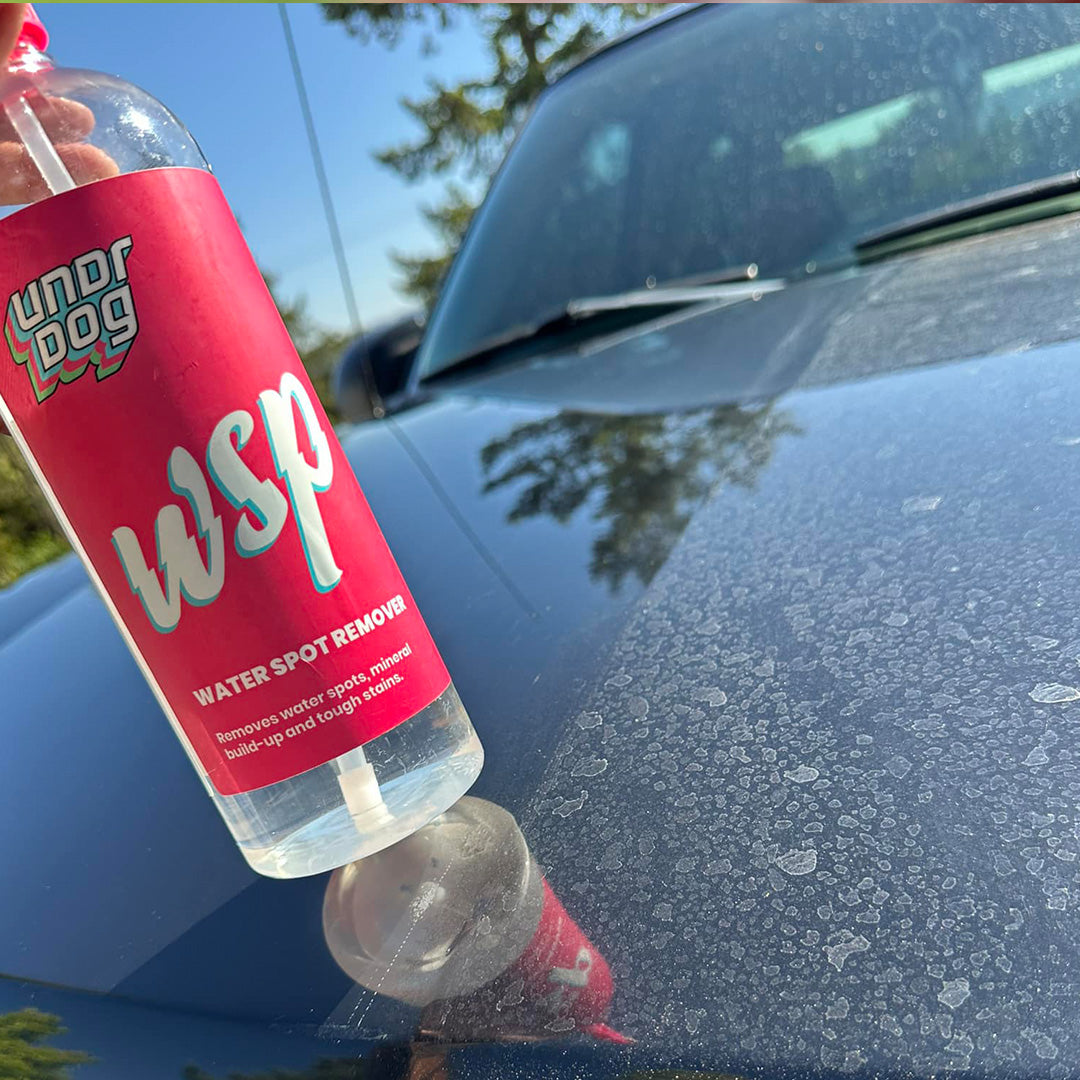

Leave a comment
This site is protected by hCaptcha and the hCaptcha Privacy Policy and Terms of Service apply.