

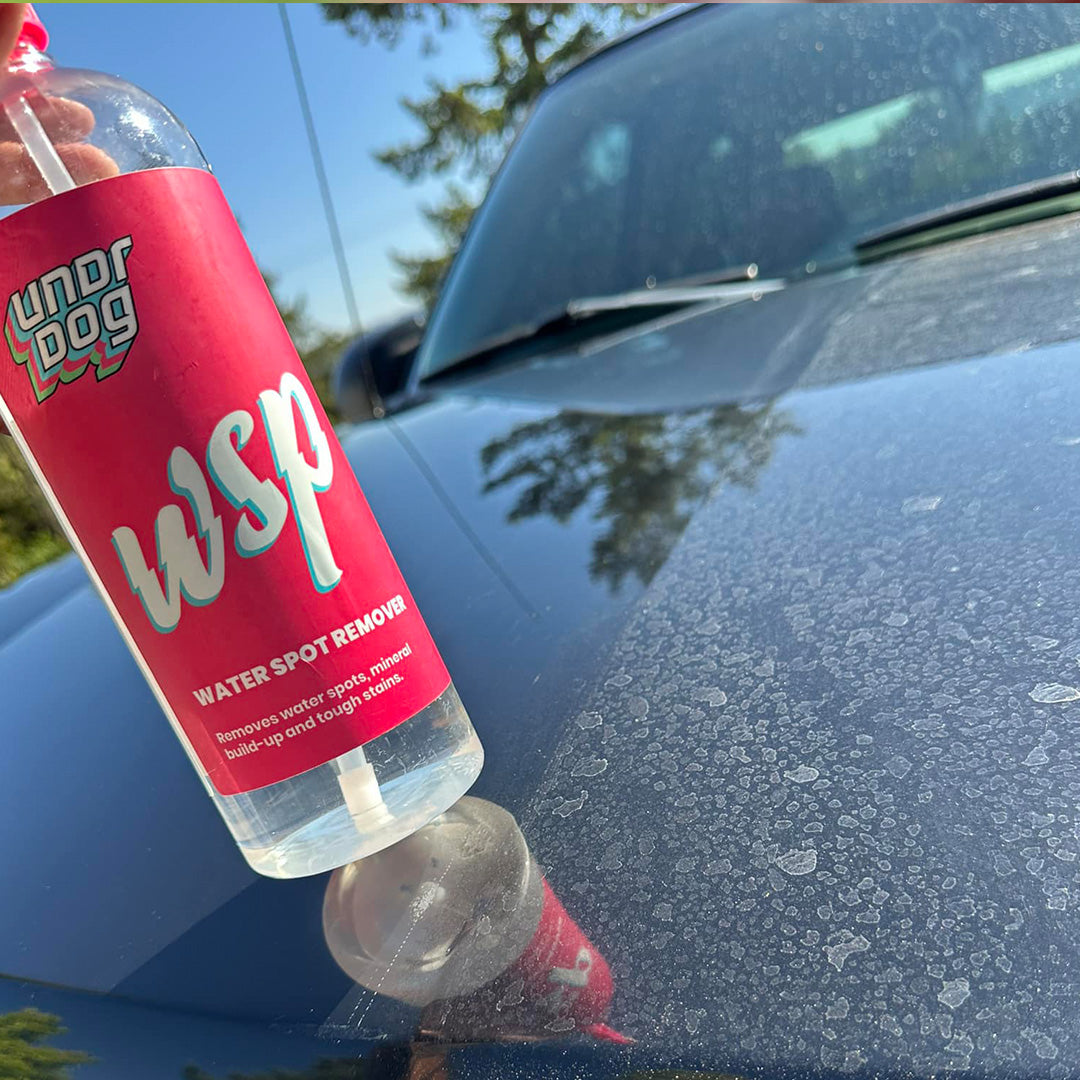
To remove hard water spots from car windows, work on cool, shaded, freshly washed glass; test a small corner; apply a dedicated water spot remover with a damp microfiber towel; buff lightly; rinse well; and wipe the glass with a second towel soaked in plain water so nothing dries on the surface. For Undrdog Water Spot Remover, the current directions call for a 1:1 mix with water on newer spots and undiluted product on stubborn ones. If the rings survive two careful passes, the minerals have most likely etched the glass, and the fix is glass polishing rather than more chemical.
This guide is for exterior automotive glass: windshields, side windows, rear glass, mirrors, and the boat and RV windshields that collect the same spots. It covers why glass spots outlast paint spots, how to tell a surface deposit from etching, the exact steps for a chemical remover, the places you should not use one, and what actually keeps windows clearer afterward. If your problem is on paint, our separate water spot remover guide for car paint covers that surface.
Why water spots on glass are so stubborn
Water hardness is the amount of dissolved calcium and magnesium in water, and the U.S. Geological Survey classifies water from soft (0 to 60 mg/L as calcium carbonate) up to very hard (more than 180 mg/L). When a droplet dries on your window, the water leaves and those dissolved minerals stay behind as a ring. Every wet-and-dry cycle adds another layer on top of the last one.
Glass is a worst case for this. Pilkington's technical bulletin on lawn sprinklers and window glass notes that minerals such as iron and calcium are present to some degree in all water supplies, that dried deposits adhere quite well to smooth surfaces such as glass, and that they can be very difficult to remove. The same bulletin draws a line that matters for your car: the deposits themselves do not degrade glass, but if they build up to the point where they stay damp and hold water against the surface for long periods, staining or etching can be expected.
Two things make car glass worse than house glass. Spots on a windshield are hard to see until low sun or oncoming headlights hit them, so they often get many more wet-and-dry cycles before anyone notices. And unlike paint, which may have wax, sealant, or a coating between the mineral and the surface, bare glass gives the deposit direct contact from day one.
That is also why your glass cleaner is not working. Cleaners are built to lift films: fingerprints, road grime, the haze from interior plastics. Mineral scale needs something that dissolves or loosens it. Undrdog's own guidance on Window Warsh versus glass protection is explicit that a glass cleaner should never be expected to remove mineral etching, and the same goes for mineral scale that has built up.
Deposit or etching? Check before you buy anything
The Water Spot Remover FAQ explains the difference with a picture that holds up well: a water spot is mineral build-up sitting on top of the surface, like a mountain, while etching is the low spot the minerals leave behind, like a canyon. A chemical remover works on mountains. Once you are dealing with canyons, the FAQ is blunt that polishing or wet sanding is the only way to remove them.
You can usually sort the two in a minute. Clean the glass normally, then look across it toward a light at a low angle and run a clean fingertip over a spot. A deposit feels slightly raised or gritty and often looks chalky white. An etched spot feels as smooth as the glass around it but still shows as a faint ring or haze. Most windows have a mix: deposits on top of some early etching.
| What you see | What it usually is | What works |
|---|---|---|
| White or gray rings that feel raised, mainly where sprinklers or hose water dried | Fresh mineral deposit | Water spot remover diluted 1:1, rinse, residue wipe |
| Dense, crusty spotting that resists the first pass | Built-up deposit from repeated cycles | Water spot remover undiluted on a test spot, then the same steps |
| Faint rings that feel smooth and stay after two careful passes | Etching | Glass polish, or a glass professional |
| Uniform haze on the inside of the glass, worse after hot days | Interior film, not minerals | Glass cleaner and the fold-in-four wipe |
| Rough, frosted patches you can feel plainly | Heavy etching or pitting | Professional glass restoration or replacement |
What you need
The product page lists a short kit, and it is enough: a bottle of Water Spot Remover, at least two clean microfiber or terry towels, water plus a wet towel, and a hose or sprayer for rinsing. Add gloves and eye protection. The product's warning statements say it may be harmful in contact with skin, causes mild skin irritation, and causes eye irritation, and its FAQ asks you to wear gloves and respiratory protection when working with any chemical, including this one.
Plan for shade. The FAQ's practical rule is to use the product in the shade and never let it dry on any surface, because it can cause damage if left too long on the wrong kind of paint or glass. Have your rinse water set up before the bottle is open, not after. A glass cleaner for the final wipe and a few minutes for the wiper blades round out the list.
Step by step: removing hard water spots from exterior car glass
- Wash or rinse the glass first. Scratches on glass come from grit under a towel, not from the remover. Wash the windows as part of a normal wash, or at minimum rinse them well, and clear leaves and dirt from the cowl under the wiper arms so you do not drag debris back onto the windshield.
- Move to shade and let the glass cool. Hot glass flashes the product off before you can rinse it, which is exactly the drying the FAQ warns about.
- Put on gloves and eye protection. Keep a water-soaked towel within reach the whole time.
- Test a corner. The directions call for a test in an inconspicuous area before treating the rest. The lower corner of a side window is a convenient spot.
- Mix for the job. For newer spots, mix 1:1 with water. For stubborn spots, use it as is, without diluting. Shake the bottle well.
- Load the towel, not the glass. Drip the product onto a microfiber towel until it is damp but not dripping, then lightly buff the spotted areas. Work one window or half a windshield at a time so every section gets rinsed before anything has a chance to dry.
- Rinse well with water. Flood the glass, and rinse any paint or trim the product ran onto. Water Spot Remover is labeled for paint and glass, so a drip on the hood is not an emergency, but the no-drying rule applies there as well.
- Remove all residue with the second towel. This is the two-towel method from the FAQ: one towel applies the product, the other, soaked in water, wipes every trace of it off.
- Inspect at an angle. Look through the glass toward a light. If spots remain and feel raised, repeat once with undiluted product on that area. If they remain and feel smooth, stop; you are now looking at etching.
- Finish the glass and the blades. Clean the window with a glass cleaner for a streak-free finish, and clean the wiper blades so they are not dragging old mineral grit across your work. Our guide on cleaning windshield wiper blades safely covers that step.

One more caution: the directions do not address rubber seals or textured plastic trim, so keep the product off those and rinse promptly if it runs.
Interior glass and tinted windows follow different rules
Hard water spots are an outside problem. The inside face of a tinted window is window film, not glass, and film makers set their own care rules. 3M's automotive window film FAQ says to wait thirty days after installation, then clean with normal household cleaning solutions and a soft, lint-free cloth, and never to use abrasive products that could scratch or damage the film. An acidic spot remover or a glass polish has no business on that surface.
If the inside of your windshield looks hazy, the cause is usually film from interior plastics or fingerprints rather than minerals. Window Warsh is listed as ammonia-free and tint-safe on its product page, which makes it a reasonable cleaner for the film side once the film maker's waiting period has passed.
Factory tint is different from film. According to Chemical & Engineering News, glassmakers produce the dark privacy glass common on SUV rear windows by adding compounds of iron, manganese, and selenium to the glass itself, so there is no film on it and the exterior face can be treated like any other window. When you are not sure which you have, treat the inside face as film and the outside face as glass.
If the spots have etched: polishing, limits, and when to call a glass pro
Light etching on a side or rear window can often be improved with a cerium-oxide glass polish. CarPro's directions for CeriGlass show the shape of the job: cover the surrounding bodywork and trim, work one section at a time in overlapping motions, spritz the pad with water when the polish starts to dry, repeat as needed, and clean the surface thoroughly when you are done. The precautions matter as much as the steps: the product is not for use on exterior tint film, painted, or coated glass, it will stain black trim, and paint should be taped off or washed right after.
Know the limits before you start. A windshield is laminated safety glass, a glass-polymer sandwich as Chemical & Engineering News describes it, that you look through at speed, and uneven polishing or heat can leave distortion that is worse than the spots you removed. Pilkington's bulletin notes that abrasive or strong acid treatment can be done carefully with some success, but that repeated action will ultimately damage the glass. If the etching is deep enough to feel plainly, or it covers the driver's view, a professional glass restoration shop or a replacement windshield is the better outcome. Professionals who polish glass for a living have the machines, the pads, and the judgment to stop at the right point.
Keeping car windows clear afterward
Removing deposits once is easy; keeping them from coming back takes a habit and, if you want it, a protective layer.
Fix the water source first. Pilkington's advice to building owners applies to driveways: minimize sprinkler overspray on glass, and consider drip irrigation or limited-pattern heads near where the car parks. If you cannot move the car out of the arc, rinse the glass with clean water before the sun bakes the spots on. After any wash, dry the glass; the Window Coating directions put it simply: always dry your vehicle after it gets wet.
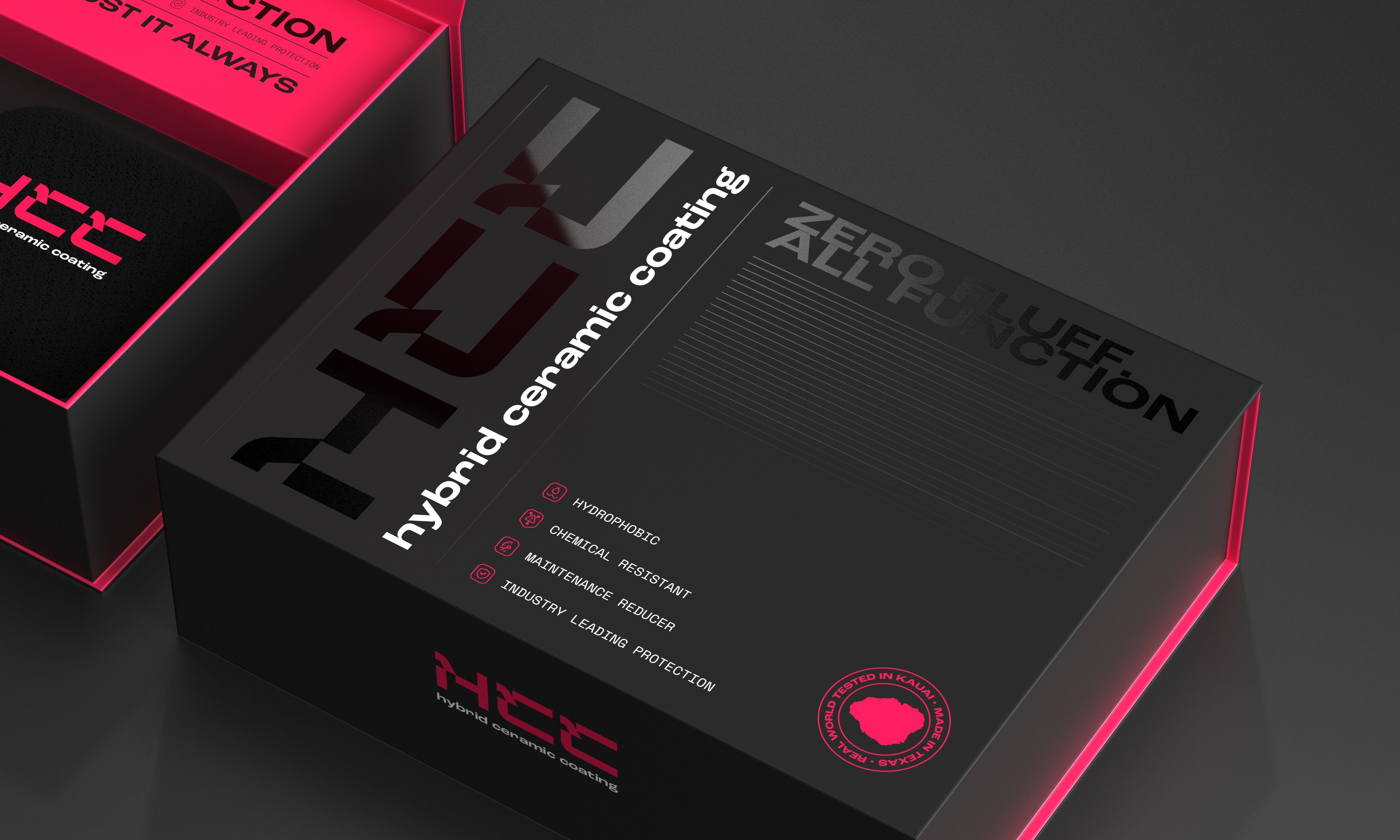
Protect the glass. Two Undrdog options apply here. HCC Hybrid Ceramic Coating is the flagship all-surface coating; its current product page lists glass among its compatible surfaces alongside paint, gel coat, metal, PPF, vinyl, and plastic trim, rates coverage at 50 ml for one vehicle or 100 ml for two vehicles or one boat, and describes it as dust- and tack-free in about four hours with full chemical resistance in five to seven days. If you are coating the whole car, the glass can be part of the same job. HCC's label classifies it as a highly flammable liquid and vapor and directs gloves, eye and face protection, and a well-ventilated space.
Undrdog Window Coating is the glass-specific option. Its page lists added clarity, hydrophobicity, easier cleaning and drying, and fewer water spots as the benefits, and the directions are specific: prep with denatured alcohol or a wax and grease remover, apply in a cross-hatch pattern, let it flash five to seven minutes, wipe with three towels, then wait three hours for it to dry, 24 hours before the glass gets wet, and one week before washing with detergents. The FAQ suggests yearly reapplication and notes that a quick polish removes it. Our Window Coating prep, application, and care guide covers the full process.

Be realistic about what a coating does. Water that dries on coated glass still leaves minerals behind; the difference is that water sheets and beads off faster, the glass dries more completely, and what does land tends to wipe away with a normal wash instead of needing a remover. A coating is a reason to rinse and dry sooner, not a reason to stop.
Maintain with a cleaner, not a remover. Between washes, Window Warsh handles the film and fingerprints that make glass look spotted when it is not. The product page lists it as ammonia and dye free for car, boat, and home windows, and its technique is simple: spray onto a towel or the glass, wipe up and down with one face of a towel folded in four, then fold it and wipe side to side. If spots survive that wipe, you are back to the deposit-or-etching check above.

Boat and RV windshields
Glass windshields on boats and RVs collect the worst spots of all, because dock water, spray, and sprinklers at the storage lot all dry on them in full sun. Water Spot Remover is labeled for cars, boats, and glass, and its FAQ names sea air alongside sprinklers and rain as a source of the build-up it removes, so the steps above transfer directly: shade, test, dilute by condition, damp towel, rinse, residue wipe. Rinse the glass with fresh water after every saltwater day. Clear vinyl enclosure panels are not glass; follow the panel maker's care instructions for those rather than any method on this page.
Frequently asked questions
Can I use vinegar to remove water spots from car windows?
Household acids are widely used on house windows, but they come with no instructions for your paint, trim, or tinted film, and Pilkington notes that repeated strong acid treatment will ultimately damage glass. A labeled remover with a test-spot, dilution, and rinse procedure gives you a more predictable result on a vehicle.
Will Water Spot Remover scratch my glass?
Its listed ingredients are water, isopropyl alcohol, polydimethylsiloxane, citric acid, polyethylene glycol trimethylnonyl ether, fragrance, and colorant, with nothing abrasive. Scratches during this job come from grit trapped under the towel, which is why washing or rinsing the glass first is step one.
Can I use it on tinted windows?
On the exterior face of the glass, yes. On the interior face of film-tinted windows, no; that surface is film, and film makers such as 3M specify soft cloths and non-abrasive cleaners instead.
How do I know the spots have etched?
If spots remain after two careful passes with undiluted remover and feel as smooth as the surrounding glass, the minerals have etched the surface. At that point more chemical will not help; glass polishing or a professional is the next step.
Will HCC or Window Coating stop water spots on glass?
They reduce them and make the glass easier to rinse and dry, which is what the Window Coating page claims. Water that dries on any surface still leaves minerals behind, so keep rinsing and drying the glass, especially near sprinklers.
Clear the glass, then keep it clear
Water Spot Remover handles the deposits. HCC or Window Coating makes the next rinse easier, and Window Warsh keeps the view clean between washes.
Shop Water Spot Remover →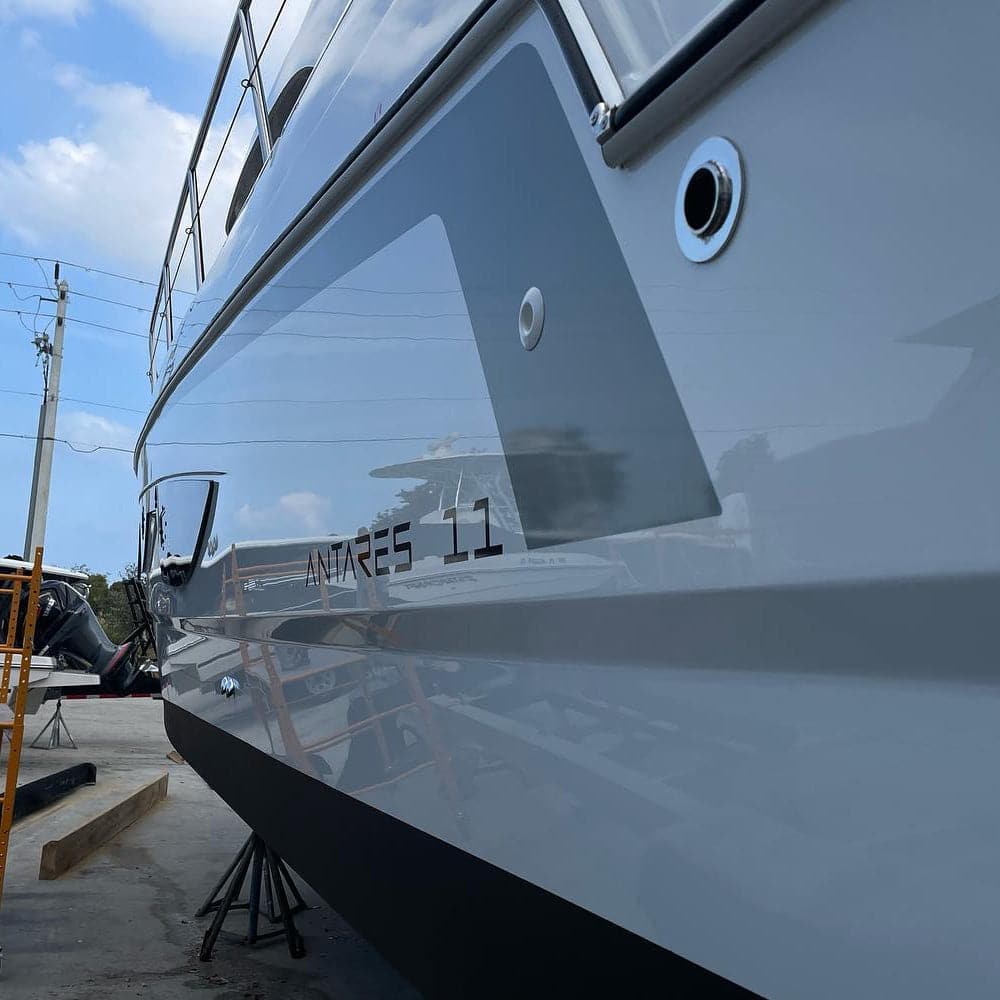

Leave a comment
This site is protected by hCaptcha and the hCaptcha Privacy Policy and Terms of Service apply.