


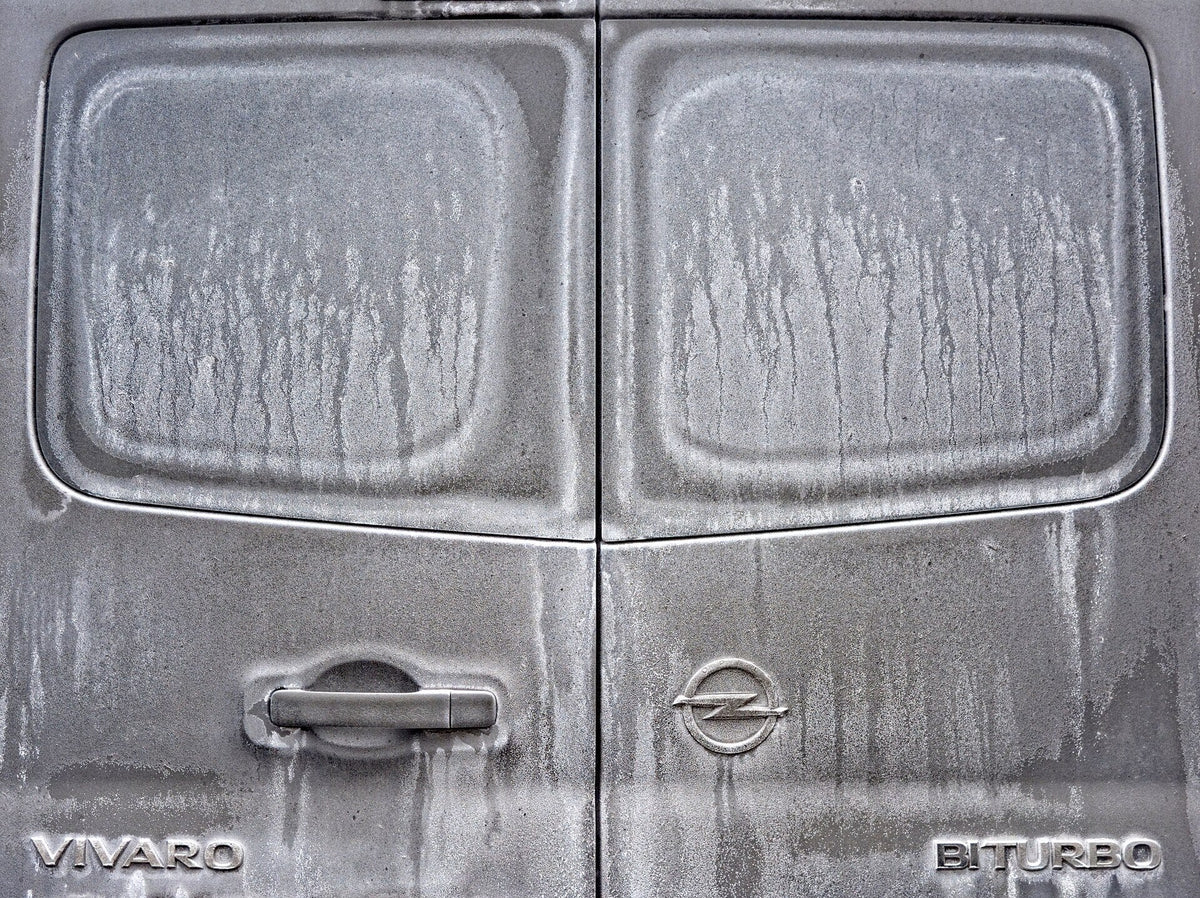
Hero photograph: “Wash Me” by XoMEoX, used under CC BY 2.0. Resized to fit the page; the photographer does not endorse Undrdog.
Winter car care for the surfaces you can see comes down to five jobs: protect the paint before the first storm, wash salt off on a schedule you can actually keep, keep the glass clear without scratching it, keep salt and moisture out of the cabin, and give the whole vehicle one thorough decontamination in spring. This checklist covers each job in season order, names the Undrdog product that fits, and points to the detailed guide when a step deserves more than a paragraph.
Everything here is about appearance and corrosion. Tires, batteries, fluids, and emergency kits belong to your mechanic and your owner’s manual, so they are left out on purpose.
The winter checklist at a glance
| Area | Before the first storm | During salt season | After the last storm |
|---|---|---|---|
| Paint and trim | Wash, decontaminate, coat or refresh protection, touch up chips that show bare metal | Wash about every two weeks, sooner after heavy snowfall; dry fully including jambs | Iron decontamination, inspect for new chips, confirm water still sheets and beads |
| Wheels, wheel wells, undercarriage | Clean wheels and arches so brine has less to cling to | Rinse arches and underbody at every wash; plain water counts when time is short | Thorough underbody rinse, iron remover on wheels |
| Glass and wipers | Clean inside and out, check wiper blades, use washer fluid rated for your temperatures | Clear frost without metal tools, keep the inside film down to limit fogging | Deep-clean glass, replace tired blades |
| Interior | Fit rubber mats or liners, vacuum carpets while they are dry | Shake out mats weekly, treat salt rings before they set, dry the cabin | Full carpet clean, leather and plastics wiped down |
| Doors and seals | Clean seal faces and jambs, follow the owner’s manual on seal care | Dry seals and jambs after every wash | Inspect seals for cracking, clean drain holes |
Why road treatments are harder on a car than snow
Snow itself is nearly harmless to paint. The problem is what road crews put down to keep traffic moving. Many agencies now spray brine before a storm instead of waiting to spread granules. The North Carolina Department of Transportation describes its brine as water with about 23 percent salt, applied to dry pavement a day or two ahead of expected snow, sometimes blended with calcium to keep the salt working as temperatures drop. Because it is already a liquid, brine coats the lower half of every passing vehicle as a fine mist that dries into the grey film in the photo above.

The chemistry matters for how you store the car. A Washington State DOT research report on de-icer corrosion notes that magnesium chloride and calcium chloride are more hygroscopic than ordinary sodium chloride, which means they pull moisture from the air and can keep corroding metal even in seemingly dry conditions, at relative humidity as low as 35 percent. A car wearing that residue is not safe just because it is parked indoors and looks dry.
The cost is not trivial. AAA estimated that de-icer corrosion costs U.S. drivers roughly three billion dollars a year, with 15 percent of U.S. drivers in winter climate regions reporting at least one rust repair over five years at an average of 490 dollars per repair. The same fact sheet lists the habits that prevent most of it: wash before winter, touch up chips that expose bare metal, protect the paint, limit driving right before, during, and after storms when treatments are fresh, and wash the entire vehicle including the undercarriage with a product made for vehicles rather than dish soap.
Before the first storm: protect what salt will touch
The pre-winter job is a proper wash, a decontamination pass, and protection that will still be working in March. Wash with Undrdog Soap, which is pH-neutral and used at about one ounce per one to one and a half gallons, and do not let it dry on the panel. If the paint feels gritty, The Purps dissolves embedded iron while the car is still wet; it turns purple where it finds contamination, needs a rinse within a few minutes, and must never dry on the surface.
For paint that will be coated, finish the prep with Wax & Grease Remover applied with The Pad so no old wax or polish oils sit between the paint and the coating.

HCC Hybrid Ceramic Coating is the first recommendation for a car that will see salt every winter. Undrdog positions it as multi-year protection for paint, glass, metal, and plastic trim, with the real-world span depending on prep, exposure, and how consistently the car is washed, and the product page lists salt among the chemicals it is built to resist. Timing is the catch. HCC is dust-free in about four hours but reaches full chemical resistance over five to seven days, so the install needs a sheltered week before brine shows up. The HCC product page does not list a minimum application temperature; flash time depends on humidity, and the practical limit is whether you can keep the panel clean and dry through cure. If that window is already gone, a maintenance wash and a quick layer of protection on the finish you have is the better pre-winter move, which is exactly the decision covered in Ceramic Coating Before Winter: Install or Maintain?
Undrdog Pro is the lighter, DIY-friendly option when a full HCC install is not realistic this season. Either way, deal with chips that show bare metal first. A coating protects what it covers; it does nothing for steel that is already exposed, and AAA puts touching up those chips near the top of its pre-winter list.
During salt season: a wash cadence you can keep
AAA’s current guidance is to wash about every two weeks through winter and more often after heavy snowfall, to rinse with plain water when a full wash is not possible, and to park in a garage when you have one. Cadence beats perfection. A simple wash every other weekend protects a car better than one heroic detail in January.
When it is above freezing
Use the normal two-bucket wash with Undrdog Soap, starting at the roof and finishing with the salt-heavy lower panels, rocker panels, and bumpers. Winter changes the drying step more than the washing step: dry the car completely, open each door and dry the jambs and seal faces, and run a towel along the trunk and hood gaps so meltwater does not refreeze there. Quick Detail works as a drying aid on a cool, shaded panel; mist one section, spread it, and wipe dry rather than letting it dry on its own.
When it is too cold for a hose
A rinseless wash in the garage is the realistic winter method for most of the country. Rinseless Wash Concentrate is mixed at 128:1, which is four ounces in roughly four gallons of warm water, then applied one panel at a time with a mitt or sponge and dried immediately with a clean microfiber towel. For light dust between washes, Rinseless Wash Spray comes pre-diluted at 10:1 and should be used as it comes, never diluted again. Heavily caked salt is still a job for a pre-rinse and a full wash; rinseless is for maintenance, not for grinding grit across the paint.
The step-by-step sequence, including what not to do in freezing weather and how to inspect a coating afterward, is in How to Wash Road Salt Off a Ceramic-Coated Car.
Wheels, wheel wells, and the undercarriage
Brine does not land on the hood. It is thrown up by the tires into wheel wells, rocker panels, suspension pockets, and the inner lips of the wheels, and that is where it dries thickest. Every winter wash should include a direct rinse into each arch and along the underbody, and AAA specifically calls for cleaning the entire vehicle, undercarriage included, rather than only the panels you can see.

If you have no lift and no undercarriage sprayer, a self-serve bay with a wand aimed low at the arches and sills is better than skipping it, and a plain-water rinse on the driveway on a mild day still counts. Save The Purps for the spring decontamination, because an iron remover that freezes or dries on a wheel is a problem, not a shortcut.
Glass and wipers
Salt spray on the windshield turns the low winter sun into a glare problem, and a film on the inside of the glass makes fogging worse and slower to clear. Clean both sides with Window Warsh, which is ammonia-free, dye-free, and tint-safe, using one towel to apply and a second dry towel to buff. Fill the washer reservoir with fluid rated for your local temperatures according to your owner’s manual, since summer fluid freezes in the lines when you need it most.
Frost needs patience rather than force: let the defroster soften it and use a plastic tool and gentle passes, never metal, hot water, or a dry wiper blade dragged across ice. The safe methods and the ones that crack glass are covered in How to Clear Frost From Car Windows Safely.
Interior: salt, slush, and moisture
Whatever is on the road ends up on the carpet. Rubber mats or molded liners fitted before the first storm catch most of it, and shaking them out once a week stops meltwater from soaking into the padding below. When white rings do appear on carpet, Interior Cleaner handles carpets, plastics, and most trim; for leather, dilute it 50:50 with water and use a separate cloth, and keep it off delicate surfaces. Finish by wiping surfaces dry so the cabin does not stay damp, which is what fogs glass on the next cold morning.
Salt rings that have already set, and the order of steps that lifts them without spreading the stain, are in How to Remove Road Salt Stains From Car Carpet.
Doors, seals, and the garage
Most frozen-shut doors are caused by wash water or melted slush sitting on the seal face. Drying the jambs and seals after every wash is the fix that costs nothing. Before putting any dressing on rubber seals, check the owner’s manual: some manufacturers prohibit silicone products on their seals, so there is no universal spray recommendation.
The garage question comes up every year. A garage keeps new snow and ice off the car, and AAA recommends using one. The caution is about brine residue, not the garage. Because calcium and magnesium chloride keep drawing moisture even in dry air, a car that comes in caked in grey film and sits for weeks is still corroding quietly. Rinse or wash it before a long park, then let it sit inside with the door seals dry.
After the last storm: spring recovery
AAA’s last pre-winter tip is really a spring tip: give the vehicle a thorough cleaning, undercarriage included, once the treatments stop. Start with a full wash, then apply The Purps to wet paint and wheels, let it react for two to five minutes, and rinse it off before it dries; the purple runs show where brake dust and road iron had settled through the winter. Test it first on any bare metal or plastic trim you are unsure about, and keep it off glass.
If the glass or paint shows mineral spotting from months of meltwater, Water Spot Remover clears it: diluted 1:1 for fresh spots, straight for stubborn ones, always after a test spot. Then inspect the coating. If water still sheets and beads evenly after the decontamination wash, nothing more is needed. If it has gone flat in areas or you find new chips down to metal, that is the moment to book maintenance or a refresh, before summer sun and spring pollen add their own problems.
How Undrdog does it
Undrdog’s winter approach is to put the most durable protection on before the season and then make the washes easy enough to actually happen. HCC is the multi-year foundation for paint, glass, trim, and wheels when there is time to prep and cure it; Pro is the lighter coating when there is not. Soap handles the above-freezing washes, Rinseless Wash handles the garage washes, Quick Detail is the drying aid, Window Warsh keeps the glass honest, Interior Cleaner deals with what the boots bring in, and The Purps closes the season. None of it replaces the two habits that matter most: wash on a schedule, and dry what you wash.
Protect the car before the brine trucks roll. HCC is the multi-year coating for paint, glass, metal, and trim, and Undrdog Soap is the pH-neutral wash that keeps it clean all winter.
Frequently asked questions
How often should I wash my car in winter?
AAA suggests washing about every two weeks during salt season and more often after heavy snowfall or a long drive on treated roads. If a full wash is not possible, a plain-water rinse of the lower body, wheel wells, and undercarriage still removes a lot of residue.
Can I wash my car when it is below freezing?
Outdoors, water freezes in door seals, locks, and on the glass, so most people wait for a day above freezing or use a heated wash bay. Indoors, a rinseless wash with a bucket of warm water and a few towels cleans a salty car without a hose.
Does a ceramic coating stop road salt damage?
A coating protects the painted surfaces it covers and makes salt film release more easily during a wash. It does not reach bare metal under the car, inside seams, or at chips, so washing the whole vehicle and touching up exposed metal still matter.
Should I apply a ceramic coating right before the first storm?
Leave a buffer. HCC is dust-free in about four hours but reaches full chemical resistance over five to seven days, and the surface needs to stay clean and sheltered for that window. If a storm is already in the forecast, maintain the finish you have and coat afterward.
Is a heated garage good or bad for a salty car?
Both, depending on what you do with it. A garage keeps new snow and ice off the car, which AAA recommends. The salts in modern de-icers keep drawing moisture even in dry air, so a car caked in brine should be rinsed before it sits inside for weeks.
What is the difference between road salt and brine?
Rock salt is spread as solid granules once snow or ice is present. Brine is salt dissolved in water, often about 23 percent salt, sprayed on dry pavement ahead of a storm. Because it is already a liquid, it coats the lower body of a car as a fine film that dries in place.


Leave a comment
This site is protected by hCaptcha and the hCaptcha Privacy Policy and Terms of Service apply.