

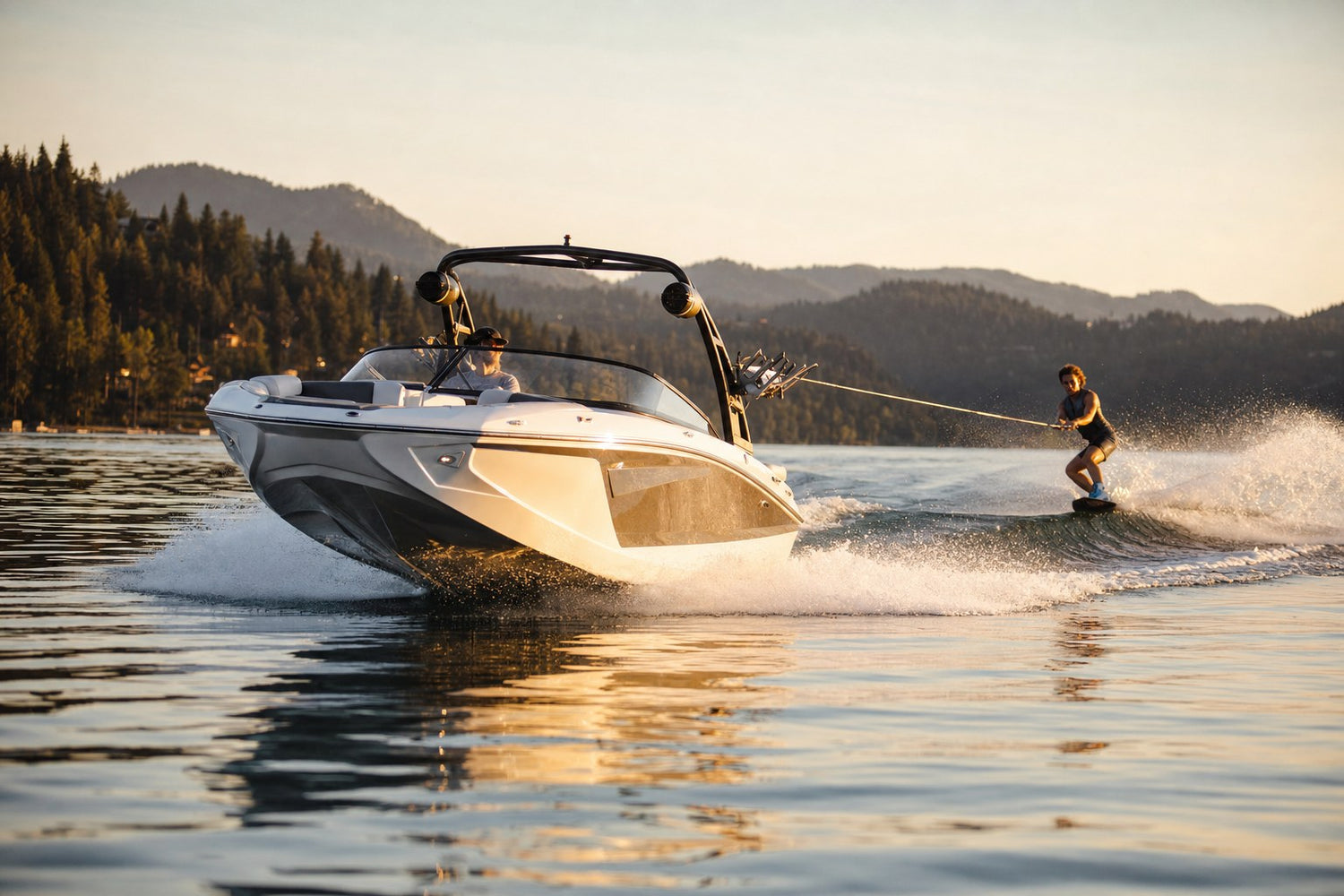
Wakeboard and ski boats live the hardest life of any recreational boat. They sit in blazing sun all summer, get pounded by hard-water spray at 25 mph, tow riders through freshwater lakes full of dissolved minerals, and then bake on the trailer between sessions. The result: gelcoat that chalks in two seasons, vinyl that stiffens and cracks, and towers that pit and haze. This guide walks you through how to actually protect every surface on a wakeboat — gelcoat hull, vinyl upholstery, aluminum or powder-coated tower, and the trailer — and which Undrdog products fit each job.

Why Wakeboard and Ski Boats Chalk Faster Than Other Boats
You already know your wakeboat looks worse than the pontoon parked next to it, even if yours is newer. There are real reasons for that, and they all trace back to the same chemistry.
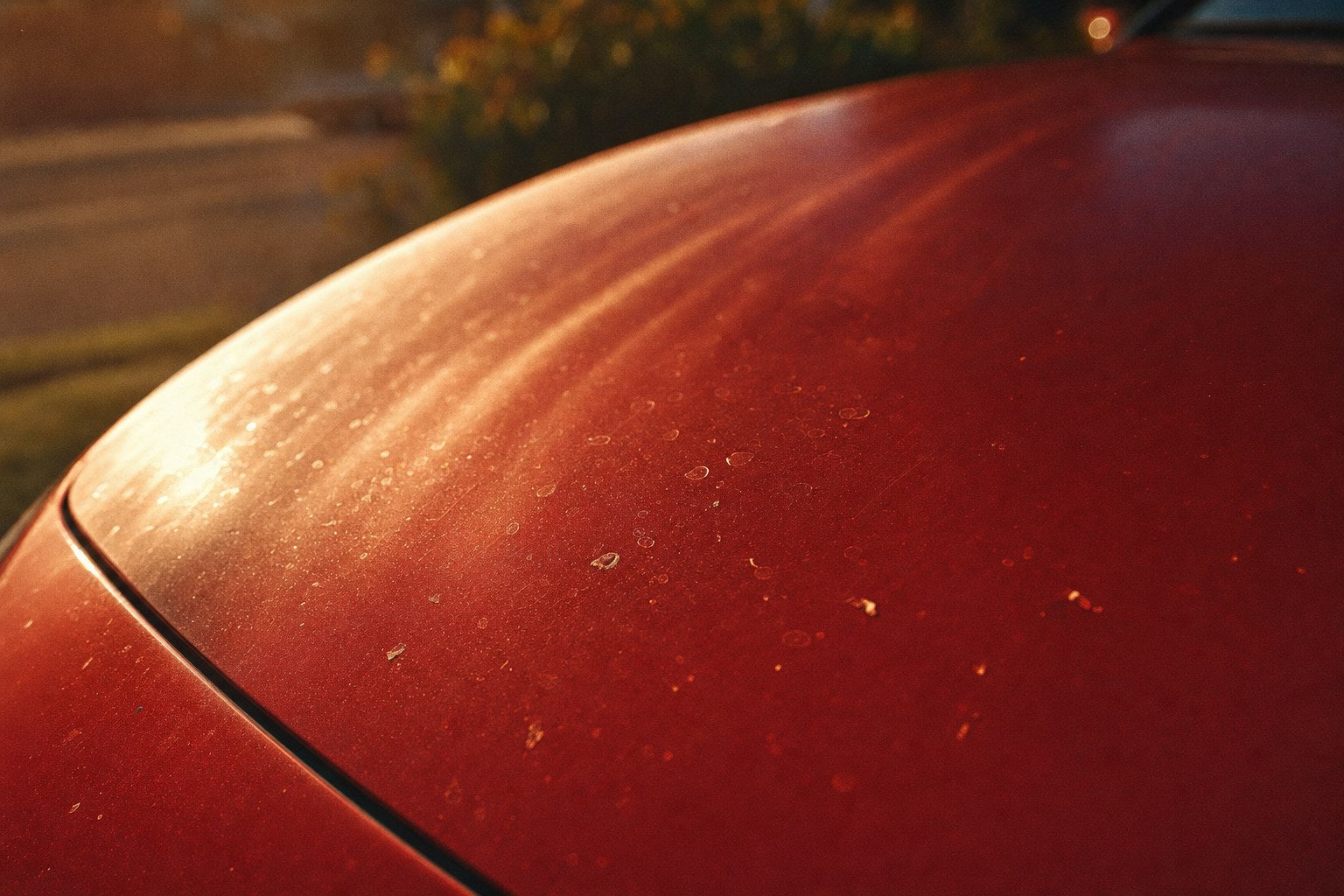
Gelcoat is a pigmented polyester or vinyl-ester resin, not paint. It is a structural surface layer that gives the hull both its gloss and its outer protection. That resin is vulnerable to ultraviolet radiation: UVA and UVB wavelengths carry enough energy to break the covalent bonds inside the polymer, a process called photodegradation. When those chains fracture, the surface loses gloss, then oxidizes as the broken chains react with oxygen. The first visible symptom is chalking — a fine powdery residue that transfers onto your hand or a white towel, which is literally degraded resin, as detailed in this breakdown of UV damage on gelcoat.
The wakeboat problem is that UV is only half of it. According to gelcoat oxidation research, moisture accelerates degradation dramatically because water hydrolyzes the ester linkages in the resin, and carries dissolved oxygen deeper into the matrix. Wakeboats spend every weekend wet. Add the spray pattern from a big wake tower, the constant misting from riders behind the boat, and the tendency to leave the boat covered but not fully dry, and you have a surface that is degrading faster than a cruiser that runs offshore for two hours on Sundays.
The most damaging wavelength for polyester gelcoat is around 325 nm, which sits right in the UVA band that hits the boat every daylight hour. A ceramic coating layer sitting on top of the gelcoat is one of the practical ways to reduce how much of that energy the resin itself absorbs.
The Four Surfaces on a Wakeboat — and What Each One Needs
A wakeboat is not one surface. It is four, and they degrade in different ways.
1. Gelcoat Hull (Above and Below the Waterline)
The hull sides above the waterline take direct UV all day. They also get the hard-water spray line where minerals evaporate off after every ride, leaving that dull white haze on darker colors. The bottom below the waterline sits in warm freshwater full of dissolved calcium and iron, plus whatever algae or pollen is in the lake that week.
2. Marine Vinyl Upholstery
Modern marine vinyl comes with built-in UV inhibitors and antimicrobials, but those additives get consumed by the sun the same way sunscreen gets used up. UV breaks down plasticizers in vinyl, which is what makes it stiffen and eventually crack, and mold and mildew — which love warm, damp cockpits — can permanently stain the material. A marine vinyl care overview notes that harsh cleaners containing ammonia, bleach, or strong solvents strip these built-in protectants, making the vinyl worse over time rather than cleaner.
3. Wakeboard Tower (Aluminum or Powder-Coated)
Bare or polished aluminum tower tubing pits from mineral deposits and oxidizes to a chalky gray. Powder-coated black towers fade, especially on the top-facing surfaces that see direct sun for six hours a day. Both benefit from a sealed, hydrophobic layer that keeps water and minerals from bonding to the surface.
4. Trailer (Painted or Galvanized Steel)
Freshwater is actually rougher on trailers than saltwater in one specific way: freshwater lakes and reservoirs are full of dissolved minerals that cake onto backed-in trailer frames. Every launch and retrieve dunks the trailer, and the water evaporates leaving a mineral crust. A ceramic-treated trailer sheds that mineral load with a rinse instead of a scrub.

The Wakeboat Care Stack: What to Use Where
Here is the coating stack we recommend for a typical Mastercraft, Malibu, Nautique, Axis, Supra, Tige, or Centurion:
| Surface | Recommended Undrdog Product | Why | Reapply |
|---|---|---|---|
| Gelcoat hull (above waterline) | HCC Hybrid Ceramic Coating | Flagship hybrid ceramic that works on gelcoat, paint, glass, and metal — easier layering, forgiving during application, hydrophobic finish | Refresh yearly, top with Quick Detail every 3–6 wash cycles |
| Gelcoat hull (below waterline / bootstripe) | Undrdog Marine or Marine Plus | Marine formula is specifically tuned for gelcoat exposed to constant water contact and mineral load | Annual reapplication, more often on daily-use boats |
| Wakeboard tower (aluminum or powder coat) | HCC | Multi-surface hybrid seals both raw aluminum and powder coating in one product | Yearly, wipe with Quick Detail after each trip |
| Marine vinyl seats | Rinse, marine-safe soap, dedicated marine vinyl protectant | Vinyl needs a purpose-built UV protectant, not a hard ceramic layer | Vinyl protectant every 6–8 weeks in season |
| Trailer (frame and fenders) | HCC | Works on painted, galvanized, or bare steel; sheds mineral crust after each launch | Yearly |
| Windshield glass | HCC + Water Spot Remover as needed | Sheds hard-water spray at speed, easier to squeegee off after a ride | Yearly |
HCC is the default recommendation across most of the boat because it is genuinely multi-surface. If you are already familiar with dedicated marine coatings, Undrdog Marine gives you a formula tuned specifically for the parts of the hull that spend the most time in the water — that is a matter of picking the tool with the tighter specialty, not a knock on HCC.
The Post-Ride Rinse-Down That Prevents 80% of the Damage
Before you talk about coatings, the biggest single move for a wakeboat is a proper rinse-down at the end of every day on the water. This is the routine that keeps the ceramic layer working the way it should:
- Rinse the hull with fresh water from the top down while the boat is still wet from the ride. If minerals dry on the gelcoat and gel-line, they etch into whatever protection is on top.
- Wash with a pH-balanced marine-safe soap — Undrdog Soap is ceramic-safe and won't strip your coating. Skip household dish soap; it is designed to cut wax and will chew through a coating layer over time.
- Sheet the water off rather than blasting with a nozzle. Water pressure isn't what removes contaminants at this stage — soap and dwell time are.
- Dry with a plush drying towel or a boat-specific waffle-weave. Standing water is what leaves the "spray line" spots on darker hulls.
- Wipe down vinyl with a damp microfiber and let it air dry with covers off. Trapped moisture under a snap-on cover is where mold sets up.
- Top with Quick Detail every third or fourth rinse-down to keep the hydrophobic top layer active.
Do this and your annual ceramic refresh does its job. Skip it and even the best ceramic layer eventually loses to mineral etching and dried-on lake gunk.

How to Prep the Gelcoat Before You Apply HCC or Marine
Ceramic coatings bond to a clean, decontaminated, and (ideally) polished surface. If you slap HCC over chalked or oxidized gelcoat, you are locking in that dull layer under a shiny topcoat — and it still looks dull. Here is the correct order for a wakeboat that already has some sun on it.
Step 1: Assess the Oxidation Level
Do the towel test described in this gelcoat oxidation guide: wet the hull with fresh water and wipe a section with a clean white microfiber. Chalk transfer means oxidation is present. Grade it: light dusting is Grade 1–2, heavy pigment on the towel is Grade 3–4.
Step 2: Wash and Decontaminate
Wash the whole boat with Undrdog Soap and a wash mitt. Once clean, spray The Purps Iron and Fallout Remover on the gel line and any rust-stained spots — freshwater lakes drop iron oxide contamination onto boats too, especially near boat ramps with rusting steel infrastructure. Rinse thoroughly.
Step 3: Correct the Oxidation
For Grade 1–2, a medium-cut polish on a dual-action polisher at 3,000–4,000 OPM is usually enough. For Grade 3, step up to a heavy-cut compound and a wool or microfiber cutting pad, then follow with a finishing polish. Grade 4 (severe chalk, color loss, rough texture) may need wet sanding starting at 1500 grit before compound, per the standard oxidation-removal method. If you are not confident on wet sanding gelcoat, hand this stage to a pro — you can burn through gelcoat and expose the laminate underneath.
Step 4: Wipe with an IPA Prep
After polish, wipe the entire surface with a 15–25% isopropyl alcohol solution on a fresh microfiber. This removes polish oils that would otherwise interfere with the ceramic bond.
Step 5: Apply HCC or Undrdog Marine
Work in shade in 2 ft × 2 ft panels. Apply a thin, even layer with the applicator, wait for the flash time on the label, then buff off with a clean plush microfiber, flipping to a fresh side often. Do not let the coating cure past the buff window — that is what causes high spots.
For step-by-step application detail, our post on how to apply a DIY ceramic coating without streaks or high spots walks through the technique in more detail. If you are trying to decide between a full coating and a spray-based option, our comparison of ceramic spray vs ceramic coating covers the trade-offs for boat owners specifically.
Vinyl Care: Why Ceramic Isn't the Answer for Seats
People sometimes ask if HCC works on vinyl. It can be applied to some vinyl, but it is not the ideal call for marine seating that flexes and gets sat on wet. Marine vinyl needs a purpose-built protectant that replenishes plasticizers and delivers UV inhibitors like Ciba Tinuvin-based additives, rather than a hard, glossy layer.
The best vinyl routine is simple: rinse and mild soap after each ride, deep clean with a marine vinyl cleaner monthly during the season, and apply a UV-blocking vinyl protectant every 6–8 weeks. Avoid bleach, ammonia, and dish detergent — a marine vinyl care overview lays out how those strip the built-in UV package and shorten the vinyl's life.
Tower and Trailer: The Overlooked Wins
Two surfaces most wakeboat owners skip:
The Tower
Our full walkthrough on jet ski gelcoat protection covers the same UV-and-mineral chemistry from another angle if you also have a PWC in the garage. Whether your tower is polished aluminum, brushed, or powder-coated black, it takes direct top-down sun all day, gets sprayed with water constantly, and picks up mineral deposits where the water pools before running off. Coating the tower with HCC does three things: it makes it faster to wipe down after each ride, it slows mineral etching on polished tubing, and on powder coat, it reduces the rate of gloss loss on top-facing sections.
The Trailer
Painted trailer frames rust from the inside out where launch water sits in weld pockets. HCC on the outside of the frame won't stop internal corrosion, but it will keep the outer paint from checking and fading, and it will make mineral crust rinse off with a hose after each retrieve. On galvanized trailers, HCC preserves the shiny hot-dipped look and keeps the zinc from developing white oxidation stains.
Winter Storage: The 20-Minute Move That Saves the Coating
Winter storage inflicts more damage on a wakeboat than a whole summer on the water. Freeze-thaw cycles widen micro-cracks in the gelcoat, condensation under a cover keeps the surface wet for months, and even filtered UV through a tarp adds up over five months, as detailed in this winter storage breakdown.
Before you put the boat away:
- Give the gelcoat a full wash and top with Quick Detail so it goes into storage with an active hydrophobic layer.
- Fully dry the vinyl and leave a moisture absorber inside the cockpit.
- Use a proper UV-rated storage cover, not a construction tarp. Standard poly tarps still let significant UV through.
- Vent the cover so condensation doesn't sit against the gelcoat all winter.
Come spring, the boat that got 20 minutes of prep in October comes out ready to hit the water. The one that got shoved under a tarp needs a full compound-and-coat weekend.
How Long HCC Lasts on a Wakeboat
Real-world durability on a boat is always shorter than on a garaged car, because a boat lives outside in direct UV plus water. Expect a properly prepped and applied layer of HCC on gelcoat to give you strong hydrophobic behavior for a full season, with a top-up of Quick Detail every few washes to keep the beading tight. Plan on a fresh application next spring — think of it the way a race team plans a full paint refresh every off-season rather than as "permanent" protection.
Protect your wakeboat before the next weekend on the water.
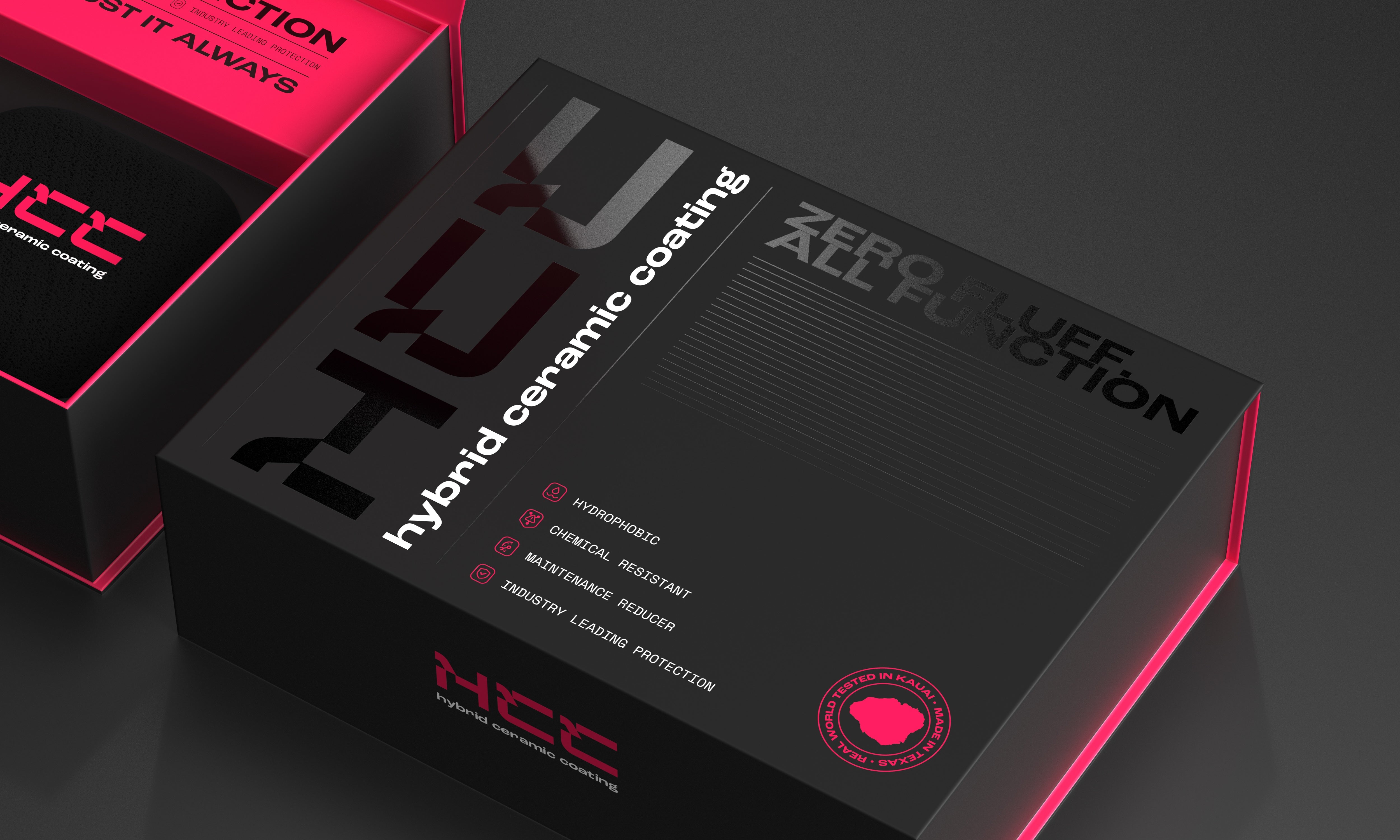
HCC is our flagship hybrid ceramic — one bottle that handles the gelcoat hull, tower, trailer, and glass on your wakeboat with a hydrophobic, easy-to-wash finish.
Shop HCC Hybrid Ceramic →Frequently Asked Questions
Can I put HCC on a brand-new wakeboat with factory gelcoat?
Yes — new gelcoat is actually the ideal case. Wash, decontaminate, IPA wipe, and coat. You skip the correction step entirely and lock in the factory gloss before UV starts working on it.
Should I use HCC or Undrdog Marine on my wakeboat hull?
HCC is the flagship multi-surface pick and is our default recommendation for a wakeboat because you likely want the same product on the hull, tower, trailer, and glass. If you want a formula built specifically for the gelcoat below the waterline and around the boot stripe, that's where Undrdog Marine (or Marine Plus for a longer-lasting layer) is the tighter fit.
Will a ceramic coating stop hard-water spots on my boat?
It reduces them significantly by making the water bead and sheet off before minerals evaporate onto the surface. It does not eliminate them if you leave the boat wet in the sun after a day of riding. That is why the rinse-and-dry routine matters. If spots do etch in, our Water Spot Remover is formulated to lift mineral deposits without cutting into the coating layer.
How often should I reapply HCC to my wakeboat?
Plan on a full reapplication once a season, typically in the spring during commissioning. Between coats, top with Quick Detail every few wash-downs to keep the hydrophobic behavior active.
Can I coat a chalky, oxidized older wakeboat and skip the correction?
You can, but you will be locking in the dull look. Ceramic coatings are optically clear — they reveal whatever finish is underneath. Correcting oxidation first and then coating gives you a boat that actually looks the way you want and protects that improved finish going forward.
What about the wakeboard tower speakers, lights, and racks?
HCC is safe on the anodized aluminum and stainless steel bracketry. Avoid the speaker grilles and light lenses themselves — for lens plastic, a plastic-specific polish is a better call. For racks and mounts, coat the same as the tower.
Is HCC safe on the swim platform teak or synthetic decking?
Do not coat real teak with HCC — teak needs to breathe and takes its own oil finish. Synthetic decking (SeaDek-style EVA foam) does not need or accept a ceramic coating. Coat the gelcoat around the decking, not the decking itself.
Does ceramic help with algae or waterline scum?
Yes on the waterline scum — the hydrophobic layer keeps organic buildup from bonding as tightly, so a rinse and light wash lifts it. It does not prevent bottom growth on a hull that stays in the water long-term; that is what antifouling paint is for, and antifouling is a different system than what we do.
Can I apply HCC in direct sunlight at the dock?
Work in shade. Direct sun causes the coating to flash off faster than you can buff it, which is the number one cause of high spots on a boat application. Early morning or late afternoon in the driveway with the boat on the trailer is the ideal setup.


Leave a comment
This site is protected by hCaptcha and the hCaptcha Privacy Policy and Terms of Service apply.