
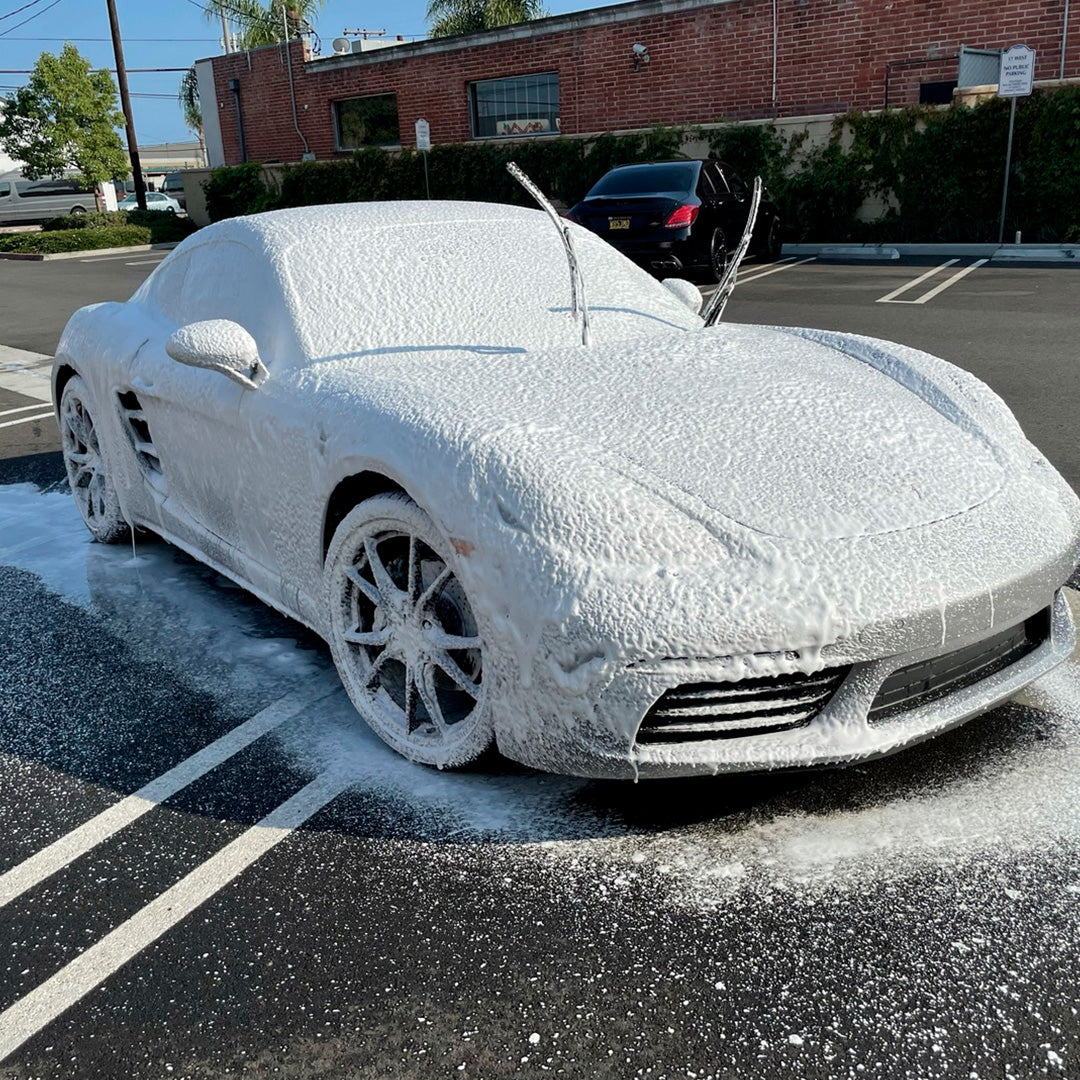
To wash a car with paint protection film, follow the instructions for the exact film, allow the specified post-installation waiting period, and use a gentle hand wash with an appropriate shampoo and soft wash media. Rinse thoroughly, keep high-pressure water away from film edges, and dry and inspect the finish afterward. These priorities are reflected in XPEL's washing guidance and 3M's film-care instructions.
The extra task is managing the film's edges and product-specific restrictions, not finding the strongest cleaner. This guide covers routine washing of automotive body-panel PPF, not installing film, cleaning windshield film, repairing lifted edges, or removing an old installation.
Check the film and first-wash date before starting
Find the brand, product line, finish, installation date, and written aftercare instructions. Ask whether there is a coating over the film and whether any panels were recently replaced. Keep those answers with the vehicle's care records so that the next person washing it has the same information.
Do not assume every installation has the same waiting period. XPEL's product-care page specifies 48 hours before washing for ULTIMATE PLUS, ULTIMATE FUSION, and STEALTH, while its COLOR PPF section specifies 72 hours. Those are instructions for the named films, not a universal PPF rule. Check the section for the exact XPEL product.
3M's September 2026 installation bulletin recommends at least 72 hours before washing for the film families covered in that document. If your supplied instructions differ, ask the installer which current document governs your product and installation rather than choosing the shortest interval online. Read 3M's maintenance section.
Before getting the car wet, walk around it in good light. Look at visible film boundaries, seams, corners, and recently repaired areas without picking at them. Photograph any lifting, peeling, or damage and contact the installer; 3M specifically directs customers to return to the installer when lifting or peeling occurs. Review the inspection guidance.
For a partial-front installation, make a simple mental map of the protected panels and their boundaries. Do not discover a hood's film edge by dragging a towel across it. If you cannot identify the product or understand the instructions, resolve that before adding unfamiliar chemicals or using a pressure washer.
Choose the shampoo and wash tools for the film
For the film families in its bulletin, 3M specifies washing in shade or a protected area with a neutral shampoo and warns against strong alkaline, acidic, or alcoholic cleaning agents. It also prohibits abrasive cleaning pads, brushes, and similar products. These restrictions matter more than a generic claim that a cleaner is strong or professional. Read the cleaning restrictions.
Our recommended setup is a permitted shampoo, clean wash and rinse buckets, a clean soft wash mitt, a controllable rinse source, and clean drying towels. Keep wheel-cleaning equipment separate from the media you intend to use on the body. Set out replacements so that a dropped or visibly dirty towel does not become the only one available.
XPEL recommends a bucket hand wash using its wash product and a soft microfiber mitt, followed by a thorough clean-water rinse and microfiber drying. That supports a gentle wash process, but it does not establish that every aftermarket shampoo is approved for every film. See XPEL's washing recommendation.
Undrdog Soap is described as a pH-neutral vehicle wash. Consider it where the film's care instructions permit the product, follow the current dilution and safety directions, and do not treat pH alone as proof of compatibility with an unidentified film or topcoat. Review the Soap instructions.
Measure rather than guessing at a stronger mixture, and do not combine cleaning products. For the broader product-choice question, our car shampoo versus dish soap guide explains why a routine vehicle wash should start with the intended use and directions, not a household substitute.

Hand-wash PPF in a controlled sequence
Prepare a cool, manageable work area
Work in shade with time to rinse and dry the vehicle. 3M recommends a shaded or protected wash area, and XPEL's COLOR PPF instructions specify a hand wash out of direct sunlight after the vehicle has cooled. See 3M's wash conditions and XPEL's COLOR care instructions.
As a practical workflow, plan smaller sections if you cannot keep the whole vehicle manageable. Have the rinse source ready before applying shampoo, and put clean drying towels within reach. Do not start with the assumption that more foam means more time is available.
Rinse, then use light contact
Begin with a controlled rinse rather than dry wiping the body. Keep the flow away from exposed film edges; XPEL warns that high-pressure water near those edges can lift or damage the film. Read the edge warning.
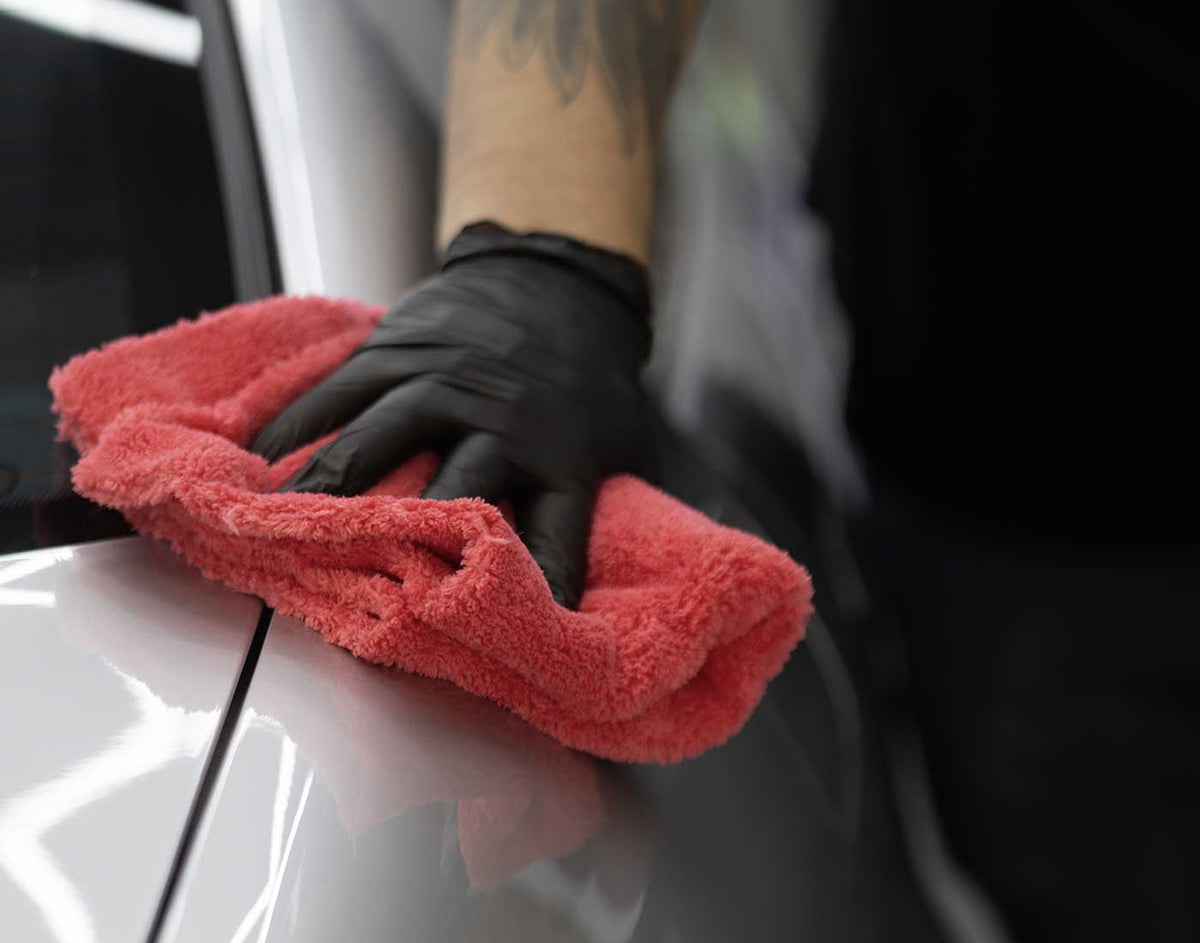
Our suggested hand-wash sequence is to work from the cleaner upper areas toward the dirtier lower areas, using the prepared shampoo and a clean soft mitt. Make light passes, rinse the mitt frequently, and replace the wash solution or media when they become dirty. Do not use extra pressure to force a stubborn mark to disappear.
Near a visible edge, use deliberate movements and avoid catching the boundary with the mitt. Do not push a fingernail, tool, or brush underneath a dirty-looking seam. Treat anything apparently trapped beneath the film as an installer question rather than something to dig out during a wash.
Rinse each section completely
Remove shampoo residue thoroughly and move on to drying rather than letting wash solution evaporate. Undrdog Soap's safety and application section specifically says to remove residue fully and not let the washed surface dry in direct sunlight. Read the product's rinsing and drying directions.
Check your work before proceeding: is the section clean, is the wash media still clean, and is an edge behaving differently from when you started? If something has changed, stop working that area. Finishing the whole car is less important than avoiding an improvised repair.
Use pressure washers only within the film's instructions
Do not borrow one online pressure or nozzle-distance number and apply it to every installation. 3M's current bulletin specifies a combination of nozzle pattern, pressure, temperature, distance, and angle; XPEL's named-film care sections give their own directions and edge warnings. The full combination matters, not just the number printed on the washer. Read the complete 3M conditions and the relevant XPEL film section.
3M explains the reason: excessive pressure can force water under the film, reduce adhesion, and cause lifting or curling. Increasing the distance does not make an already lifted edge a suitable target for a jet. See the manufacturer's pressure-washing warning.
If you cannot identify the film or control the equipment to its requirements, our recommendation is to leave the pressure washer out of this wash. Use an appropriately controlled hand-wash and rinse process instead, or have the installer demonstrate the permitted method.
| Situation | Practical next step | What not to assume |
|---|---|---|
| Film and care sheet are known; edges look intact | Follow all applicable equipment limits and avoid edge-directed spray. | One acceptable distance cancels the other restrictions. |
| Film identity or instructions are missing | Ask the installer before using powered rinsing equipment. | A setting used on another car is suitable here. |
| An edge is lifted, torn, or peeling | Stop work in that area and request installer assessment. | A gentler jet can clean beneath the film safely. |
| A mark remains after the approved routine wash | Ask for a film-specific spot-treatment procedure. | More pressure is the correct next step. |
This table is a conservative workflow, not a replacement for the film's instructions. Use it to decide when you have enough information to continue and when you do not.
Handle stains, matte finishes, and edges separately
Remove bird residue, bugs, and other contaminants promptly using the method approved for the film. Both 3M and XPEL emphasize prompt contaminant removal, but their treatment instructions are product-specific. See 3M's contaminant advice and XPEL's care sections.
Do not transfer a solvent instruction from one film to another. For example, the 3M bulletin advises against alcoholic cleaning agents, while some XPEL film sections describe alcohol for particular stubborn stains. Those are not interchangeable permissions. Ask your installer to resolve uncertainty for the exact film before spot treating it. Check 3M's restrictions against the product-specific XPEL directions.
For matte or satin film, make finish preservation an explicit part of the product check. Do not add a gloss-enhancing treatment simply because it works on the neighboring glossy paint. Request the approved cleaner and maintenance product for that finish, and keep polishing or abrasive correction outside a routine wash.
If a mark survives the approved cleaning process, photograph it and ask for guidance. Do not escalate through acid, solvent, clay, heat, and polishing as a trial-and-error sequence. The goal is a clean film with its intended finish, not a spot that looks different because it has been worked harder than the surrounding area.
Dry the film and inspect the edges again
Dry promptly after rinsing. 3M recommends quick drying to help prevent hard-water or chlorine stains, while XPEL's general PPF washing guidance calls for microfiber drying after a thorough rinse. Read 3M's drying guidance and XPEL's washing FAQ.
Use a clean towel and controlled movements without scrubbing edges. Our recommendation is to lift and reposition the towel where needed rather than dragging it blindly across an exposed boundary. Keep a second clean towel available instead of making repeated passes with one that has become wet or dirty.
XPEL's COLOR PPF section permits an electric blower or plush microfiber drying towel. Do not automatically transfer that instruction to an unidentified film; consult its own care sheet and the equipment instructions. Check the COLOR drying recommendation.
Our blower-versus-towel guide covers choosing a drying method. For a filmed car, add the film-specific edge and equipment restrictions to that decision rather than treating drying as a separate, unrestricted step.

Finish with another visual inspection. 3M recommends checking for edge lifting after washing; arrange professional assessment if you find it rather than trying to trim or reattach the film yourself. Review the post-wash inspection instructions.
Keep coating choices separate from routine PPF washing
A wash does not need to become a coating installation. Finish the approved cleaning and inspection first, then discuss any proposed treatment with the installer, including its suitability for the film's finish and any applicable care or warranty conditions.
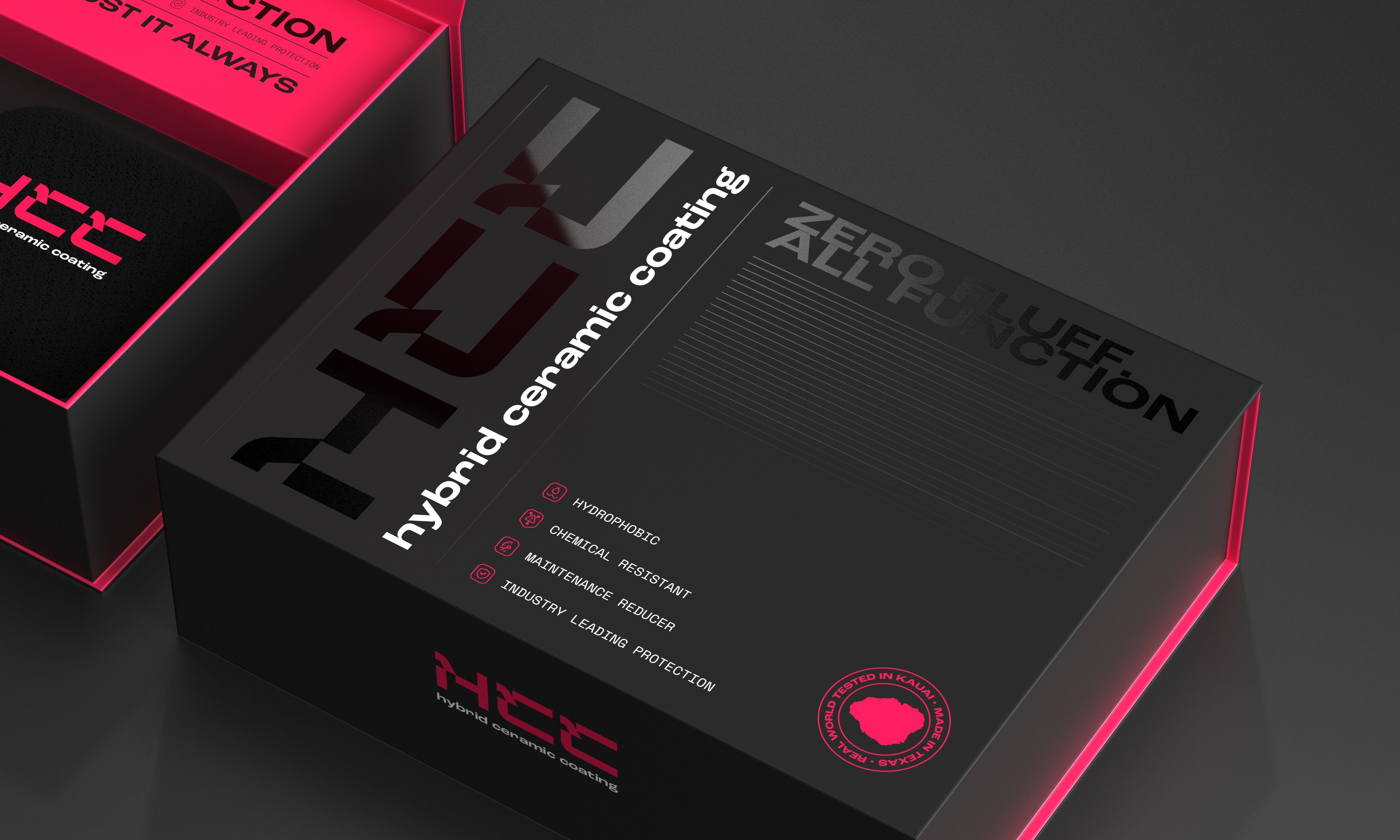
When a coating is appropriate, HCC Hybrid Ceramic Coating is Undrdog's all-surface flagship for cars, boats, planes, and bicycles. Its multi-year durability depends on preparation, exposure, use, and maintenance; it is not a substitute for washing or a fixed lifespan promise. Review HCC's current product information.
HCC's broad positioning does not establish approval for every third-party film or installer program. Confirm the exact application before purchasing or preparing the surface, and do not use a paint-correction or solvent-preparation procedure on PPF merely because it appears in a coating tutorial.
For today's wash, keep the shopping list tied to the job: an appropriate shampoo, clean wash media, and a way to rinse and dry safely. More products are not automatically a better maintenance plan.
Frequently asked questions
How long should I wait to wash a car after PPF installation?
Follow the exact film's instructions and installer handover. XPEL lists 48 hours for several named films and 72 hours for COLOR PPF; the current 3M bulletin recommends at least 72 hours for its covered families. Do not turn either interval into a rule for every installation. XPEL instructions; 3M bulletin.
Can I use a pressure washer on paint protection film?
Only within the exact film's equipment restrictions and with intact edges. Manufacturer guidance covers more than distance, and high-pressure water at an edge can cause lifting or damage. If the film or requirements are unknown, ask the installer before using the washer. Read the full pressure-washing guidance.
Is a pH-neutral shampoo automatically safe for all PPF?
No single description establishes compatibility with every film and finish. 3M recommends neutral shampoo for the products covered in its bulletin, but you should still check the exact product and film instructions. Use the permitted dilution and avoid adding other cleaners to the mixture. See the scoped shampoo guidance.
Can a car with PPF use an automatic car wash?
Follow the film's instructions rather than assuming every wash is acceptable. The 3M bulletin prefers hand washing or touchless washing, while XPEL's COLOR instructions prohibit automatic tunnel washes. A general recommendation does not override the restrictions for your product. 3M care guidance; XPEL COLOR instructions.
What should I do if dirt appears to be under a film edge?
Do not pick at the edge, insert a tool, or blast water beneath it. Photograph the area and ask the installer to assess it, especially if lifting or peeling is visible. 3M directs customers back to the installer for those conditions. Read the inspection recommendation.
Can I remove a stubborn PPF stain with alcohol?
Do not use a generic alcohol recipe across films. Some XPEL care sections permit it for specific stains, while the 3M bulletin advises against alcoholic cleaning agents. Verify the current directions for your film and surrounding surfaces before treatment. XPEL product-specific directions; 3M restrictions.
Does PPF need drying after a wash?
Yes, drying is part of the cited care routines. 3M recommends prompt drying to help prevent hard-water or chlorine stains, and XPEL recommends microfiber drying after rinsing. Use a clean towel and avoid aggressive work at the edges. 3M drying advice; XPEL washing FAQ.
Should I add a ceramic coating every time I wash PPF?
Do not turn routine washing into an automatic coating installation. Follow the film's specified maintenance plan, and verify any additional treatment with the installer. Ask what product is being applied, why it is needed, and whether it is suitable for the exact film and finish.
Build the wash around the film's care instructions
Review Undrdog Soap's directions and confirm suitability for your film before adding it to your wash routine.
Shop Undrdog Soap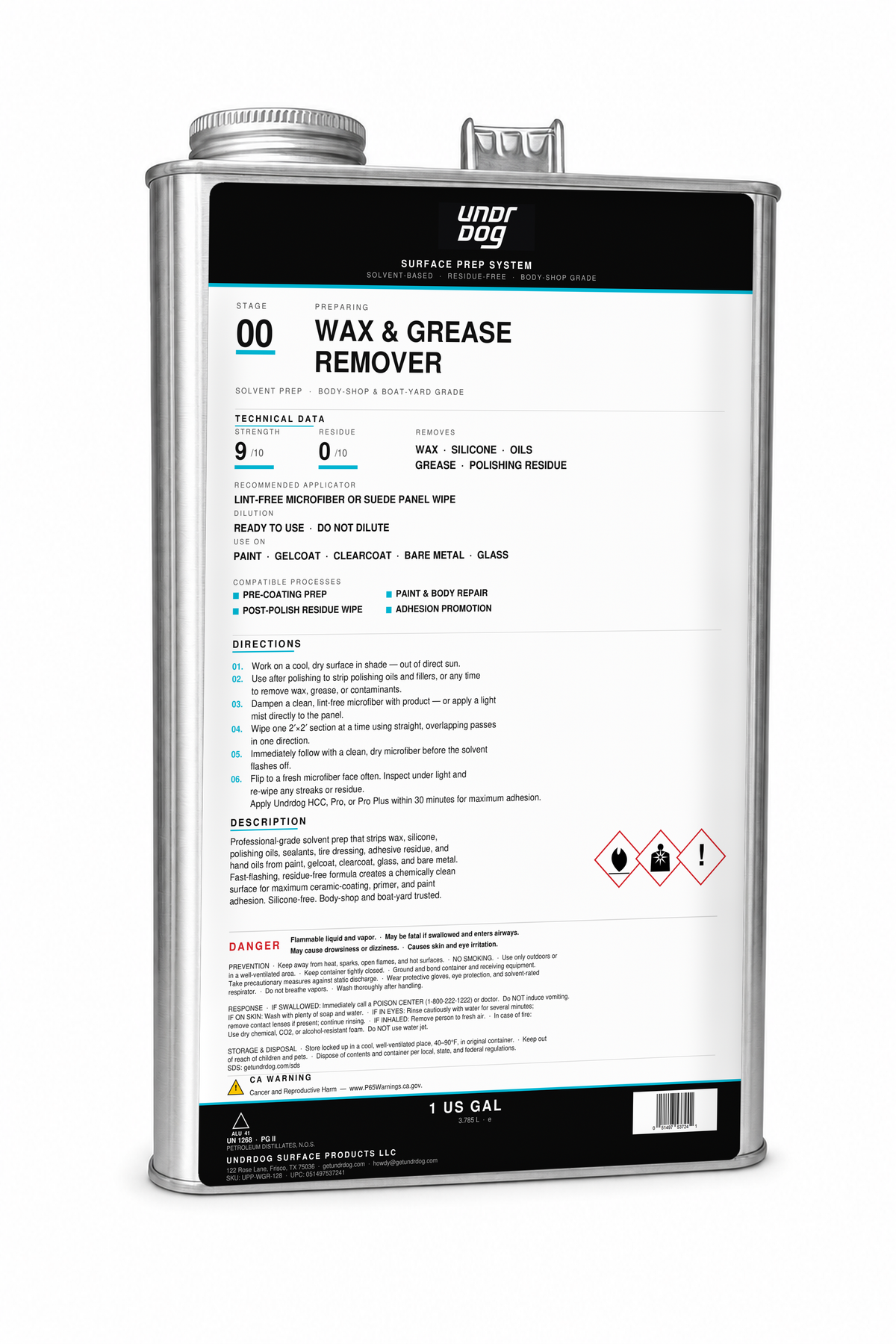

Leave a comment
This site is protected by hCaptcha and the hCaptcha Privacy Policy and Terms of Service apply.