

Ceramic coating cost per application is the product cost assigned to one defined, completed job, not automatically the bottle’s purchase price. Compare the amount you actually use, the work that amount covers, and whether the remainder will serve another real job. Then keep that material calculation separate from the price of preparation, installation, and professional judgment.
A cheaper bottle can require less cash today without delivering a lower cost for the same work. A larger bottle can have a lower price per milliliter without being the better purchase for someone coating one vehicle. The useful question is not “Which number is smallest?” It is “Which number describes the job I am actually buying?”
Separate three prices before comparing anything
Start with three entries on your worksheet: purchase outlay, consumed material cost, and total job cost. This is a practical budgeting framework, not a claim that every shop must price its work this way. Keeping those entries separate makes the assumptions visible.
- Purchase outlay: What you must pay to acquire the bottle or kit. Include the relevant shipping, discounts, and taxes consistently if you want an out-the-door comparison.
- Consumed material cost: The portion of the product purchase assigned to the quantity used for a defined job. State whether the quantity includes applicator loading and other product consumed during that job.
- Total job cost: Your chosen total for the work, including relevant consumables, preparation, equipment purchases, and paid labor. For DIY planning, track your own time separately rather than silently treating it as worthless.
The starting arithmetic is ordinary unit pricing. NIST defines unit pricing as “the cost per unit of measure of products, such as the cost per milliliter or per ounce,” and recommends consistent units for comparisons (NIST’s Unit Pricing Guide).
Our cost-per-application worksheet goes one step further by assigning purchased material to a particular job. It is not a substitute for standardized retail unit-price labeling, and it is not a performance rating. A low calculated cost does not establish that a product is suitable for your surface or that the work was completed correctly.
Define “one application” before dividing
Write down the exact vehicle, the surfaces included, and the prescribed application system. Does your quote cover painted body panels only, or are glass, wheels, and trim separate line items? Is the stated quantity intended for the complete specified process, or just one of its steps?
Those questions are more useful than assuming “one car” is a consistent measuring unit. In its current HCC instructions, Undrdog states that coverage depends on panel count and application technique; use the guidance for the exact product and job rather than a universal bottle-to-car conversion.
Our recommendation is to put the scope in a sentence before doing the math: “This estimate covers the specified exterior panels of this vehicle using the manufacturer’s prescribed process.” List excluded areas underneath. If you change the scope later, update the estimate instead of pretending the original denominator still applies.
Do not improve the spreadsheet by spreading a product farther than its instructions allow or omitting a prescribed step. The calculation should describe a correctly completed job. It should not become an incentive to use too little product or call unfinished work an application.
The calculation, with a clearly hypothetical example
Use the same quantity unit throughout. Divide the product price by the bottle’s stated volume, then multiply that result by the amount assigned to the job. NIST’s guidance on consistent measurement units supports the first comparison; the job allocation here is our own transparent planning method (NIST unit-price comparison guidance).
Product price per mL = product purchase price ÷ bottle volume in mL. Then calculate: consumed product cost = price per mL × mL used for the defined job. If a kit includes tools or other products without separate prices, label any allocation as an estimate rather than presenting the entire kit price as a verified coating-only price.
For illustration only, imagine a 50 mL bottle costing USD 90. Its price is USD 1.80 per mL. These numbers are invented to demonstrate arithmetic; they are not current Undrdog prices, coverage claims, or recommended application quantities.
| Hypothetical quantity used | Calculation | Consumed product cost |
|---|---|---|
| 20 mL | USD 1.80 × 20 | USD 36 |
| 25 mL | USD 1.80 × 25 | USD 45 |
| 30 mL | USD 1.80 × 30 | USD 54 |
Each row still requires the same USD 90 bottle purchase if that is the package you must buy. The table does not mean the seller offers a USD 36 checkout option. It shows why consumed material cost and cash needed to start the project answer different questions.
The table also shows why uncertain consumption deserves a range. If your job estimate is somewhere between the first and third rows, write USD 36–54 of product under those hypothetical assumptions, not an unjustifiably precise figure. Replace the estimate with your own reliable job record when one is available.
Leftover product is only a saving if you use it
Now extend the example: the USD 90 bottle supports two completed jobs, each using 25 mL. Product cost averages USD 45 per job. If you complete only one job and never use the remainder, the purchase has supported one completed job, so your realized purchase outlay per completed job is USD 90.
Both figures can be honest when labeled correctly. “USD 45 consumed” describes the allocation to the first job while the remainder is still available. “USD 90 purchased for one completed job” describes the cash outcome if there is no later use. Do not count hypothetical future jobs as though they have already happened.
Opened-product instructions matter to that decision. For example, Gtechniq’s Crystal Serum Light page says, “Store in a cool, dry place” and “Use within 3 months of opening” (the product’s published storage instructions).
That is a product-specific example, not an Undrdog storage instruction and not a shelf-life rule for the whole category. Before assigning value to leftovers, obtain the instructions for the exact product in your cart. Ask what applies after opening, how to store it, and what to do if its condition becomes uncertain.
A useful buying rule is to separate a booked second job from an imagined one. If you regularly coat suitable vehicles within the product’s permitted storage conditions, a larger package may fit your actual work. If this is a one-vehicle project, compare the full purchase you need now instead of buying extra solely to make the unit price look attractive.
Build a record that does not hide consumption
Use a simple job log rather than a universal “cars per bottle” guess. Record the product, package size, purchase cost, opening date, job date, vehicle, surfaces, and prescribed process. Mark each quantity as measured, estimated, or unknown so the next person reading the log knows how much confidence to place in it.
If you can record consumption using a safe, product-appropriate method, do so consistently. Do not decant coating into household measuring tools or leave containers open merely to obtain a number. If your method records mass rather than volume, keep the calculation in matching mass units unless you have a valid product-specific conversion; do not silently substitute grams for milliliters.
For a simpler record, track how many comparable, completed jobs a purchased bottle actually supported, including any unusable remainder. That produces a useful realized average without pretending you measured every drop. Keep different vehicle scopes separate so a small-panel job is not counted as equivalent to a full exterior.
Our suggested log has these fields:
- Purchase: Exact product, package size, amount paid, and what the price includes.
- Instructions: The version or date of the application and storage guidance you followed.
- Job scope: Vehicle, included surfaces, excluded surfaces, and prescribed steps.
- Consumption: Quantity and measurement method, or completed-job count if quantity is unknown.
- Remainder: Still usable under the instructions, used on another recorded job, or no longer available.
- Other inputs: Consumables and labor, recorded separately from coating consumption.
Be consistent about applicator loading and other product used during the job. If your consumption measurement already captures product taken from the bottle for those purposes, do not add an invented “waste allowance” for the same quantity again. If you cannot measure it reliably, disclose the uncertainty instead of manufacturing precision.
Keep applicators, towels, and labor in the right column
The applicator itself is a separate purchase from the liquid it carries. The Pad is Undrdog’s microfiber applicator sponge for coating, waxing, and sealing work; its product page identifies the tool’s intended role, not a guaranteed product-saving percentage (The Pad product information).

List the applicators, leveling towels, preparation products, and protective equipment your chosen process requires. Check what the kit already includes before buying duplicates. Follow the relevant instructions for tool reuse or replacement rather than assigning every towel an invented number of applications.
Our applicator versus microfiber towel guide explains the different jobs those tools perform. Use it to organize the workflow, not as a reason to treat application and leveling as the same task or to delete needed tools from a budget.
A professional quote should be evaluated as a service, not reverse-engineered into a bottle markup. Ask what preparation, correction, installation, inspection, and handover are included. Compare the written scopes and the work you expect to receive; a low estimated liquid cost alone is not evidence that the quoted labor is overpriced.
For DIY, keep two totals if that helps: cash purchases and your time commitment. For a paid installation, request a clear total and defined exclusions rather than demanding that a detailer disclose private margins. Our coating pickup checklist can help you carry that agreed scope through to handover.
Keep future washing and other ongoing care outside this single-application calculation unless you explicitly label a broader ownership budget. Our ceramic coating maintenance budget guide covers that separate exercise. Do not divide today’s purchase by an assumed number of protection years and call the result a measured lifetime cost.
Frequently asked questions
Is one bottle the same as one application?
Do not assume that it is. Define the vehicle, included surfaces, and prescribed process, then use product-specific guidance and your actual consumption or completed-job record.
What is the basic cost-per-application formula?
Divide the product purchase price by its stated volume, then multiply by the volume assigned to the defined job. Label uncertain quantities as estimates and keep consumables and labor separate.
Why track purchase outlay as well as consumed cost?
You may have to purchase a full bottle even when the job uses only part of it. Consumed cost allocates material to the job; purchase outlay tells you how much cash the project requires now.
Does a larger bottle always save money?
No. Compare both package price and unit price, then consider whether you have real work for the remainder under that product’s storage instructions. Unused leftovers do not automatically create a saving.
Can I use another coating’s opened-bottle shelf life?
Do not transfer a storage deadline between products. Get the instructions for the exact product you own before planning future jobs around its remaining contents.
Should I add a standard waste percentage?
Do not invent one. Record what your measurement includes, avoid counting the same consumption twice, and disclose uncertainty when you lack a reliable quantity.
Does lower cost per milliliter mean better protection?
No. That calculation compares quantity and price, not suitability or performance. Choose a product and process that fit the surface before deciding which purchasing option fits the job.
Can I judge a detailer’s price from the bottle cost?
Not fairly from that number alone. Compare the agreed service scope, preparation, correction, installation, inspection, and handover rather than treating the entire service price as a charge for liquid.
How Undrdog does it
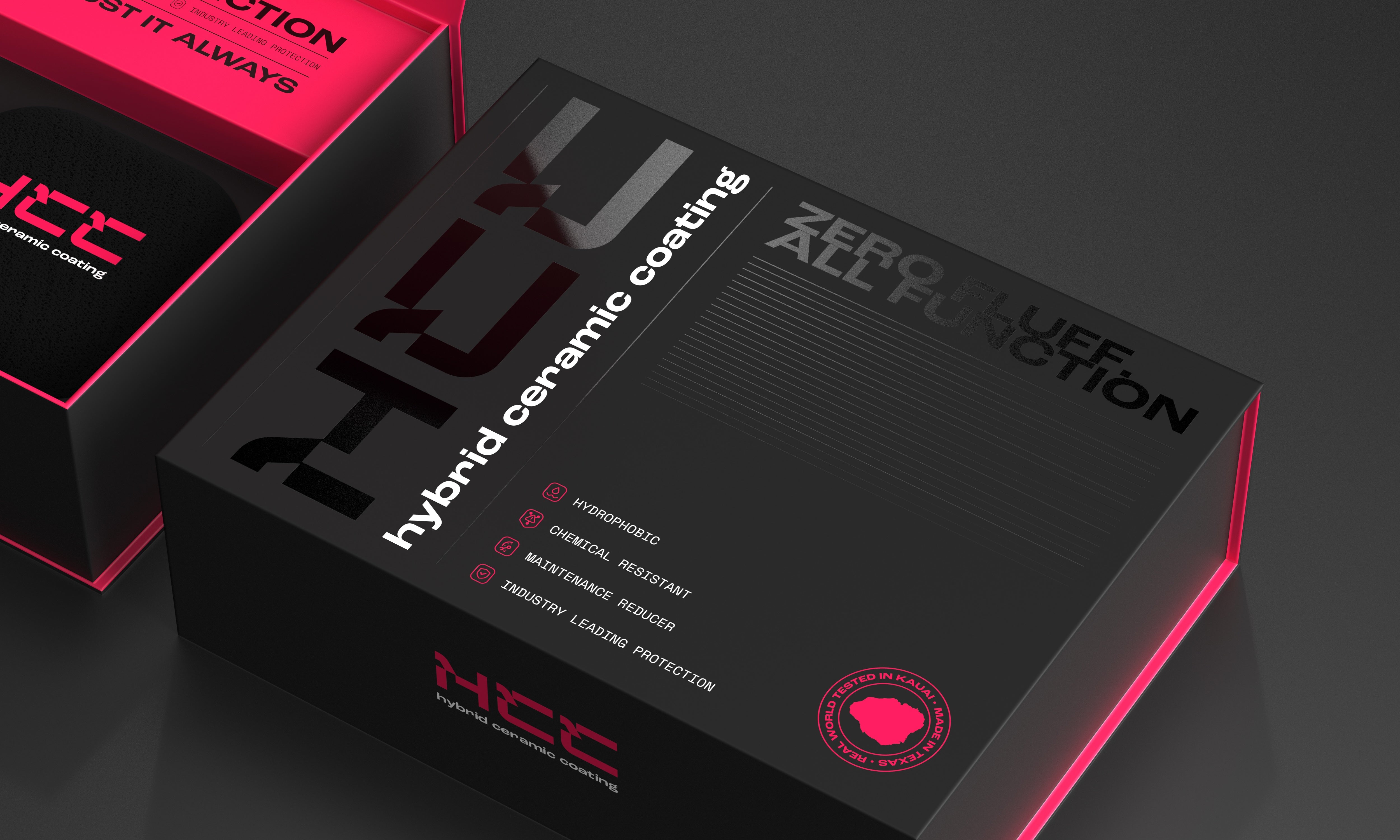
HCC Hybrid Ceramic Coating is Undrdog’s flagship all-surface coating for cars, boats, planes, and bicycles. Its current product guidance identifies multiple compatible exterior materials and notes that coverage depends on the job and technique; confirm suitability and instructions for the particular surface you intend to coat (HCC product information).
For this comparison, we do not assign HCC a made-up universal cost per car, number of cars per bottle, or fixed protection-year divisor. Start with the current package and checkout price, confirm the application scope, and record the work completed. The same discipline should apply when evaluating our products as when evaluating any other purchase.
Undrdog Pro is another automotive coating option with its own surface and application guidance. Its product information addresses both detailers and enthusiasts; choosing it should follow the intended job and instructions rather than an assumption that a different bottle automatically gives the same coverage (Undrdog Pro product information).

Our recommendation is to start with HCC when you need the all-surface flagship, then ask about the exact surface, vehicle, and planned process before buying. No hypothetical table in this article is a promise about what either product will cover. Zero fluff means showing the assumptions, including our own.
Buy for the job, not the smallest-looking number. Review HCC’s current options and instructions, confirm your surface and scope, then build the budget from what you actually need.

Leave a comment
This site is protected by hCaptcha and the hCaptcha Privacy Policy and Terms of Service apply.