


“Nano ceramic coating” is not a protection grade. The National Nanotechnology Initiative describes nanotechnology as understanding and controlling matter at dimensions of approximately 1–100 nanometers, where distinctive phenomena can enable applications. On a coating label, the useful next question is what feature is nanoscale and how that relates to the specific product's measured performance. See the NNI definition.
Do not dismiss the science, but do not let a size-related word answer questions about durability, scratching, chemical exposure, or installation. Those require their own evidence. This guide separates the meaning of the term from the conclusions you can reasonably use when buying a coating.
What does nano actually mean?
A nanometer is one-billionth of a meter. The NNI's explanation places the nanoscale at approximately 1–100 nanometers and describes how some materials can behave differently at that scale than in bulk form. It gives examples involving properties such as reactivity, light interaction, heat conduction, and strength; it does not establish a universal improvement in every property. Read About Nanotechnology.
That distinction matters. A real nanoscale feature can be technically relevant without proving the particular benefit you want from a car coating. The NNI page explains a field of science, not the measured wash durability of the bottle in your garage.
Our recommendation is to treat “nano” as the beginning of a technical explanation. Ask the supplier to finish the sentence: which material or feature, at what size, measured in what state, and connected to which result? If those details are unavailable, describe the claim as unspecified rather than inventing them.
Also avoid assuming that a product without the word on its label is technically inferior. A vocabulary comparison is not a performance comparison. Start with your surface and maintenance needs, then look for information that actually addresses them.
Ask whether nano describes a particle, a structure, or a film
Before comparing numbers, identify what is being measured. Particle size and the thickness of an installed coating are different questions. For example, NIST's transmission electron microscopy protocol measures projected images of particles deposited on a suitable substrate; it is not a measurement of the coating thickness on your vehicle. See the NIST–NCL TEM protocol.
Use this short clarification request: “When you say nano, are you describing an ingredient's particles, a feature within the cured material, or the thickness of the finished film?” This is a proposed buyer question, not a statement that every coating contains discrete nanoparticles or that every cured coating falls within the same size range.
Consider a deliberately hypothetical example. A supplier gives a particle measurement of 40 nanometers for a raw-material sample. That does not mean the coating applied to a car is 40 nanometers thick. The number identifies a particle measurement in that example; a claim about the installed film would need information about that different quantity.
Likewise, do not replace a missing measurement with a diagram. A drawing of small spheres is an illustration unless it is linked to a relevant measurement record. Ask whether it depicts an actual measured sample or simply explains a proposed concept. Both can be useful, but they are not the same evidence.

If the discussion shifts to a percentage, keep that separate too. Our coating solids-content guide explains the different questions behind weight, volume, and dry-coating yield. Do not combine an unspecified percentage and an unspecified nanoscale claim into a performance score.
Why a particle-size number needs a method
Two laboratory methods can describe particle size differently. NIST's TEM protocol explains that projected particle images can be converted into an equivalent circular diameter: the diameter of a circle with the same projected area. It discusses sample preparation, imaging conditions, and analysis limitations, so the result is not merely a number read from an attractive microscope image. See the TEM measurement protocol.
Dynamic light scattering, or DLS, addresses another quantity. A NIST-hosted interlaboratory study describes estimating the average hydrodynamic equivalent diameter and the width of the size distribution of particles suspended in liquid. That is not identical to a projected particle diameter from an electron-microscope image. See the nanoparticle size and surface-charge comparison study.
The distinction is practical when someone presents two different values as a contradiction. Before deciding that a claim is wrong, ask whether the methods, sample state, reporting basis, and preparation match. NIST's TEM guidance specifically discusses differences between TEM and DLS related to weighting and the physical property being measured. See its discussion of measurement interpretation.
The interlaboratory study also found that reproducibility depended on the sample and procedure. Hydrodynamic-diameter measurements of pre-dispersed, single-mode suspensions were reproducible when detailed protocols were followed, while the more polydisperse ceria aggregate/agglomerate suspension did not produce reproducible results between laboratories. Those are findings about the study's materials and methods, not a test of automotive coatings or a verdict on every DLS measurement. See the study's results and limitations.
You do not need to become a laboratory analyst to use that lesson. Request the method name and a plain-language explanation of what the number represents. If the only response is another unqualified size number, the missing context remains missing.
What nano does not establish about protection
The NNI definition explains a length scale and the possibility of distinctive material behavior. It does not assign years of service, scratch protection, or a chemical-resistance rating to a retail coating. Our conclusion is therefore limited: the word alone is insufficient evidence for those benefits. See the scope of the NNI explanation.
| Claim presented | What remains unresolved | Useful follow-up question |
|---|---|---|
| “Nano ceramic” | Which feature is nanoscale and what evidence identifies it. | What exactly is nano in this product? |
| A particle-size value | Sample identity, method, distribution, and reporting basis. | Was this the raw ingredient, liquid product, or another sample? |
| A microscopy image | Scale, preparation, representativeness, and connection to the sold product. | What does this image show, and where is the measurement record? |
| “Smaller means better” | Better at which outcome and compared with what. | What relevant performance comparison supports that conclusion? |
| A durability claim | Conditions, endpoint, maintenance, and product-specific evidence. | How was the claimed service result established? |
| A scratch-protection claim | The particular contact, test method, substrate, and result. | Which type of damage was actually evaluated? |
Use the final row carefully. Our separate guide to 9H and rock-chip claims addresses why a hardness statement should not be treated as universal impact protection. Adding “nano” to that statement does not supply the missing impact evidence.
Do not turn this into a demand for every shop to operate a research laboratory. Ask the detailer to explain the product information they rely on and the work they will perform. It is reasonable for a skilled installer to refer a particle-measurement question to the manufacturer. Preparation and careful application remain worth discussing on their own terms.
Trace the claim from the sample to the product you can buy
Our recommended evidence check starts with identity, not the most impressive number. Find out whether a document concerns the exact retail product, a supplied ingredient, a research material, or a differently prepared sample. A valid result for one of those is not automatically a result for all of them.
The NIST–NCL TEM protocol provides a useful example of scope. It was tailored to specified gold-nanoparticle reference materials and discusses modifications that other particles may require. Its existence is evidence of a documented measurement procedure, not proof that an unrelated coating was tested with it. See the protocol's sample and preparation scope.
- Copy the exact claim: Save the wording, product name, and version rather than paraphrasing it into a stronger promise.
- Identify the sample: Ask what material was actually measured and how it relates to the product being sold.
- Define the quantity: Distinguish particle diameter, structure size, film thickness, concentration, and performance.
- Identify the method: Ask for the method, relevant preparation, and whether the number is a measured result or a target specification.
- Check the claimed benefit: Ask for the separate evidence connecting the product to the outcome you care about.
- Keep the limitation: If only a size measurement is supported, do not repeat it as proof of durability or protection.
Keep the request proportionate. You do not need confidential formulation details to ask whether a claim refers to a raw material or the finished product. If a supplier will not disclose proprietary composition, ask what nonconfidential performance information and application guidance it can provide instead.
Unanswered questions should remain unanswered in your purchasing notes. They are not proof of poor performance, and they are not permission to assume the strongest possible result. Compare the information you can verify with your actual needs.
Use the evidence without losing sight of the job
Here is a hypothetical comparison, not a report about two brands. Product A advertises a nanoscale particle value but does not explain its relation to the retail formula or provide a relevant durability result. Product B gives clear surface, preparation, application, and maintenance instructions but no particle-size claim. You cannot rank their durability from that information alone.
You can still make progress. Ask Product A's supplier to clarify the evidence, and ask Product B's supplier about any performance requirement that matters to your project. Evaluate the installation plan and support alongside the product information. Avoid awarding a technical advantage merely because one label includes an extra scientific word.

For a daily driver, our suggested discussion includes the vehicle's condition, the intended surfaces, the preparation you are paying for, aftercare restrictions, and your maintenance routine. For a boat or another surface, adapt those questions to the actual material and use. A particle-size conversation should not crowd out the details needed to complete the job correctly.
A short message is enough to start: “What does nano refer to in this product, what measurement supports it, and which product-specific test supports the benefit you are recommending?” Accept a clear limitation when that is the honest answer. Precision is more useful than a bigger promise.
Frequently asked questions
What does nano ceramic coating mean?
The term points toward a nanoscale feature, but the label alone does not identify which feature or establish protection. Ask what is nanoscale, how it was measured, and what product-specific evidence supports the claimed benefit.
How small is a nanometer?
A nanometer is one-billionth of a meter, according to the National Nanotechnology Initiative. Its explanation describes the nanoscale as approximately 1–100 nanometers; that size range is not a durability rating for a coating.
Does nano mean a coating is better?
Not by itself. Define the outcome, such as a specific resistance or maintenance benefit, and request evidence for the actual product. A size-related description does not provide that comparison on its own.
Is nanoparticle size the same as coating thickness?
No. A particle-size measurement describes the particles and measurement method used. Film thickness is a different quantity. Do not transfer an ingredient's particle-size value to the installed coating.
Why can two particle-size measurements differ?
They may measure different quantities or use different sample preparation and reporting methods. NIST's TEM protocol discusses projected particle size versus hydrodynamic size measured by DLS in liquid. Check method and sample context before comparing the numbers.
Does a NIST document prove a coating was tested?
No. A published protocol or study establishes its own methods and scope. You need a record connecting the actual product and sample to a relevant test before claiming that the coating was evaluated.
Do I need a company's secret formula to assess its nano claim?
No. Ask for nonconfidential clarification of the measured feature, sample, method, and claimed performance. An ingredient list or proprietary recipe is not a substitute for evidence about the outcome you need.
Does this article establish HCC's nanoparticle size?
No. It reports no HCC nanoparticle-size measurement or independent nanoscale test result. Evaluate HCC using its current product information, confirmed surface suitability, application requirements, and support for your project.
How Undrdog does it
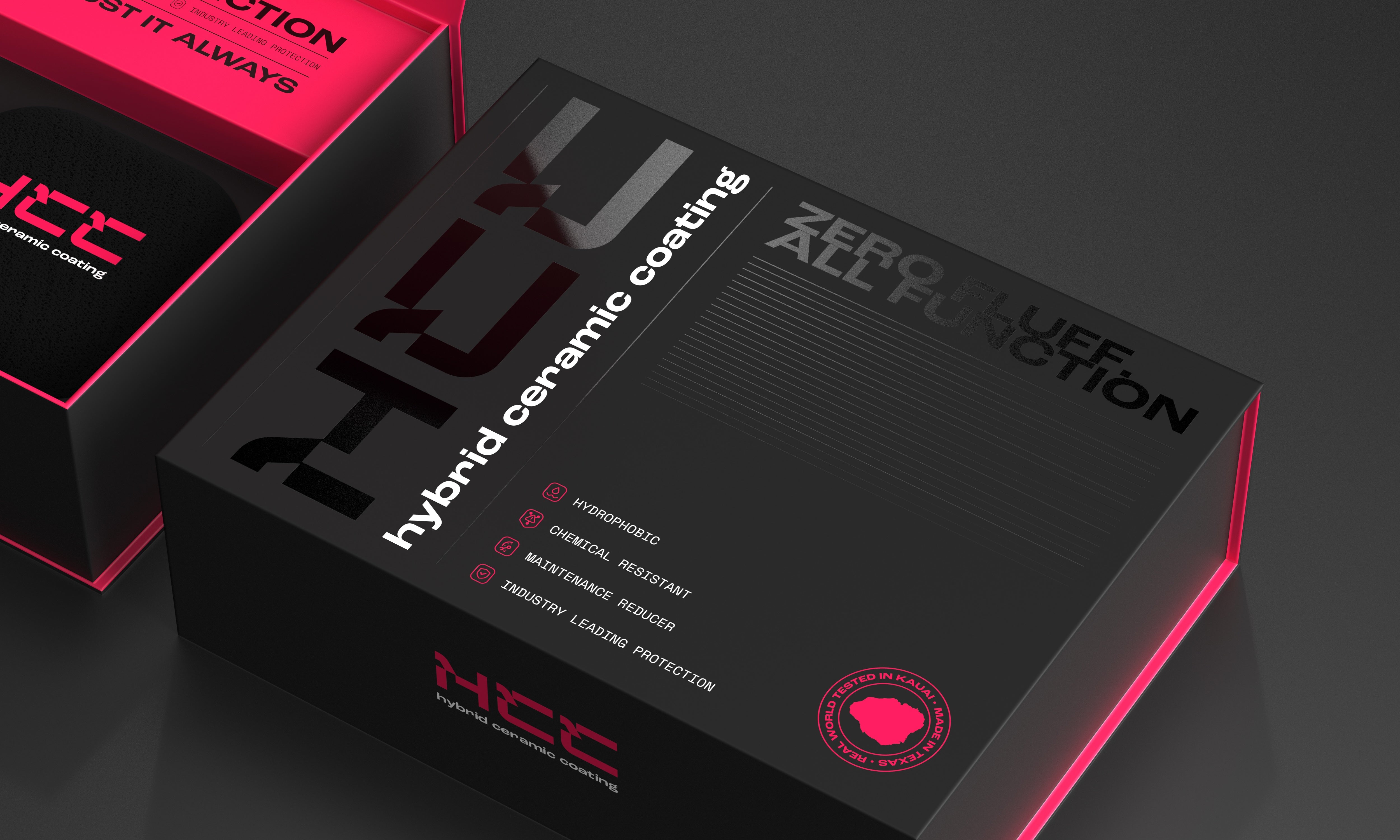
HCC Hybrid Ceramic Coating is Undrdog's all-surface flagship for cars, boats, planes, and bicycles, available to detailers and DIYers. Its product information identifies paint, gel coat, metal, glass, PPF, vinyl, and plastic trim among the intended surfaces. Confirm suitability for the exact surface and follow the current application instructions rather than extending a broad description to an unverified use.
HCC is positioned for multi-year protection, with real service life depending on preparation, exposure, use, and maintenance. That framing is not a substitute for a particular test result, and this article does not assign HCC a particle size, disclose its proprietary formula, or claim that NIST or the NNI has evaluated it. Review the current HCC product information for the actual product discussion.
Our recommendation is straightforward: ask precise questions of us, too. Choose the coating for your surface and working conditions, respect the preparation and installation work, and keep each claim within the evidence that supports it.
Choose the coating for the job, not the buzzword.
Review HCC's intended surfaces and current instructions, then match the product and installation plan to your project.
Shop HCC Hybrid Ceramic Coating

Leave a comment
This site is protected by hCaptcha and the hCaptcha Privacy Policy and Terms of Service apply.