

Choose one-step paint correction when one suitable polishing combination delivers the defect reduction and finish you want; choose two-step correction when a cutting stage needs a separate refining stage to reach that finish. A fine polish can serve either role, as RUPES explains in its MILLE FINE technical sheet. Make the decision from the actual paint and a controlled test area, not from the assumption that a bigger package is automatically better.
This guide compares the scope of the work, not competing bottles or machine brands. It is intended for gloss automotive paint that has been assessed as suitable for correction, not as a polishing recipe for matte finishes, wraps, paint protection film, or an unknown failing finish.
What one-step and two-step paint correction mean
For this comparison, “one-step” means one abrasive polishing stage chosen to improve the finish, while “two-step” means a cutting stage followed by a separate finishing stage. That distinction is consistent with RUPES describing the same fine compound as either a stand-alone treatment or a follow-up to a more aggressive compound. Washing, decontamination, inspection, preparation for protection, and coating application are separate parts of the project.
Do not read “one step” as “one quick movement across the hood.” Ask a shop to define what its package includes: the panels being treated, the intended result, and the preparation and protection that surround the polishing. For DIY work, write down the same scope before choosing products.
Likewise, do not confuse a one-stage correction process with a single-stage paint system. DeFelsko distinguishes pigmented single-stage paint from a paint system with a separate clear coat, which is a description of the finish itself rather than the number of polishing stages (paint-system explanation). If you do not know what is on the vehicle, establish that before treating a package name as permission to polish.
One-step vs two-step: compare the intended result
Use this table as a decision checklist, not a guarantee of how any particular vehicle will respond. The question is whether the tested process meets your agreed finish goal without unnecessary escalation.
| Decision | One-step approach | Two-step approach |
|---|---|---|
| Process in this guide | One selected polishing stage | Cutting followed by a separate refining stage |
| Reason to choose it | The test area reaches the desired improvement and final clarity | The tested cutting stage needs refinement to reach the desired clarity |
| What to agree on | Which defects can remain and what the finished paint should look like | What the additional stage is expected to improve |
| What not to promise | A fixed percentage of scratches removed | Complete removal of every defect |
| Protection afterward | Specify it separately; do not assume it is included | Specify it separately; a second polishing stage is not a coating |
| Stopping point | The agreed result is reached, or safe improvement cannot be established | The agreed result is reached, or further correction is not justified |
Write the result in observable language: “reduce the light wash marks and improve clarity while accepting the isolated deeper marks.” That is a more useful starting brief than “make it perfect.” It also gives a detailer something meaningful to evaluate before quoting a larger correction job.
When a one-step polish is enough
A one-step option is credible when the chosen combination corrects the target defects and leaves an acceptable finish without a separate refining stage; RUPES specifically describes one-step light-defect removal and finishing on most paints for MILLE FINE (product-specific technical guidance). That is evidence that the workflow exists, not a promise that one product will finish every car the same way.
Start by setting your priority. If you want a cleaner-looking daily driver rather than the removal of every mark visible under inspection lighting, be explicit about that. Approve the sample result before expanding the work, and decide which remaining defects you are comfortable keeping.
As a hypothetical example, imagine that a tested polishing combination reduces the wash marks that bothered you, leaves clear reflections, and reveals a few deeper isolated scratches. You may decide that the result meets your goal. Choosing to stop there is not automatically choosing poor workmanship; it is choosing the agreed endpoint instead of turning the project into a different job.
Do not select the combination from vehicle color alone. RUPES bases its guidance on paint type, defect type, and the tool being used, while acknowledging that the technician may need to adjust for the actual situation (paint-correction selection guidance). Treat an online recommendation as a starting point to evaluate, not a substitute for inspecting your own finish.
When a second polishing stage earns its place
A separate finishing stage has a defined purpose: improving clarity after more aggressive correction, rather than simply adding another product to the invoice. Meguiar’s describes its M205 finishing polish as a way to refine after compounding and eliminate holograms and buffer swirls from a more aggressive step (manufacturer description).
In a second hypothetical example, a detailer tests a cutting combination that improves the defects you wanted addressed, but the inspected finish still needs refinement. A separate finishing test demonstrates a result you prefer. That is a specific reason to authorize the additional stage: you can identify what it changes.
Do not turn that example into a rule that severe-looking damage must always receive two stages. DeFelsko cautions that deeper damage may not be adequately addressed by sanding and buffing and that limitations must be recognized before too much paint is removed (correction limitations). Some defects should remain; others call for a paint-repair assessment rather than continued polishing.
Ask to see the distinction between remaining original defects and a finish that still needs refinement. Then decide whether the extra work fits your priorities. A good explanation should connect the proposed stage to the observed condition, not merely to the name of the premium package.

Use a test area to choose the scope
Make the test area a decision point, not a photo opportunity. The following checklist is a recommended way to document the choice; use the actual tool, pad, polish, and paint-system instructions for the operating procedure.
- Identify the surface: Record known refinishing, prior correction, existing protection, and any uncertainty. Do not assume that a recently purchased vehicle has untouched paint.
- Prepare before judging: Wash and address relevant contamination before evaluating correction. RUPES specifically calls for proper decontamination before polishing (technical sheet).
- Define the target: Choose the marks and finish-quality concern that prompted the work. Separate them from unrelated damage you are not trying to repair.
- Record the combination: Note the tool, pad, product, and method used. Follow the system’s directions rather than borrowing a universal speed or pressure setting.
- Inspect consistently: Compare the original and treated area under the same lighting and viewing conditions, after residue has been removed using a suitable inspection process.
- Make a clear decision: Continue with one stage, evaluate a separate refining stage, revise the goal, or stop and seek an assessment.
If the paint still feels contaminated after washing, resolve that question before treating polishing as the next automatic step. Our iron remover versus clay bar guide helps separate chemical decontamination from physical treatment. That earlier decision is different from choosing how many correction stages to perform.
Keep the process consistent as you work. RUPES instructs users to clean pads frequently and avoid oversaturating them with polish for its MILLE FINE system (pad-care guidance). Follow the directions for your own system rather than trying to compensate for a deteriorating result by repeatedly working the same area.
Paint preservation matters more than stage count
Correction involves the paint surface, not just the dirt sitting on it; DeFelsko describes polishing the top clear-coat layer and warns about excessive topcoat removal (automotive detailing guidance). Therefore, do not use “one-step” as a safety guarantee or “two-step” as a universal quality rating.
A thickness reading also needs interpretation: magnetic and eddy-current gauges measure the total distance to the underlying metal, not each paint layer separately (DeFelsko’s explanation of gauge limitations). A single large number is not proof of an equally large amount of clear coat available to remove.
DeFelsko also states that there is no single correct paint-thickness target across all vehicles and finishes (paint-thickness discussion). This guide consequently does not assign a safe micron allowance, a fixed number of lifetime corrections, or a removal amount to either package.
Stop if the surface condition is unclear, the response is unexpected, or you cannot establish that continued correction is appropriate. Do not use more pressure, another compound, or an extra stage as a way to avoid that decision. For an uncertain finish, a qualified detailer or refinisher should assess the job before you proceed.
Compare quotes by scope, not a promised percentage
Ask for a written scope before choosing between quotes. These are useful questions whether you are hiring a professional or deciding how much of a project to take on yourself:
- Finish target: Which visible concerns are being addressed, and which are expected to remain?
- Included work: Does the quote cover washing, relevant decontamination, polishing, final preparation, and protection, or only some of those stages?
- Panel coverage: Is the same process proposed everywhere, or are specific areas treated differently?
- Inspection: Can you review a representative result before approving a larger scope?
- Change approval: What happens if the test indicates that more work, less work, or paint repair is appropriate?
- Handover: What care instructions and restrictions apply to the protection selected afterward?
There is no price estimate in this comparison because your vehicle and the proposed work have not been assessed. Ask each shop to price the same clearly defined scope rather than assuming that similarly named packages include identical labor. Respect the inspection, preparation, judgment, and finish work involved, while expecting the shop to explain why each stage is proposed.
One-step correction is not automatically coating prep
Some products marketed for a one-step process also leave protection behind: Koch-Chemie specifically states that One Cut & Finish P6.01 contains carnauba waxes that seal the surface during polishing (manufacturer’s one-step explanation). Do not generalize that formulation to every polish, but do check whether your chosen product leaves a finish intended to remain on the surface.
If a separate coating is next, plan the preparation sequence before choosing that polishing product. Do not assume a glossy finish, a quick wipe, or the word “one-step” establishes that the surface is ready. Follow the coating’s specified preparation and confirm how any existing treatment should be addressed.
For a suitable Undrdog coating project, our final-panel-preparation guide explains the role of the final wipe, its surface restrictions, and the current two-towel method. It is a separate preparation decision, not a reason to add more abrasive correction.
How Undrdog fits after the correction decision
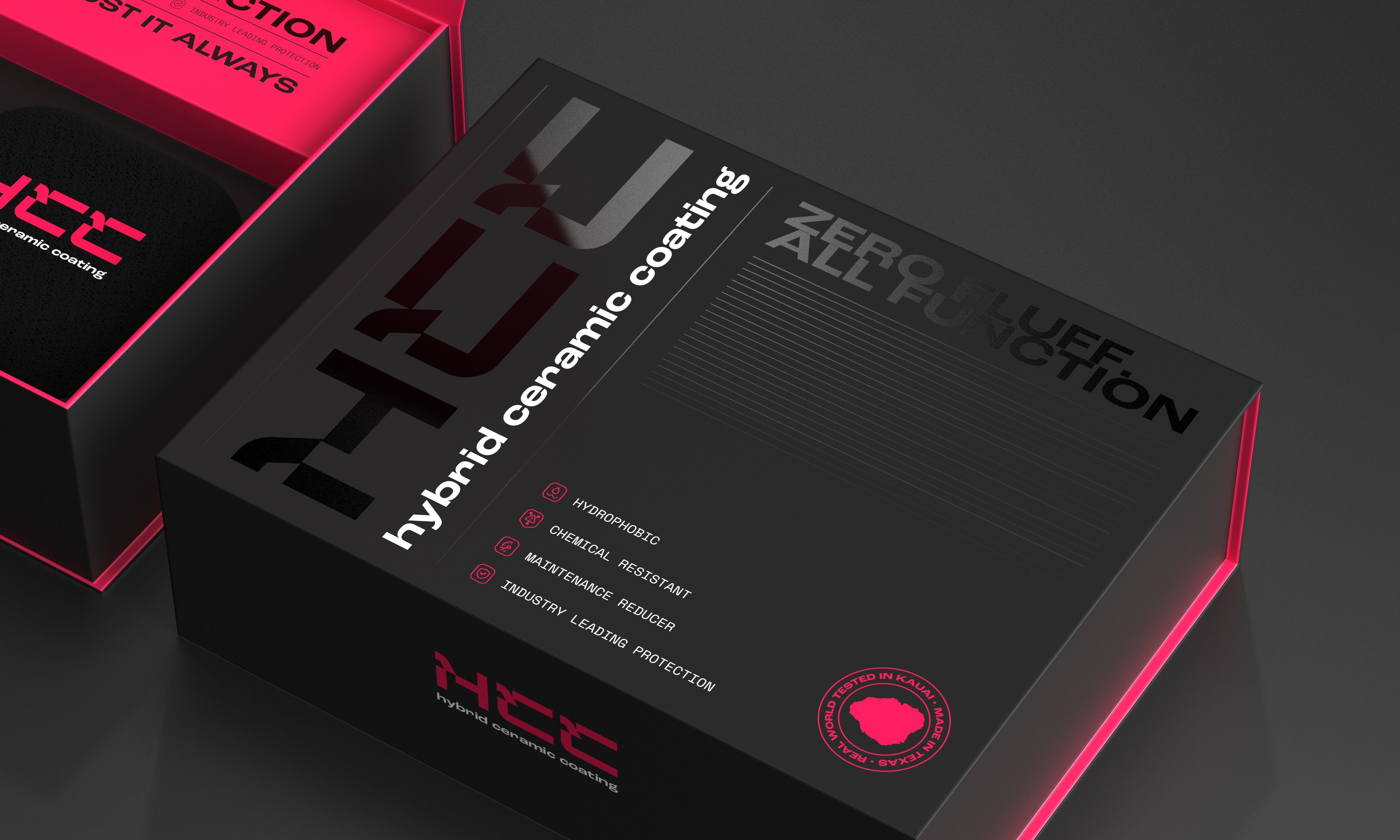
HCC Hybrid Ceramic Coating is Undrdog’s all-surface flagship for suitable projects involving cars, boats, planes, and bicycles. Its multi-year positioning depends on preparation, exposure, use, and maintenance rather than a fixed lifespan promised for every installation (current HCC product information).
Our recommendation is to settle the correction goal first, confirm surface suitability, and then follow the current HCC preparation and application instructions. Do not buy extra correction stages simply to make a coating purchase feel more complete. Equally, do not treat a coating as a substitute for resolving a finish problem you wanted corrected before protection.
Plan a safe installation environment as well: HCC’s current safety guidance calls for ventilation, protection against skin and eye exposure, and keeping the product away from ignition sources (ingredients and safety section). Read the full label and safety information rather than treating a blog as a complete application or safety procedure.

Frequently asked questions
Is two-step paint correction always better than one-step?
No. Choose the scope that reaches the agreed finish goal on paint suitable for correction. If the tested one-step result is acceptable, do not add another stage just because it sounds more complete; if refinement is needed, evaluate what that extra stage actually improves.
Does one-step correction mean one pass with the polisher?
Not in this guide. It means one selected abrasive polishing stage, not one movement across the surface or the entire wash-to-protection process. Ask your detailer to define the package and follow the chosen polishing system’s operating instructions.
Can the same fine polish be used in either process?
Yes, when its manufacturer specifies those uses: RUPES describes MILLE FINE as both a stand-alone treatment and a follow-up to a more aggressive compound (technical sheet). That does not establish identical suitability or results for every other polish.
Will two-step correction remove every scratch?
Do not expect that guarantee. DeFelsko notes that deeper paint damage may not be adequately addressed by sanding and buffing, and that recognizing the limit matters before too much paint is removed (correction limitations). Agree on what may remain or need separate repair.
Does a paint gauge tell me exactly how much clear coat is left?
Not necessarily. Magnetic and eddy-current gauges measure the combined thickness to the base metal rather than separating individual layers (gauge principles). Understand the instrument, substrate, paint history, and limitations before using a reading to justify more correction.
Is every one-step polish also a wax or sealant?
No blanket assumption is useful. Koch-Chemie’s P6.01 is a documented example that includes carnauba wax, but that is a product-specific formulation (manufacturer explanation). Check the actual product and plan any subsequent coating preparation accordingly.
Should I automatically choose two steps before ceramic coating?
No. Decide on the finish you want and whether correction is appropriate, then evaluate the tested result. Plan the coating’s required preparation separately rather than treating a particular polishing-stage count as proof that the surface is ready.
What should I ask before paying for a correction package?
Ask for the target result, included preparation, panel coverage, expected remaining defects, protection afterward, and the approval process if the scope changes. Request an explanation tied to your vehicle’s condition, not only a package name or an unsupported removal percentage.
Plan protection after the finish is ready
Review HCC’s surface suitability, preparation, and safety directions for your next coating project.
Shop HCC Hybrid Ceramic Coating

Leave a comment
This site is protected by hCaptcha and the hCaptcha Privacy Policy and Terms of Service apply.