

Short answer: a rinseless wash uses high-lubricity polymers to encapsulate dirt so a microfiber towel can lift and trap it without dragging across the paint. You use about one gallon of water instead of 40–50, no hose, no rinse step — and when it's done correctly with the right technique, it's just as safe as a traditional two-bucket wash. This guide covers the chemistry, when to use it (and when not to), the correct technique, and how Undrdog Rinseless Wash Concentrate and Undrdog Rinseless Wash Spray fit into a modern wash routine.

What Is a Rinseless Wash, Really?
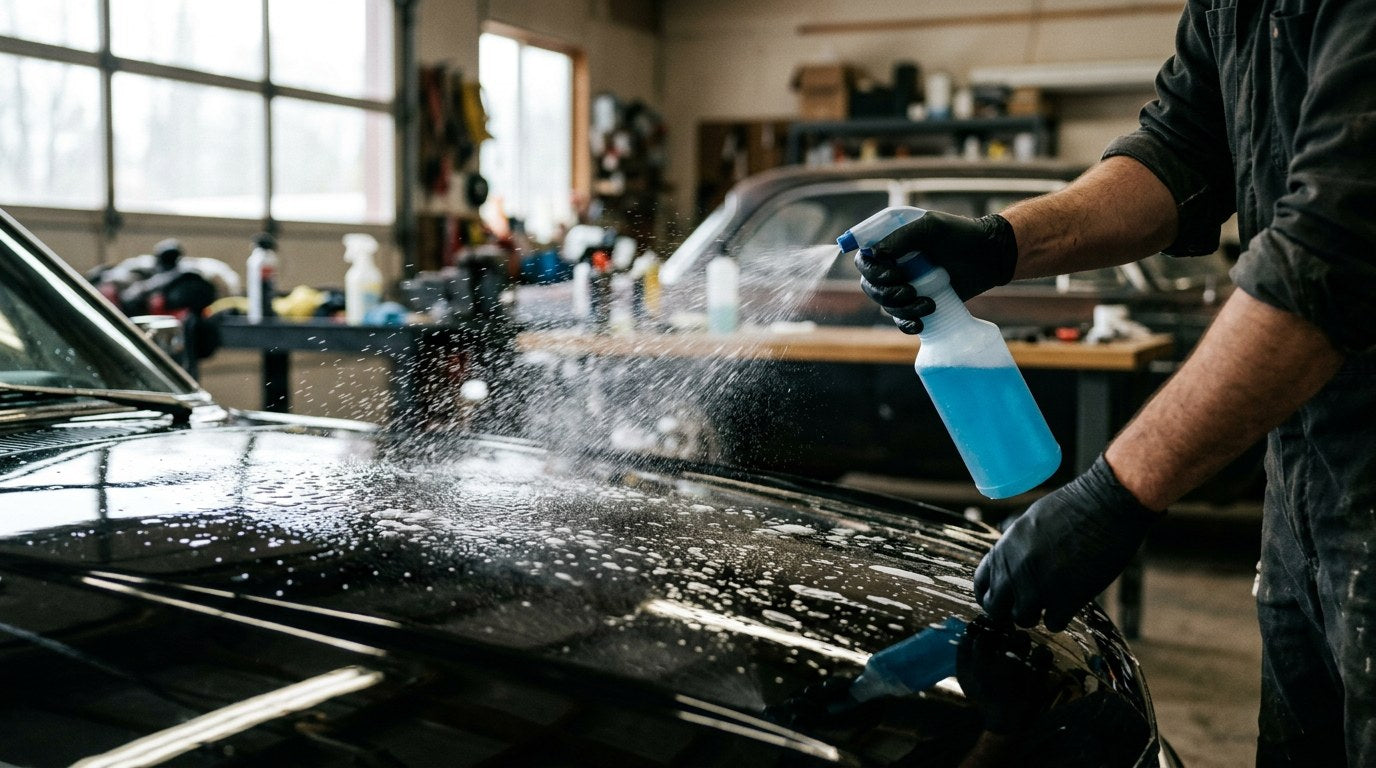
A rinseless wash is a wash method where you clean the vehicle using a small amount of specially formulated solution and a plush microfiber towel — no hose, no pressure washer, no rinse afterward. The name tells you what's different: you skip the rinse step entirely because the solution and towel do all the work.
The three big claims of rinseless washes are: less water (one gallon vs 40–50 for a traditional two-bucket wash), less time, and just as safe on the paint. The first two are objectively true. The third depends entirely on your technique — and this post is going to spend a lot of time on that.
The Chemistry: How Rinseless Wash Actually Works Without a Rinse
A rinseless wash contains three key ingredient categories:
- Surfactants (soap) — lift dirt off the surface, same as any wash.
- Polymers and lubricants — this is what makes rinseless different. Long-chain polymers coat both the paint and the dirt particles, so the particles glide off the surface rather than dragging across it. The higher the concentration, the slicker the solution.
- Sequestering / chelating agents — bind up minerals in the water so you don't leave water spots on drying panels.
When you spray or apply a rinseless solution to paint, the polymers immediately start encapsulating both the paint surface (creating a slick film) and the loose contaminants sitting on top. When you then wipe with a clean, saturated microfiber towel, the towel picks up the encapsulated dirt and traps it in its long fibers. Because the surface stays lubricated the entire time, there's no dry drag — which is what causes swirl marks in a poorly-executed wash.
The reason there's no rinse step: the polymer film left behind evaporates or gets wiped away as you buff off, leaving a clean surface behind. Well-formulated rinseless solutions dry streak-free at their recommended dilution.
When Rinseless Wash Is the Right Choice
Rinseless shines in specific situations:
- Cars that were washed within the past 1–2 weeks. Light dust, road film, pollen, light rain spotting — rinseless handles all of it easily.
- Water-restricted areas. Drought states, HOA-restricted communities, apartments and condos without hose access.
- Cold weather. When it's 30°F outside and hosing water everywhere means ice on the driveway, rinseless is the safer method.
- Ceramic-coated vehicles between full washes. A ceramic coating's hydrophobic surface makes rinseless washing even easier because dirt sits on top of the coating rather than bonding into the paint.
- Detail-shop garage floors. Pros use rinseless for interim washes to avoid flooding the shop.
- Show prep. Final wipe-down at a car show, on a boat lift, or before a photo shoot.
When Rinseless Wash Is NOT the Right Choice
Rinseless has real limits. You should switch to a traditional wash (or pre-rinse first) when:
- The car is genuinely dirty. Mud, thick road grime, months of buildup, off-road runs — rinseless is not the tool. You'll load up the towel too fast and start dragging grit.
- You have sand, salt, or heavy grit. Beach cars, winter road-salted cars, gravel driveway cars. Pre-rinse or pre-soak first.
- Bug carcasses are baked on. These need dwell time from a dedicated bug remover. Our bug splatter removal guide covers the correct sequence.
- Iron and fallout are visible. Rinseless doesn't decontaminate. Use The Purps for that.
- You're about to ceramic-coat. Pre-coating prep needs a full two-bucket wash and IPA wipe, not a rinseless.

Rinseless Wash vs Traditional Two-Bucket Wash
| Factor | Rinseless | Traditional Two-Bucket |
|---|---|---|
| Water use | ~1–2 gallons | ~40–60 gallons |
| Time (avg sedan) | 20–35 minutes | 45–75 minutes |
| Cleaning power on heavy dirt | Limited | Excellent |
| Grit encapsulation | High (polymers) | Moderate (foam only) |
| Risk of swirl marks | Low with correct technique | Low with correct technique |
| Cold-weather friendly | Yes | No |
| Works on apartments/HOAs | Yes | Depends on hose access |
| Skill required | Medium (technique-dependent) | Low to medium |
| Cost per wash | Low (concentrated dilution) | Low to medium |
Concentrate vs Spray: Which Undrdog Rinseless Do You Actually Need?
Undrdog Rinseless Wash Concentrate
Rinseless Wash Concentrate is the multi-purpose bottle. You dilute it based on the job: 256:1 for light interim washes, closer to 10:1 for tough grime or as a slick clay lubricant. That flexibility means one bottle covers bucket washes, pump sprayers, and detail sprays. It stretches far — a 32oz bottle at 256:1 dilution is roughly 64 gallons of wash solution — and it's the right pick if you wash multiple vehicles or want a single bottle that adapts to the job.
Undrdog Rinseless Wash Spray
Rinseless Wash Spray is the pre-mixed, ready-to-use version. Spray onto the surface, wipe, done. No mixing, no measuring, no bucket needed for spot cleaning. It's the right pick if you want a quick maintenance wash for a coated car between full washes, a way to knock down dust in a garaged vehicle, or a portable option to keep in the car for car shows or road trips.
Most owners end up with both — concentrate for the actual wash routine, spray for touch-ups.
Step-by-Step: The Correct Rinseless Wash Technique
Step 1 — Assess the Vehicle
Walk around it. If you see caked mud, sand, road grime, salt spray, or heavy bird droppings, rinseless is not the right method today — go traditional wash. If you see light dust, road film, pollen, or fingerprints, rinseless is a great fit.
Step 2 — Mix Your Solution
For Rinseless Concentrate in a two-gallon bucket, use the label's recommended dilution. Warm water helps polymers dissolve and lift dirt slightly faster. For the Spray, just shake and go.
Step 3 — Gather Your Towels
You need at least four to eight plush 500–600 GSM microfiber towels. This is not the place to skimp — a rinseless wash lives and dies by how much dirt each towel can trap before you switch to a clean one.
Step 4 — Two-Bucket Rinseless (Recommended for Anything Beyond a Duster)
One bucket has your wash solution. A second bucket has clean water only. Both have grit guards. Every time you finish a panel, dunk the towel in the plain water bucket first (to release trapped dirt), then dunk in the solution bucket to reload. This keeps the solution bucket clean and dramatically reduces the odds of pulling grit back onto the paint. Independent detailer tests using clear-coat panels have shown two-bucket rinseless practices deposit significantly less contamination back onto the paint than single-bucket rinseless, per this side-by-side test.
Step 5 — Work Top-Down, Panel by Panel
Start at the roof and work down. Dirtier panels (rockers, lower doors, bumpers) always go last so you're not lifting their grit up onto cleaner surfaces. Fold your towel into quarters — that gives you eight clean faces per towel before it needs a swap.
Step 6 — The Wipe-and-Flip Motion
Lay the saturated towel flat on the panel. Wipe in one direction with the weight of the towel doing the work — no downward pressure. When you reach the edge of the panel, flip to a clean face. When both faces on that quarter are used, fold to the next quarter. When all four quarters are used, that towel goes in a laundry bag and you pick up a fresh one.
Step 7 — Follow With a Drying Towel
A dedicated drying towel (larger, higher GSM) buffs off any streaks and lifts residual moisture. Our drying towel guide covers what to look for.
Step 8 — Boost the Coating
If the vehicle is ceramic-coated, a quick pass of Undrdog Quick Detail after the rinseless wash refreshes hydrophobic behavior and adds gloss.

Mistakes That Turn Rinseless Wash Into a Swirl Machine
- Using a dirty car and calling it "light dust." If the towel comes off the first panel visibly brown, this was not a rinseless-appropriate car.
- Single bucket, no grit guard. You'll drag grit back onto the paint. Two-bucket + grit guard is the safe baseline.
- Cheap, low-GSM microfiber. Short-nap towels don't trap enough dirt between flips. Use plush 500–600 GSM.
- Reusing the same towel face after seeing dirt on it. Fold to a clean face every pass.
- Pressing down on the towel. Let the towel weight do the work. Pressure is what grinds trapped grit into the clear coat.
- Skipping the boost step on coated cars. Rinseless leaves paint clean but a quick hydrophobic booster keeps beading tight.
Why Rinseless Wash and Ceramic Coating Are Made For Each Other
A ceramic-coated car has a slick, hydrophobic surface that dirt struggles to bond to. That's the same behavior a rinseless wash relies on — a slick, encapsulating film that lifts dirt off the paint without dragging. When you combine the two, the wash is dramatically easier, the towels stay cleaner longer, and the ceramic coating lasts longer because you're not scrubbing it every wash.
HCC Hybrid Ceramic Coating is our flagship all-surface ceramic. Coat once, then use rinseless for interim maintenance and full two-bucket washes only when the vehicle needs deeper cleaning. That's the maintenance cadence that keeps coated cars looking freshly-detailed for years without a huge labor investment.
Wash smarter, use less water.
Undrdog Rinseless Wash Concentrate stretches up to 256:1, saves 40+ gallons per wash, and works in bucket, sprayer, or detail-spray applications.
Shop Rinseless Wash →Frequently Asked Questions
Is rinseless wash safe on ceramic coating?
Yes — rinseless wash is one of the best maintenance methods for ceramic-coated cars. The polymers are non-abrasive and don't strip coating. Just avoid harsh degreasers or high-pH cleaners between coating applications.
Can I use rinseless wash without a bucket?
Yes. The pre-mixed Rinseless Wash Spray version is designed for direct spray application — spray, wipe with a clean plush microfiber, flip to a clean face. This is the fastest interim maintenance option for coated cars.
What's the difference between a rinseless wash and a waterless wash?
Both skip the rinse step. Waterless washes use even less water (typically pre-diluted, sprayed directly) and rely more heavily on lubricants. Rinseless typically uses a small bucket of solution and is better suited for the whole vehicle rather than spot cleaning. The technique is very similar.
How dirty can a car be before rinseless is no longer safe?
If you can see visible mud, sand, road salt, or heavy grit — that's too dirty. Rinseless is best on a car that's been washed recently and has accumulated light dust, road film, or fingerprints since. Anything beyond that should be pre-rinsed first, or washed traditionally.
Can I use Undrdog Rinseless Wash as a clay bar lubricant?
Yes. At a stronger dilution (roughly 10:1 to 32:1) the Rinseless Concentrate makes an excellent clay lubricant. The polymers protect the paint while the clay shears embedded contaminants.
Do I still need to two-bucket wash with a rinseless product?
Two-bucket rinseless is meaningfully safer than single-bucket rinseless. The extra bucket of clean water is where you release trapped dirt from your towel before reloading solution — keeping your solution bucket clean and your paint safer. For anything beyond a quick dust-off, use the two-bucket method.
How many gallons of water does a rinseless wash actually save?
A typical two-bucket rinseless wash uses 1–2 gallons total. A traditional hose wash uses 40–60 gallons on average. That's roughly 40–50 gallons saved per wash — more if you factor in typical hose runoff.
Will a rinseless wash strip an existing wax or sealant?
Undrdog Rinseless Wash is pH-neutral in dilution and does not aggressively strip wax, sealant, or ceramic coating. That's a key difference from some alkaline degreasers.
Can I use rinseless wash on boats and RVs?
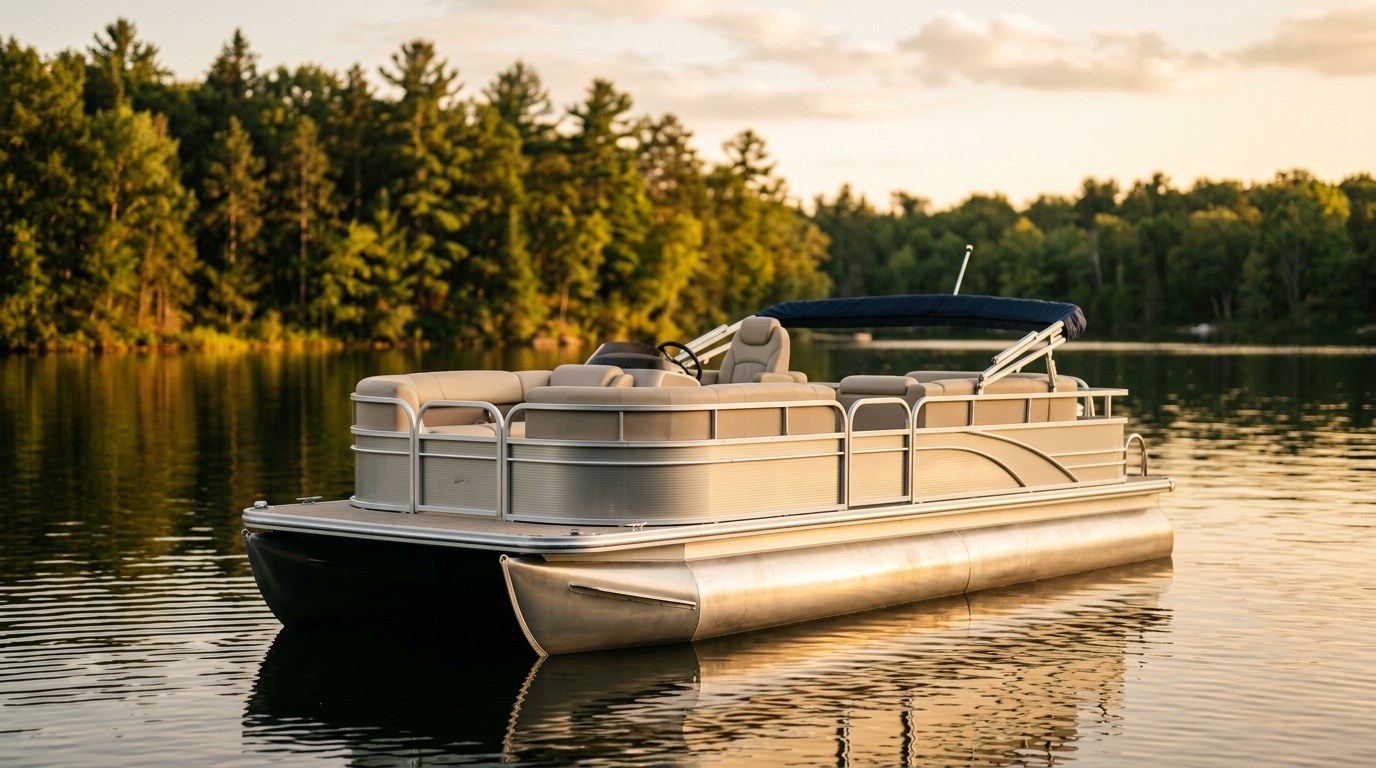
Yes for maintenance washes on coated boats and RVs. For heavy oxidation, algae, or waterline stains, use a dedicated marine wash instead. For coated boats, rinseless with the two-bucket method is a clean, water-efficient maintenance option between full washes.
How long does a bottle of Rinseless Wash Concentrate last?
At the 256:1 dilution, a 32oz bottle makes approximately 64 gallons of ready-to-use wash solution — enough for a couple dozen sedan washes depending on how much solution you use per bucket. The higher the concentration (for tougher jobs), the fewer washes per bottle.

Leave a comment
This site is protected by hCaptcha and the hCaptcha Privacy Policy and Terms of Service apply.