

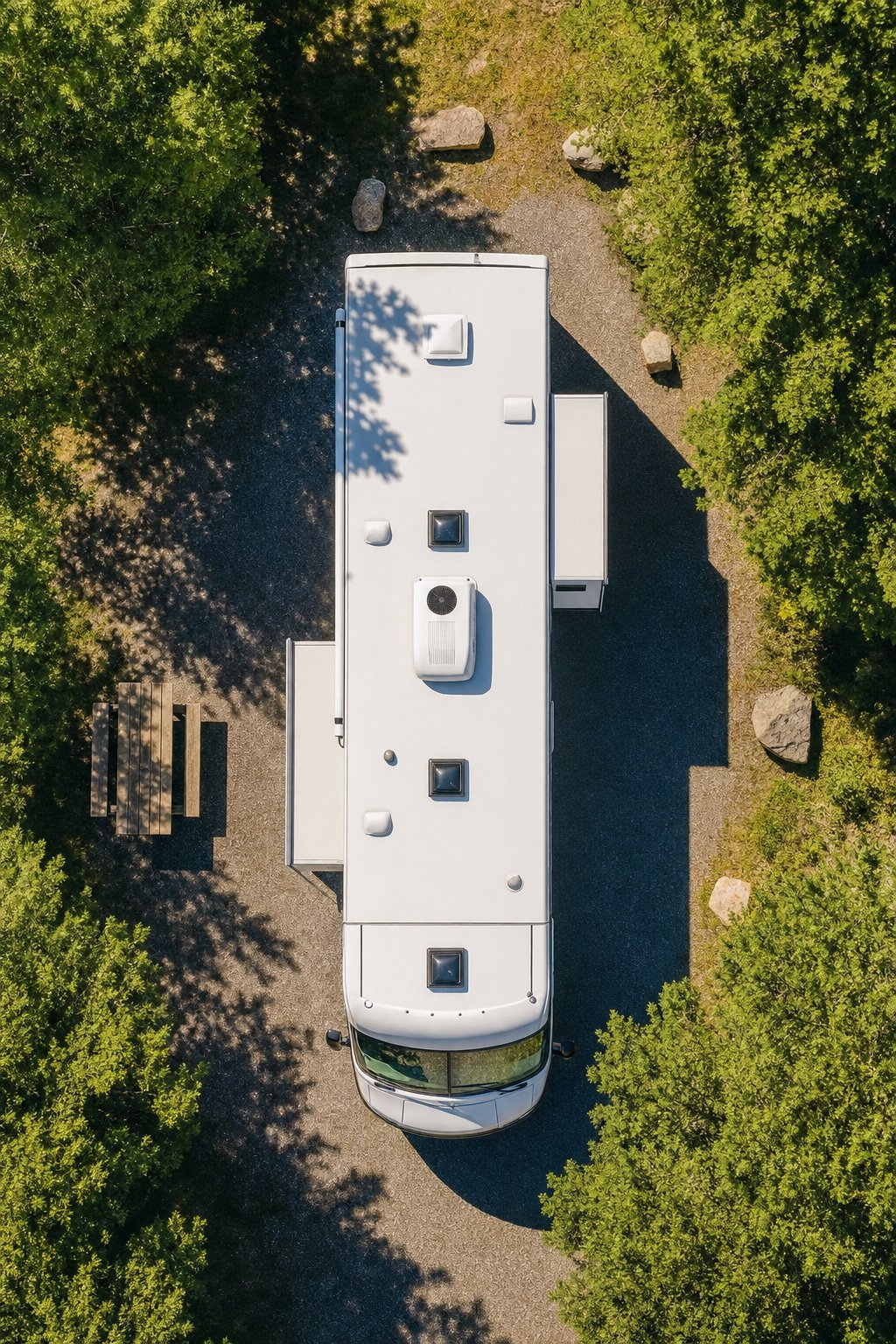
Your RV's roof is the single most expensive surface on the rig and the one owners neglect the most — a full roof replacement runs $6,000–$15,000, but a proper wash-and-protect routine costs a few afternoons per year and a couple of bottles of the right products. The three RV roof types (EPDM rubber, TPO rubber, and fiberglass) each fail in different ways, and using the wrong cleaner on any of them can void warranties, dissolve seams, and turn a good roof into a leaky roof in a single wash. Below is what actually works, what to avoid, and how to keep an RV roof — and the sidewalls attached to it — looking and sealing correctly for the full life of the coach.

Identifying Your RV Roof: EPDM, TPO, or Fiberglass
Before you buy any product or start scrubbing anything, know what you're standing on. RV roofs come in three dominant materials, and the care regime is not interchangeable.
EPDM (Ethylene Propylene Diene Monomer)
The classic "rubber roof." EPDM has been the industry standard for decades — soft, black underneath with a white top coating that oxidizes over time, leaving that chalky white residue that streaks down your sidewalls every time it rains. Feels a bit like a bicycle inner tube. If your rig is from a mainstream manufacturer built between 1990 and roughly 2015, there's a strong chance you have EPDM. The RVgeeks maintain a solid plain-language guide to identifying and caring for each material, and it's worth a read if you're not sure what you own.
TPO (Thermoplastic Polyolefin)
The newer standard, especially on 2015+ builds and premium coaches. TPO looks similar to EPDM at first glance — white, flexible membrane — but has a slightly textured "orange peel" surface, doesn't oxidize the same way EPDM does, and is generally more resistant to punctures and mold. TPO is stiffer under your feet than EPDM. If you never see chalky white streaks running down your sidewalls, you probably have TPO, not EPDM.
Fiberglass
Rigid, gelcoat-finished, one-piece or paneled fiberglass roof. Found on higher-end coaches, some fifth wheels, and many toy haulers. Fiberglass is dramatically more durable than either rubber option and behaves like a boat hull or a car exterior — it can be waxed, polished, and ceramic-coated with the same techniques you'd use on any gelcoat surface. If your roof is hard, glossy (when new), and doesn't dent under your weight, you have fiberglass.
Why Each RV Roof Type Fails
The failure modes are completely different by material, and understanding them shapes your maintenance plan.
EPDM fails through UV oxidation. The white top layer breaks down under sun exposure, releases as fine chalky powder, and washes down the sides of the coach with every rain. Left long enough, that top layer erodes completely, exposing the black rubber underneath and setting up the roof to crack and split. UV is the primary killer — heat, ozone, and airborne pollutants are secondary. Family Handyman and most RV service manuals point to the same root cause: unprotected EPDM in constant sun lasts maybe 10–15 years; well-protected EPDM can hit 20+.
TPO fails through seam and edge failure. The membrane itself is much more UV-resistant than EPDM, but the seams around vents, skylights, air conditioners, refrigerator vents, and roof-to-sidewall transitions are where TPO roofs leak. Every one of those penetrations is sealed with a product called Dicor self-leveling lap sealant (or similar), and that sealant cracks, shrinks, and pulls away from edges over 3–5 years. TPO roofs almost never fail across the middle of a panel; they leak at the sealant.
Fiberglass fails through oxidation, delamination, and gelcoat crazing. The gelcoat surface chalks and dulls under UV the same way a neglected boat hull does. In severe cases the fiberglass laminate can delaminate from the underlying substrate — visible as bubbles or soft spots. And micro-cracking (crazing) can appear in the gelcoat at flex points. All three failures are UV-driven and progress faster on rigs stored outdoors without shade or coating.

The Right Way to Wash an RV Roof
The single most damaging mistake RV owners make is using the wrong cleaner. Every EPDM manufacturer's warranty specifically excludes damage from citrus-based cleaners, petroleum distillates, harsh degreasers, and abrasive scrubbing. Get this part right and you protect a $10,000 surface for the cost of a jug of the correct soap.
Wash frequency: A minimum of once per year for stored coaches, every 3–6 months for full-timers or heavy travelers, and after any long trip through construction dust, industrial areas, or under lots of tree cover.
What to use:
- A gentle, pH-neutral, rubber-safe soap. On EPDM and TPO, that means no citrus, no petroleum distillates, no oven cleaner (yes, some people try this — don't). A quality car wash soap like Undrdog Soap is safe on both rubber and fiberglass roofs.
- A soft-bristled RV brush on an extension pole. Never use a stiff brush, a scouring pad, or anything abrasive on rubber roofs. Soft brush only.
- Plenty of fresh water. Rinse continuously so soap doesn't dry on the surface.
- Non-slip footwear if you have to walk on it. EPDM is famously slippery when wet.
The wash sequence:
- Sweep or blow off loose debris — leaves, pine needles, twigs — before wetting anything.
- Wet the roof thoroughly to cool the membrane and prevent flash-drying.
- Work in small sections, front-to-back. Never try to soap the entire roof at once.
- Rinse each section immediately after brushing — do not let soap dry.
- Rinse down the sidewalls when finished. Chalky EPDM oxidation runs down the coach during roof washing; leaving it to dry on sidewalls stains them.
Sealant Inspection and Reseal: The Single Most Important Roof Task
Even a spotless roof will leak if the sealant around penetrations has failed. This is the #1 cause of catastrophic RV water damage — not membrane failure, but sealant failure at vents, seams, and edges. Every wash is an inspection opportunity.
Walk (or crawl) the roof and look at:
- The perimeter roof-to-sidewall seam on all four sides.
- The base of every vent, skylight, and antenna.
- The perimeter of the air conditioner shroud.
- The refrigerator roof vent.
- Any factory-cut opening (satellite mount holes, solar mount points, etc.).
You're looking for: cracks in the sealant, sealant that has pulled away from an edge, missing sealant, or "alligatoring" (fine cross-cracking that looks like alligator skin). Small cracks — under a hairline width — can typically be resealed by cleaning the area and applying a small bead of the same sealant on top. Larger failures require removing the old sealant and reapplying fresh. For EPDM and TPO roofs, that sealant is almost always Dicor Self-Leveling Lap Sealant (or equivalent). For fiberglass roofs, non-sag sealant designed for gelcoat is the correct product. Match the sealant to the roof — don't cross-mix.
UV Protection: The Move That Doubles Roof Life
After washing, the second-most important task on any roof is protection. The mechanism matters here — a rubber roof needs a protectant that penetrates and preserves flexibility; a fiberglass roof needs a coating that seals the gelcoat surface and blocks UV. Different tools for different materials.
Protecting an EPDM Roof
EPDM benefits from a dedicated rubber-safe UV protectant — products like 303 Aerospace Protectant, Dicor Rubber Roof Protectant, or B.E.S.T. RV Rubber Roof Treatment. Apply after washing, per label directions, typically every 3–6 months. This slows the chalking process significantly and keeps the membrane pliable.
Protecting a TPO Roof
TPO is inherently more UV-resistant and does not require the same aggressive protectant schedule as EPDM. A gentle rubber-safe protectant used annually is plenty. Focus your effort on inspecting and refreshing sealants at penetrations; the membrane itself needs less babying.
Protecting a Fiberglass Roof
Fiberglass is where a serious ceramic coating pays off. Because fiberglass gelcoat behaves like painted or gelcoat automotive/marine surface, it responds to the same treatment: proper decontamination, light polish if oxidation is present, then a ceramic coating for multi-year UV protection.
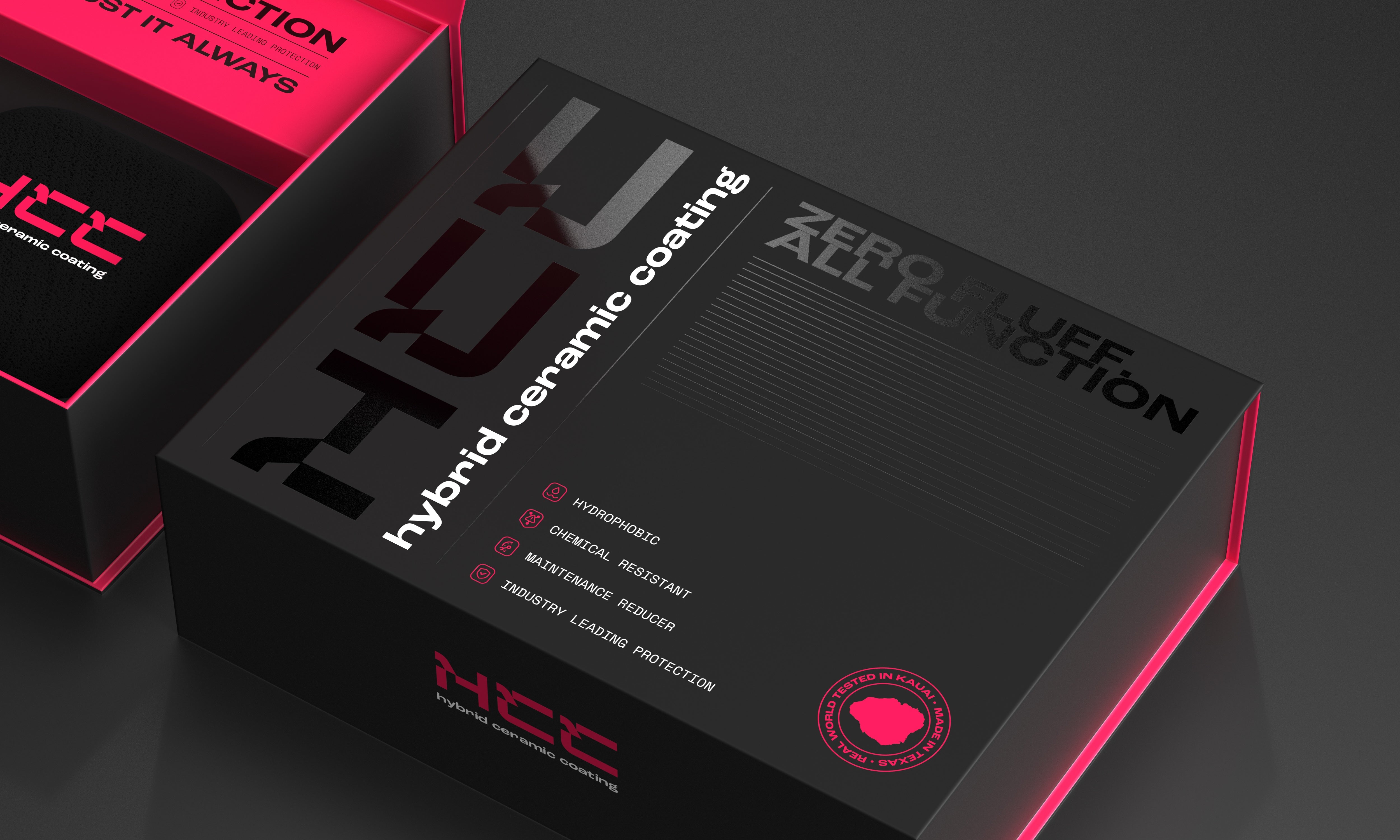
HCC (Hybrid Ceramic Coating) is Undrdog's flagship all-surface hybrid ceramic and is specifically designed to protect cars, boats, planes, and — yes — RV fiberglass roofs and sidewalls. It bonds to gelcoat, resists UV oxidation, sheds water and mineral deposits, and delivers the same 2–5 year durability window on an RV that it does on a car. For coaches that live outside year-round in sun-heavy regions like Arizona, Florida, Texas, and Hawaii, an HCC application on the fiberglass roof and sidewalls is the single most cost-effective UV insurance you can put on the rig.

Fiberglass Sidewall and Roof Restoration: Bringing Chalky Gelcoat Back
If your fiberglass roof or sidewalls are already chalky, dull, and streaked, protection alone won't fix them — you need to restore first, then protect. The process mirrors what you'd do to bring back an oxidized boat hull, which we covered in detail in our Marine vs Marine Plus guide.
- Wash with pH-neutral soap and a soft brush. Rinse fully.
- Decontaminate if there's iron fallout or industrial staining — The Purps works the same on RV fiberglass as it does on paint and gelcoat.
- Polish or compound the oxidized layer. Light chalking can come off with a one-step polish; heavy oxidation needs an aggressive compound then a finishing polish. Work in small sections and keep the pad moving.
- Wipe down with clean IPA or a dedicated prep spray to remove polish residue and oils.
- Apply HCC per label instructions. Level immediately with a plush microfiber. Do not apply in direct sun or on a hot panel.
- Let cure under cover for at least 24 hours before exposing to rain or heavy sun.
For heavily neglected fiberglass with visible micro-cracking or delamination bubbles, get a professional inspection before you polish anything — you may need a fiberglass repair, not a cosmetic restore.
RV Roof Type at a Glance
| Roof Type | Main Failure Mode | Safe Cleaners | Cleaners to Avoid | Recommended Protection | Typical Life With Care |
|---|---|---|---|---|---|
| EPDM (rubber) | UV oxidation, chalking | pH-neutral car soap, rubber-safe cleaners | Citrus, petroleum distillates, harsh degreasers | Rubber-safe UV protectant every 3–6 months | 15–20 years |
| TPO (rubber) | Seam and sealant failure | pH-neutral car soap, rubber-safe cleaners | Citrus, petroleum distillates, abrasive scrubs | Annual protectant + sealant inspection every 6 months | 20+ years |
| Fiberglass | Gelcoat oxidation, delamination | Any quality auto/marine soap | Nothing acidic on unprotected gelcoat | HCC ceramic coating every 2–5 years | 25+ years |
Storage, Covers, and Where You Park Matter
The single biggest lifespan-extender for any RV roof is where the rig lives when it's not being used. In order of best-to-worst:
- Indoor covered storage. No UV, no rain, no bird droppings, no tree sap. Adds 5–10 years to any roof.
- Covered outdoor storage (RV port, carport, canopy). Blocks direct overhead UV. Nearly as good as indoor if the coverage is complete.
- Breathable RV cover. A quality UV-rated breathable cover on an outdoor-stored rig helps significantly, but only if it's put on clean and taken off clean. Non-breathable covers trap moisture and are worse than nothing.
- Uncovered outdoor storage. The default for most owners. Compensate with more frequent wash-and-protect cycles.
Tree cover deserves a special mention. Storing under trees blocks UV but adds a whole new set of problems: sap, pollen, bird droppings, falling branches, and mold. On balance, tree-shaded storage is better than full-sun exposure for the roof, but you'll wash more often and inspect sealant more carefully. If you park under pines, plan on a decon and rinse every couple of months to keep sap off the seams.
The Twice-a-Year Roof Care Calendar
A rhythm that keeps most RV roofs in top shape without living on top of the rig:
- Spring (before travel season): Full wash, sealant inspection, apply UV protectant (rubber) or renew ceramic coating if due (fiberglass). Verify no winter-damage cracking around penetrations.
- Mid-summer: Quick wash, spot-check sealants especially after long UV exposure, refresh rubber protectant if it's been 3+ months.
- Fall (before storage): Full wash, comprehensive sealant reseal if needed, apply protectant. This is the most important wash of the year — anything you leave on the roof in fall will bake in over winter.
- Winter (stored rigs): Visual check monthly from ground level. If you can safely brush off snow accumulation without walking on the roof, do it.
Frequently Asked Questions
How often should I wash my RV roof?
At minimum once per year. Full-timers or heavy travelers should wash every 3–6 months. After any long trip through construction, industrial areas, or under heavy tree cover, do an extra rinse-and-wipe as soon as you're back — sap, pollen, and industrial fallout compound damage quickly on unprotected roofs.
Can I use car wash soap on my rubber RV roof?
Yes, if it's a quality pH-neutral car wash soap without citrus or petroleum distillates. Undrdog Soap, and most dedicated car detailing soaps, are safe on both EPDM and TPO roofs. Avoid heavy-duty degreasers, tar removers, and any product labeled for oven cleaning or industrial degreasing.
What's the difference between EPDM and TPO?
EPDM is the classic soft rubber roof that oxidizes and chalks over time, leaving white streaks down the sidewalls. TPO is a newer thermoplastic membrane that's stiffer, more UV-resistant, and doesn't chalk the same way. TPO typically has a slight textured "orange peel" surface; EPDM feels smooth like an inner tube.
Can I ceramic coat my RV roof?
Fiberglass roofs — yes. Rubber roofs (EPDM and TPO) — no. Ceramic coatings like HCC bond to gelcoat and painted surfaces, not to rubber membranes. Rubber roofs need a dedicated rubber-safe UV protectant instead. Fiberglass roofs benefit hugely from a proper decon-polish-coat process with HCC.
How do I know if my RV roof is EPDM or TPO?
Check the owner's manual or the manufacturer's build sheet if you have it. Visually: EPDM is smoother, softer under your feet, and shows chalky white oxidation over time. TPO is stiffer, slightly textured, and doesn't produce chalky runoff. If in doubt, contact your dealer or the manufacturer with the VIN.
Why is my RV leaving white streaks down the sidewalls when it rains?
That's oxidized EPDM chalk washing off the roof. It's a sign that the roof needs a wash and a fresh application of UV protectant. Left long enough, chalk streaks stain sidewalls permanently. Clean the roof, protect it, then wash the sidewalls with a proper car soap to remove the deposits.
What's the most important RV roof maintenance task?
Sealant inspection at every penetration. More RVs are totaled by water damage from a failed vent seal than by any other cause. Every wash, walk the roof and eyeball every seam, every vent, and every edge. A tube of the correct sealant costs $15 and prevents thousands in interior damage.
Can I walk on my RV roof?
Depends on your rig. Most Class A, Class C, and larger fifth wheels have walkable roofs designed for periodic access. Smaller travel trailers and pop-ups often do not — check your owner's manual. On walkable roofs, use soft-soled shoes, distribute your weight, and stay off wet EPDM without extreme caution because it's very slippery.
How long does an RV roof last with proper care?
EPDM: 15–20 years with regular washing and UV protectant. TPO: 20+ years with sealant maintenance. Fiberglass: 25+ years with periodic decon and ceramic coating renewal. Poorly maintained roofs of any type fail in half that time — and the failure is almost always avoidable with a few afternoons of care per year.
Do I need a specific soap for washing an RV, or is car soap fine?
A quality pH-neutral car wash soap works on RV sidewalls, roofs (both rubber and fiberglass), awnings, and wheels. There is no need to buy a separate "RV soap" for most jobs — as long as your car soap is coating-safe and free of harsh degreasers, it does the same job at a lower cost per gallon.
The Bottom Line
An RV roof is not a maintenance-free surface, and the difference between a 15-year roof and a 25-year roof is a few afternoons of care per year plus the right products for the material you have. Identify your roof type first. Wash with a pH-neutral coating-safe soap. Inspect sealants every wash and reseal at the first sign of cracking. Protect EPDM and TPO with rubber-safe UV protectants; protect fiberglass with a proper ceramic coating like HCC. Park under cover when you can, use a breathable cover when you can't, and never let a small sealant crack become a leak. Do those things and the roof will outlast the coach.


Leave a comment
This site is protected by hCaptcha and the hCaptcha Privacy Policy and Terms of Service apply.