

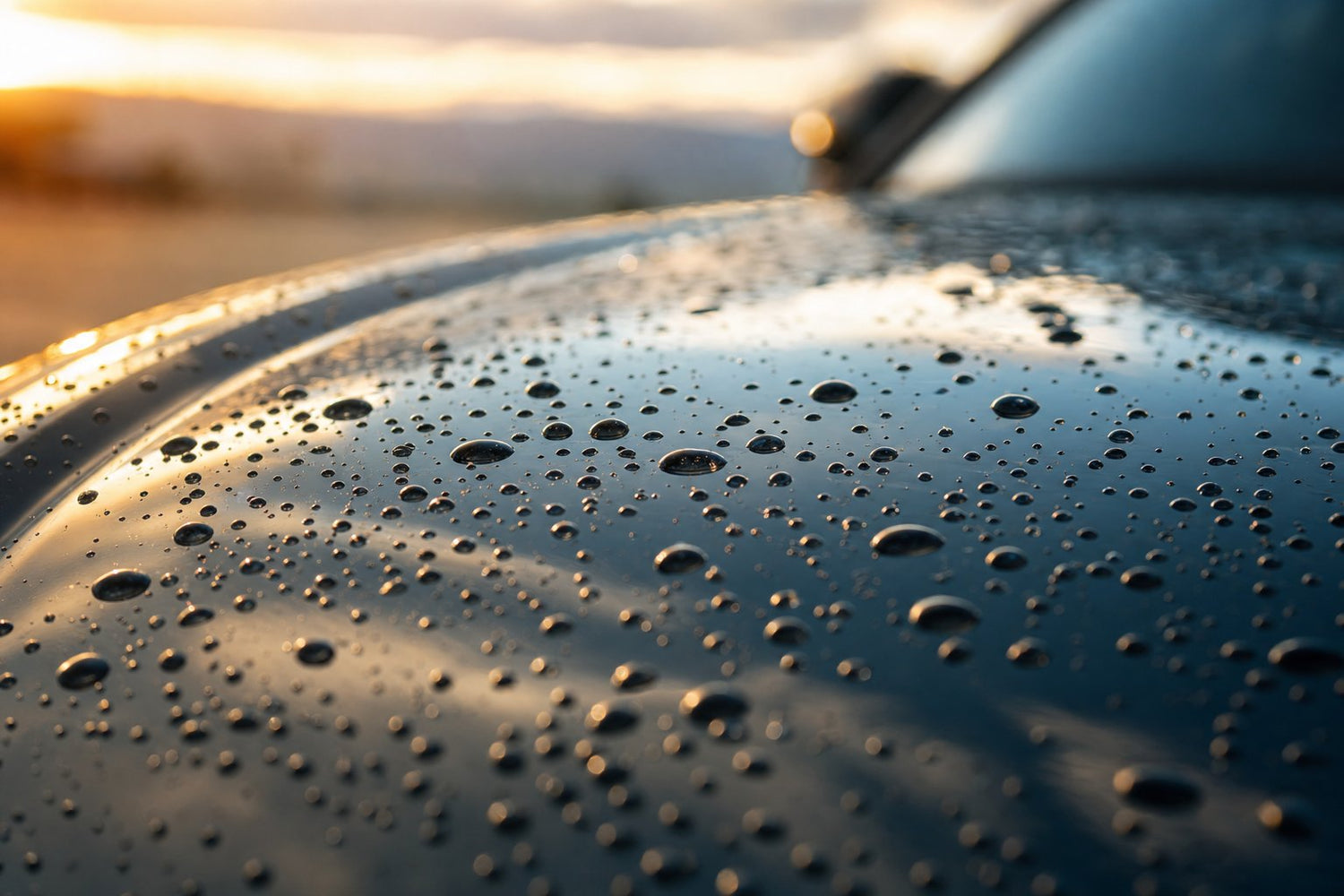
A quick detailer spray is a spray-on, wipe-off maintenance product that lifts light dust, fingerprints, and fresh water spots off already-clean paint while adding gloss and a thin layer of slick, hydrophobic protection. It is not a wash, and it is not a coating. Used correctly, it keeps a freshly washed car looking freshly detailed for weeks; used wrong, it drags grit across your clear coat and puts swirl marks into paint you were trying to protect.

What a Quick Detailer Actually Is
The category was pioneered in 1981 when Meguiar's launched what became Meguiar's Quick Detailer, and every major brand now sells one. Under the hood, a modern quick detailer (QD) does three things at once: it lubricates the surface so a microfiber towel can lift light contamination without dragging it across paint, it deposits a thin layer of gloss-enhancing polymers or SiO₂ that beads water and repels dust, and it evaporates fast enough to leave a clean, slick finish rather than an oily film.
Undrdog Quick Detail is a hydrophobic spray tuned for the in-between. It is the product you reach for when your car looks fine but not fresh, when you spot a bird strike two hours after you washed, or when you want to boost the beading on your ceramic coating before a car show. It is not a substitute for a proper two-bucket wash or a decon service — it is what keeps that wash looking new.
What Quick Detailer Is Not
The single biggest mistake people make with quick detailer is treating it like a waterless wash. It is not one. According to Auto Care HQ, standard quick detailers don't have the lubrication or the encapsulating surfactants that a true rinseless or waterless wash uses. If you spray a QD on a genuinely dirty panel — a week of commuter grime, pollen, road film — and start wiping, you are grinding embedded grit across your clear coat with a microfiber towel. That's how swirl marks and micro-marring show up. The result looks fine in a shaded driveway and shows up like spider webs the first time direct sunlight hits the paint.
The rule that actually keeps your paint safe: if the panel feels gritty when you drag a clean finger across it, or you can visibly see dust and dirt, wash it. QD is for a car that is already clean and needs a touch-up.
When You Should Reach for a Quick Detailer
There are five use cases where a good quick detailer earns its shelf space:
- As a drying aid after a wash. Mist the panel while it's still wet, then wipe with a plush drying towel. The added lubrication reduces the friction between the towel and any leftover water beads, dropping the risk of adding swirl marks during the dry.
- To remove fresh spot contamination. Bird strikes, tree sap dots, bug splatter, fingerprints around the door handle, oily smudges around the fuel door. Spray, dwell 20–30 seconds, wipe off with a clean microfiber. Do this in the first few hours before etching starts.
- To knock down light dust between washes. Emphasis on light. Overnight garage dust or a few days of dry-weather cruising — not a week of commutes and pollen.
- To boost gloss and slickness before an event. Car shows, meets, photo shoots, listing a car for sale. A QD wipe-down after a wash makes the paint pop and reflects light more evenly than an unfinished wash alone.
- As a maintenance topper on a ceramic-coated car. A hydrophobic QD refreshes beading and slickness on a coating that has aged into its second half of life. Detailers on r/AutoDetailing point out that a ceramic-infused QD is effectively a diluted ceramic spray with added polymers to help repel dust.

The Right Way to Apply Quick Detailer
Application technique matters more with quick detailer than with almost any other detailing product, because you are working directly on the paint without the lubrication of a real wash bucket. Get this workflow right and you'll get years out of a bottle without ever adding a scratch.
1. Work in the shade, on cool paint.
Panel temperature above roughly 100°F causes the carrier to flash off before you can wipe cleanly, which streaks the surface and leaves polymer residue. Pull the car into a garage or wait for the paint to cool. If you're doing this after a wash, the paint should already be cool because you rinsed it.
2. Use a clean, plush microfiber — not a shop rag.
A 400+ GSM plush microfiber, freshly laundered, no fabric softener. Fold it into quarters — that gives you eight clean wiping faces before you need a new towel. Cheap thin microfibers with hard edges are the primary source of QD-induced swirl marks.
3. Mist 2–3 sprays per panel section — not a soaking.
A fine mist held 6–12 inches from the panel. More product doesn't equal more gloss; it just means more streaking and more product to buff off. Some detailers prefer spraying the towel instead of the panel in humid or dusty conditions.
4. Wipe in straight lines, not circles.
Straight overlapping passes. Circular motion concentrates any micro-scratches into visible swirl patterns that light up under direct sun. Straight-line motion distributes any minor marring evenly with the paint's grain, where it disappears optically.
5. Flip the towel and buff.
After the wet pass, flip to a dry side of the folded towel and gently buff. This removes any leftover polymer, evens out gloss, and reveals the slick finish. If you feel any resistance, you're using too much product — mist less next time.
6. Rotate towels aggressively.
One folded towel handles roughly one to two panels before it starts holding enough lifted contamination to risk marring. Have three to four clean microfibers ready before you start on the whole car.
Quick Detailer vs Spray Wax vs Ceramic Topper
These three products get confused constantly, and the wrong pick either wastes money or removes protection you paid for. Here's how they actually differ:
| Product | Primary Purpose | Protection Duration | Cleaning Power | Best For |
|---|---|---|---|---|
| Quick Detailer | Gloss + light protection between washes | 1–2 weeks per application | Light dust / fresh smudges only | Weekly touch-ups, drying aid, event prep |
| Spray Wax | Standalone hydrophobic protection | 4–8 weeks depending on formula | Very light | Uncoated cars needing a fast protection layer |
| Ceramic Topper | SiO₂ layer boost on coated cars | 2–6 months per application | Very light | Refreshing a fading ceramic coating |
| Rinseless Wash | Full clean without hoses | None (cleaning only) | Moderate — lifts and encapsulates dirt | Actual dirty panels when a hose isn't an option |
The breakdown from Nasiol makes the practical point: a quick detailer is a maintenance product, a ceramic spray is a protection product. On a coated car, you can use a hydrophobic QD as a maintenance topper without stripping the coating. On an uncoated car, a QD is your finishing touch — but if you want real weeks-long protection, you either need a spray wax, a spray sealant, or a proper ceramic coating underneath.
How Quick Detail Fits an Undrdog System
Undrdog Quick Detail is designed to layer with the rest of the Undrdog lineup rather than compete with it. That means the honest answer to "where does it fit" depends on where you already are.
On a coated car (HCC, Pro, Pro Plus, Marine, Marine Plus)
Quick Detail is the ideal weekly refresh. If you're running HCC — the flagship all-surface hybrid ceramic that works on cars, boats, planes, and even bicycle frames — a light QD misting every two to three weeks after a wash keeps beading tight and slickness at its peak. It won't extend the coating's total life dramatically, but it will keep the coating performing near its best throughout its life. For a deeper look at maintaining a coated car, see our guide on how to maintain a ceramic-coated car.
On an uncoated car
Quick Detail is your finisher on wash day and your touch-up between washes. Wash with Undrdog Soap, decon with The Purps if you've got iron fallout, dry the car, then mist and wipe Quick Detail panel by panel to seal in the gloss and add a few weeks of beading. It's not a substitute for a coating, but it makes uncoated paint act closer to coated paint for a couple of weeks at a time.
Between wash steps
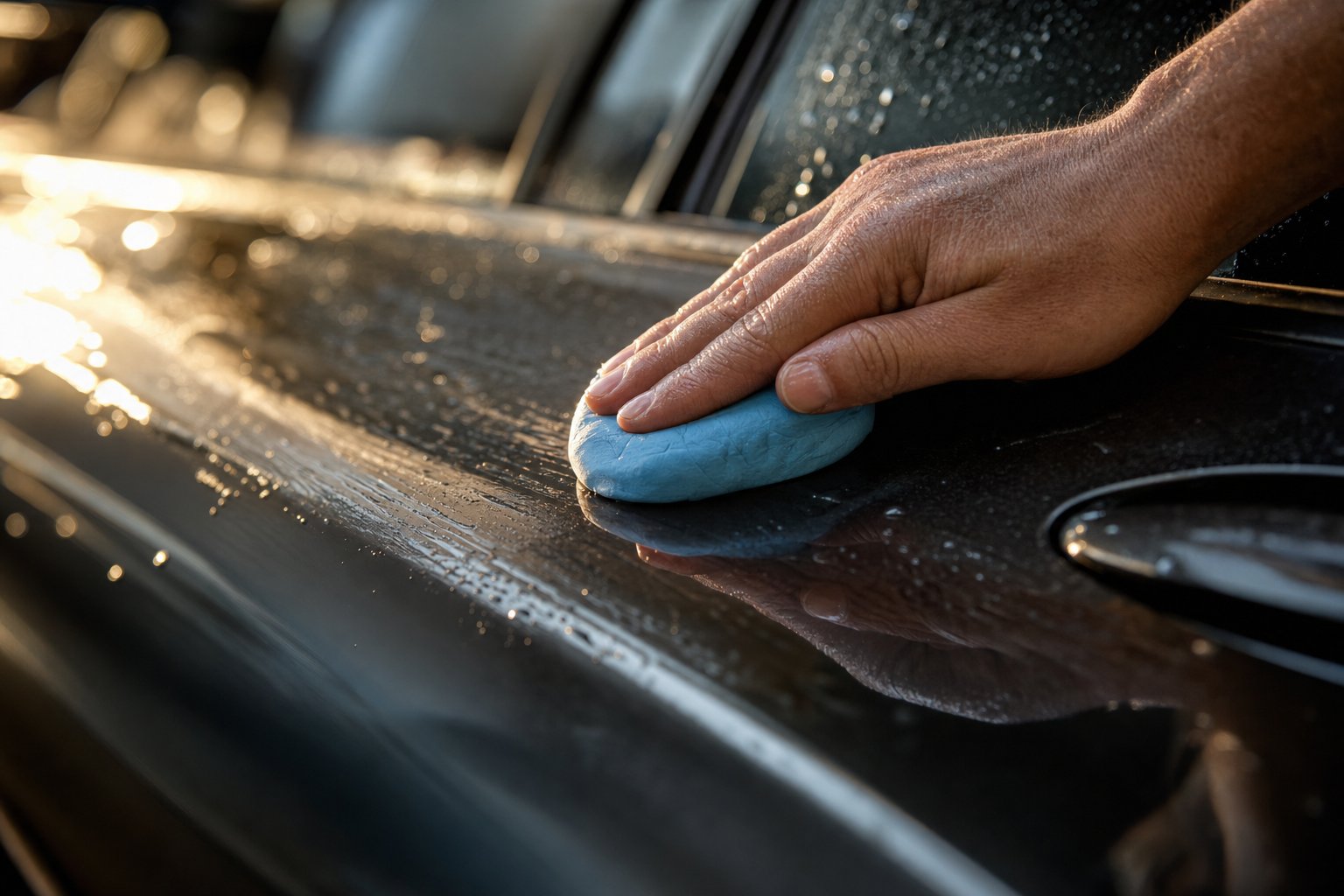
Quick Detail also earns its keep as a clay lubricant when you're doing decon work and don't want to open a dedicated clay lube bottle. Mist the panel, glide the clay across it, wipe residue, keep moving. Just use a heavier mist than you would for a normal QD wipe — you want the panel visibly wet under the clay.
Fresh Water Spots: The Quick Detailer Emergency Kit
Water spots are the one contamination type where speed matters more than technique. If tap water, sprinkler water, or a rain squall left droplets that dried on hot paint, you have a narrow window before the minerals start etching your clear coat. A quick detailer is the fastest field response.

Mist Quick Detail heavily on the spotted area, let it dwell 30–60 seconds to soften the mineral deposit, then wipe firmly with a plush microfiber. Most fresh spots come off in one pass. Older, baked-in spots that have already etched the clear coat won't come off with any QD — that's a job for a dedicated Water Spot Remover and, if the etch is deep, a light polish afterward. If you want the full playbook for stubborn water spots, we walk through it in our water spot removal guide.
Common Quick Detailer Mistakes
The mistakes that ruin paint aren't dramatic — they're mundane. Watch for these:
- Using QD on a dirty car. Covered above, but worth repeating. If it isn't already clean, wash it.
- Using the same towel for the whole car. Every wipe adds dust and polymer to the towel. Rotate.
- Applying in direct sun on hot paint. Streaks, high spots, wasted product.
- Over-applying. Two to three mists per panel section is the target. Twelve is not more gloss — it's more residue to buff off.
- Wiping in circles. Straight lines only. This one habit change eliminates most swirl-mark risk.
- Storing QD in a hot vehicle. Repeated heat cycles change the formula. Store the bottle indoors between uses.
- Skipping the buff step. The dry-side buff after the wet wipe is what unlocks the slick, mirror finish. Skipping it leaves a hazy micro-film.
Storage, Shelf Life, and Bottle Care
Quick detailer sprays are water- and polymer-based, and the formula stays stable for a long time if you don't cook it. Store the bottle in a cool, dry place — inside a garage cabinet or under a workbench, not on a shelf that gets direct afternoon sun through a window. Most quick detailers have an effective shelf life of 12–24 months from opening. If the product ever separates on the shelf, shake vigorously before use. If it smells sour or looks cloudy in a way it didn't when new, replace it.
Trigger sprayers eventually clog from mineral residue. If your spray pattern gets uneven, unscrew the trigger, run the pickup tube and nozzle under warm water for 30 seconds, then reattach. This alone gets most triggers back to a clean fan pattern.
Frequently Asked Questions About Quick Detailer
Can I use quick detailer instead of washing my car?
No. Quick detailer is a maintenance product for already-clean paint. Using it on a genuinely dirty car drags grit across your clear coat with a microfiber towel and adds swirl marks. If a panel is dusty or dirty, wash it first — either a traditional two-bucket wash or a rinseless wash — then finish with QD.
Will quick detailer damage my ceramic coating?
Not if the QD is compatible. Hydrophobic and SiO₂-based quick detailers are safe on coated cars and can extend the perceived performance of your coating. Avoid QDs that are wax-heavy or contain aggressive surfactants — those can gunk up a coating over time. Undrdog Quick Detail is formulated to layer with coated and uncoated paint.
How often should I use quick detailer?
On a coated car, every one to three weeks after a wash is a good cadence. On an uncoated car, use it after every wash as your finishing step, plus for spot touch-ups as needed. There's no benefit to daily use — it just wastes product.
What's the difference between quick detailer and waterless wash?
A waterless wash has significantly higher lubrication and encapsulating surfactants specifically engineered to lift and hold dirt away from the paint. A quick detailer has just enough lubrication to safely move a microfiber over already-clean paint. Waterless wash can (carefully) clean a lightly dirty car; quick detailer cannot.
Can I use a quick detailer as a clay lube?
Yes, in a pinch. Mist the panel heavily so the surface is visibly wet, glide the clay bar or mitt, wipe residue with a clean microfiber. Dedicated clay lubes cost less per ounce for that job, but a QD works fine when you need it.
Does quick detailer actually add any protection?
A light layer, yes — usually one to two weeks of measurable hydrophobicity. It is not a substitute for a spray sealant, spray wax, or ceramic coating, which measure protection in months. Think of QD as a top-up, not a base layer.
Will quick detailer streak on hot paint?
Almost always. Once the panel is above roughly 100°F, the carrier flashes off before you can wipe cleanly and you end up with visible streaks and high spots. Move the car into shade or a garage, or wait for the surface to cool.
Can I use quick detailer on glass and trim?
Yes on glass — most QDs leave a slick, hydrophobic finish on windshields and side glass that improves rain shedding. Test on plastic trim before committing; most polymer-based QDs are trim-safe, but some can leave a semi-permanent sheen on textured plastic. Interior use is generally fine on hard surfaces (dash, console) but skip screens and upholstery.
Do I need quick detailer if I already have a ceramic coating?
You don't need it, but it's the easiest way to keep a coated car looking its best between washes. On HCC or Pro Plus, a QD wipe-down after washing keeps beading tight and slickness at peak. It also gives you a fast way to knock down fingerprints and fresh bird strikes without hauling out a hose.
How long does one bottle of quick detailer last?
A 16 oz bottle typically covers 30–50 full-car applications when used correctly — two to three mists per panel section, no over-application. That's about a year of regular weekly use on a single vehicle.

Leave a comment
This site is protected by hCaptcha and the hCaptcha Privacy Policy and Terms of Service apply.