

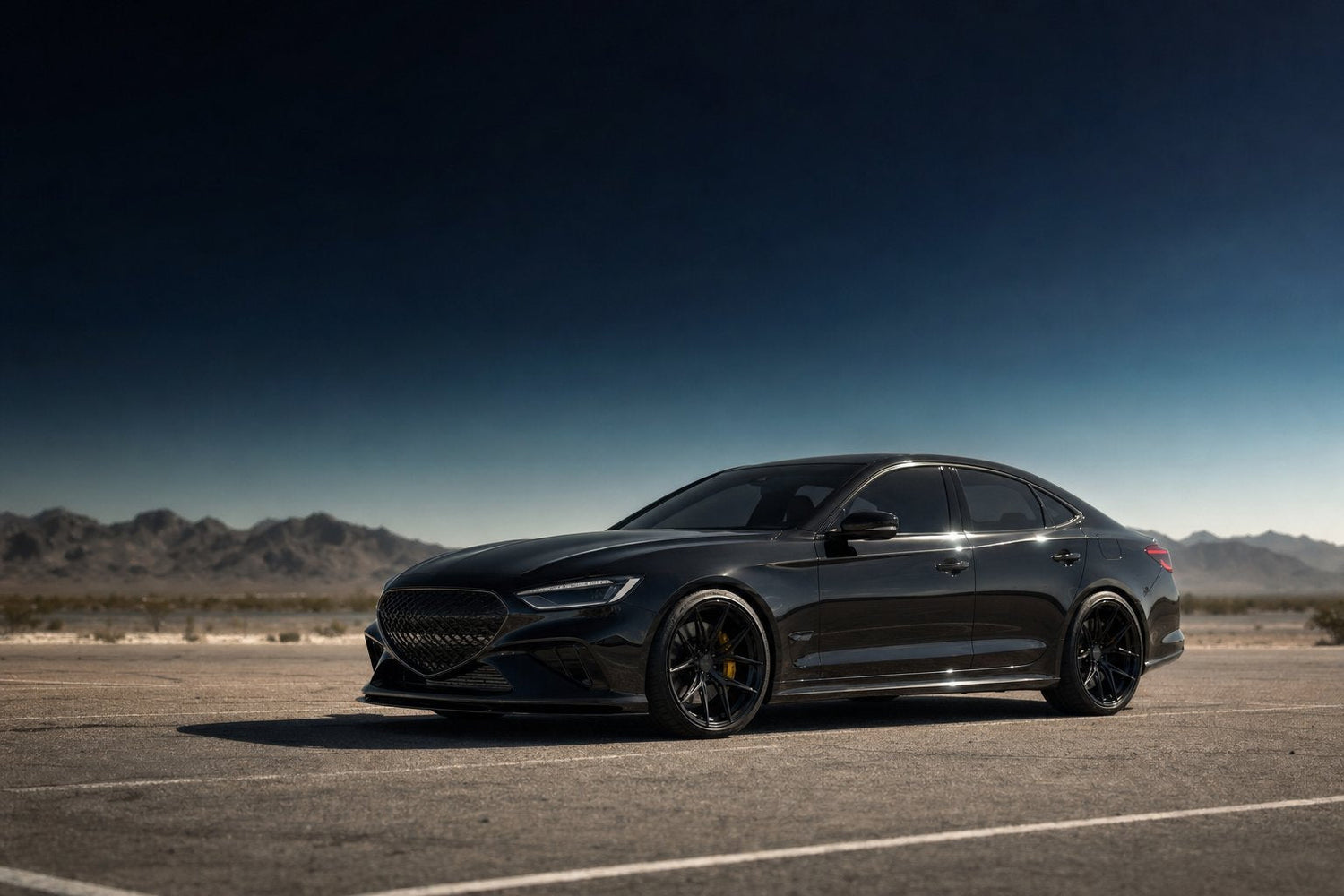
In direct midsummer sun a car's paint surface can climb from 130°F to over 190°F on dark colors — hot enough to bake sap, bug guts, sprinkler water, and pollen directly into the clearcoat, and to dry out any wax you thought was still protecting you. Your midsummer game plan is short and specific: wash in the shade in the early morning or evening (never on a hot panel), decontaminate before you polish or coat, upgrade from wax to a ceramic like HCC (Hybrid Ceramic Coating) if you're on wax, and use a Quick Detail spray to knock down bugs and sprinkler water within hours, not days. The goal isn't to survive the summer — it's to end August with paint that still looks like May.

What Extreme Heat Actually Does to Your Car's Paint
The number that matters isn't the ambient air temperature — it's the panel temperature. On a 95°F afternoon, a black hood can measure 180–200°F with an infrared thermometer. Independent auto body sources like Dynasty Auto Body and paint chemistry references from PPG confirm the mechanism: prolonged high panel temps combined with UV break down the clearcoat's UV inhibitors and cause polymer chains to become brittle. Over time you get the milky, chalky, "oxidized" look that used to be considered normal on 10-year-old cars but is completely preventable now.
At the same time, heat and UV work on your paint from a different angle: any contaminant sitting on the surface — bird droppings, tree sap, insect protein, sprinkler mineral deposits, bug splatter — gets baked in faster and etches deeper. The same bird dropping that would rinse off cleanly at 65°F in May can etch a permanent mark into your clearcoat in under an hour on a 180°F panel in July. This is the single most under-appreciated cause of "sudden" paint damage during heat waves.
The third mechanism is thermal cycling. Panels expand during the day and contract at night. Repeated cycling over months stresses any existing paint imperfections — rock chips, scratches, edges — and can accelerate paint failure at those weak points. There's not much you can do about the cycling itself, but you can fix chips and scratches promptly so they don't turn into peeling clearcoat by fall.
The Cardinal Rule: Never Wash a Hot Panel
Every summer, well-meaning car owners create their own water spots by washing at 2 PM in a driveway with panels north of 140°F. Here's what happens: the cold water hits the hot panel, the panel constricts, water evaporates almost instantly, and the dissolved minerals in your tap water (calcium, magnesium, iron) concentrate on the surface and etch into the clearcoat. What you end up with is a hazy, spotty, milky-looking hood that no amount of soap will fix — because those minerals are now IN the clearcoat, not sitting on top of it.
The fix is simple and non-negotiable in a heat wave:
- Wash before 9 AM or after 6 PM. In the deep summer, this means early morning is usually the safer window because evening panels can still hold heat.
- Move the car into the shade — a garage, a carport, or the shaded side of your house — at least 30 minutes before you start.
- Touch the panel with the back of your hand before you spray. If it's warm, it's too hot. Wait, or move to a cooler panel.
- Use a coating-safe pH-neutral shampoo like Undrdog Soap — hot conditions are not the time for aggressive alkaline degreasers.
- Rinse continuously as you go. Don't let soap dry on any panel. On coated cars this is easy; on uncoated cars it's a race.
- Dry immediately with a large, clean drying towel or a leaf blower. Do not let water air-dry in the sun.
If you're pressed for time, a rinseless wash beats a full two-bucket wash in the driveway heat, because it uses less water and dries faster with less risk of streaking or spotting. Our streak-free application technique guide has the same core lesson: cool panel, small area, fast leveling.

Water Spots From Sprinklers and Afternoon Rain
The second biggest midsummer paint threat isn't washing — it's water that gets on your car when you're not looking. Sprinkler overspray hits every parked car in every suburb from June through September. In hot climates, brief afternoon rain showers followed by full sun do the same thing: they leave concentrated mineral water on hot paint that flash-evaporates and etches the clearcoat.
Prevention is easier than remediation:
- Park away from sprinkler zones. If your neighbor's sprinkler tags your car every Tuesday and Friday, park somewhere else on those days.
- Keep a Quick Detail spray and a plush microfiber in your trunk. When you spot beads or spots on a warm panel, mist and wipe within a few hours, not the next weekend.
- For a car parked at a hotel or lot where you've walked away from the sprinkler event and returned to visible spots, a dedicated Water Spot Remover is the right tool. Do not attack water spots with a compound or polishing pad if a chemical remover will handle them — you're just going to remove clearcoat you didn't need to remove.
- If you catch the water while it's still liquid, blot with a plush microfiber. Do not smear.
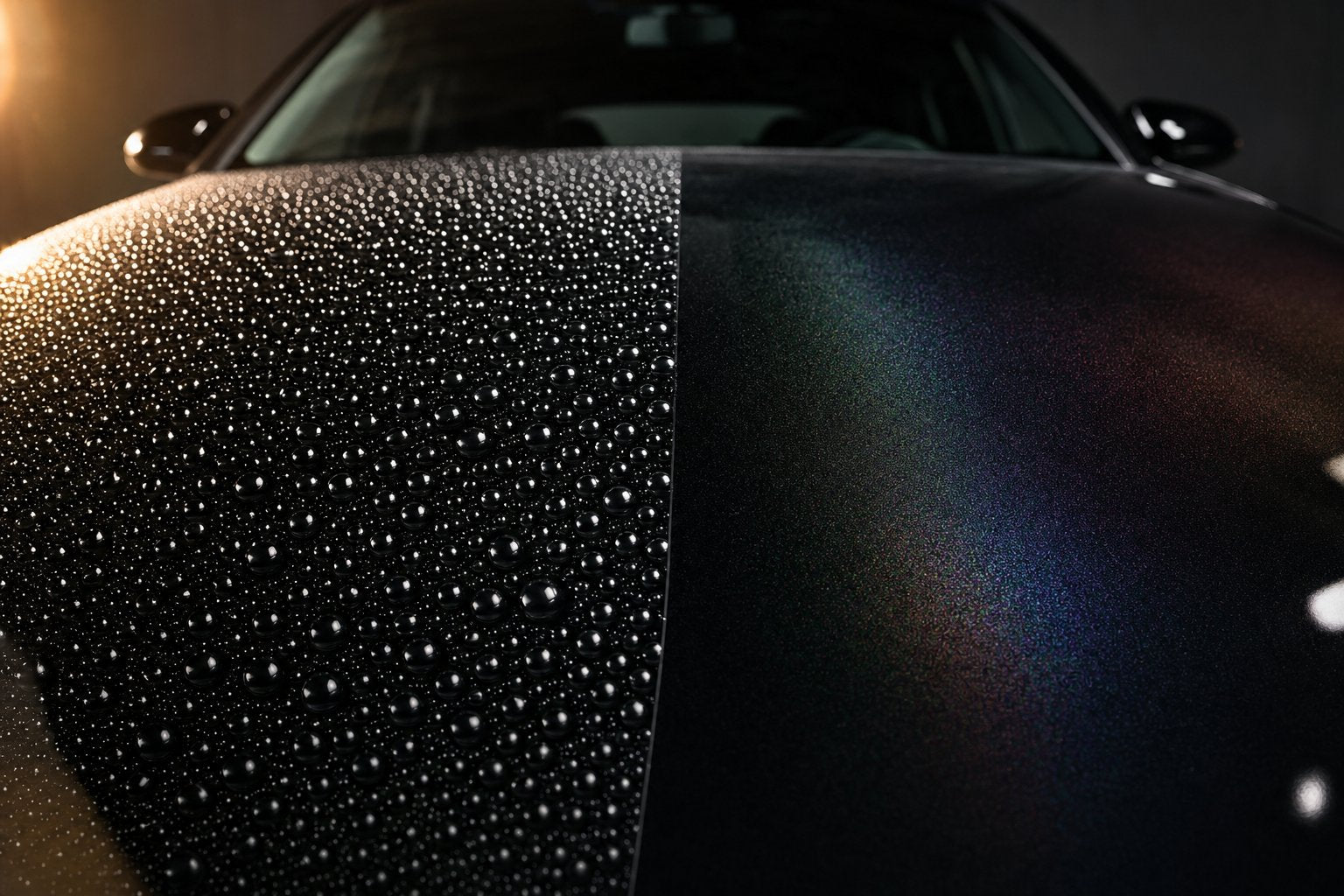
The reason a ceramic-coated car handles water spots better in a heat wave isn't magic — it's that the surface is so hydrophobic and slick that water beads tighter, rolls off faster, and leaves less mineral residue behind when it does dry. A wax finish absorbs water and lets minerals settle in. HCC and other quality ceramics resist that adsorption, which is why coated cars come out of every summer looking substantially better than waxed cars.
Bugs, Sap, and Bird Droppings: The Baked-On Menace
Summer traffic and summer trees are unusually cruel to paint. Insect protein bug splatter is acidic; tree sap is sticky and hardens with heat; bird droppings are aggressively acidic and packed with grit. Left on a hot panel, all three etch clearcoat quickly. The Axalta refinish team notes the same pattern: the same contaminant that's harmless in cool weather can become a permanent mark in a matter of hours during a heat wave.
Response protocol in order of urgency:
- Bird droppings — same day, ideally within an hour. Mist the spot generously with Quick Detail or a bird dropping–specific spray. Let it dwell 2–3 minutes to rehydrate. Wipe with a clean plush microfiber in one direction, then flip and buff.
- Tree sap — before it hardens if possible. If it's still sticky, mist and wipe. If it's hardened, a small amount of pure isopropyl alcohol on a microfiber will lift most sap without damaging clearcoat or a ceramic coating. Rinse the area with clean water afterward.
- Bugs — after every long summer drive. Don't let bug splatter sit on your bumper and hood overnight in July. Mist with Quick Detail, let dwell, wipe. For heavy accumulation, a dedicated bug remover pre-soak followed by a rinseless or full wash is the move.
- Iron and industrial fallout — monthly during summer road-trip season. Highway travel adds brake dust and rail dust to your paint that regular washing can't remove. The Purps chemically bonds with iron particles and rinses them out — the purple streaks you see are the reaction actually happening. Doing this once a summer keeps your paint from developing that "sandpaper" feel by fall.

Wax Is Not Enough in a Heat Wave (And Neither Are Most Sealants)
Traditional carnauba wax melts. Not metaphorically — literally. Carnauba's melting point is around 180°F, which is right in the range a black or dark blue car will hit on any 95°F day with direct sun. Every hot afternoon shortens the life of a wax coat, and by August the "wax" you applied in May is essentially gone. Polymer sealants do slightly better but are still degrading faster in a heat wave than they do in spring or fall.
Ceramic coatings behave completely differently. The SiO2 backbone in a hybrid ceramic like HCC is chemically stable at temperatures well above anything your paint will reach in the sun — silica doesn't care about a 200°F panel. The gloss, beading, sheeting, and UV protection you got on day one is the same performance you'll have in September. This is the single strongest argument for moving from a wax-and-sealant maintenance routine to a ceramic-first routine if you live somewhere with real summers.
HCC is Undrdog's flagship all-surface hybrid ceramic and is the default recommendation for cars, boats, planes, and bicycles. For pro-only application scenarios where you're paying a shop to apply, the pro-installed Undrdog Pro or Pro Plus tier is the equivalent choice. Either way, once the coating is on, your midsummer maintenance drops from "protect it every month" to "wash it in the shade with the right soap."
Ceramic Coating in a Heat Wave: Application Rules
If you're planning to apply HCC yourself this summer, do not do it on a 190°F panel in your driveway. The application rules are the same as the wash rules but tighter:
- Application panel temperature should be between 60–80°F for best working time. Above 85°F the coating flashes too fast to level cleanly.
- Apply in a shaded garage or workshop, not the driveway. Even a cool morning driveway heats up fast once the sun hits it.
- Work small — one panel at a time, or one half of a large panel at a time. Level immediately with a plush, coating-safe microfiber.
- Do not apply if the panel just got sun. Even if the ambient is cool, the panel may still be radiating heat.
- Follow the coating with a proper 24-hour cure window before the car sees rain, sprinklers, or heavy sun. Garage overnight if possible.
Interior and Trim: The Silent Casualties of Midsummer
Paint is not the only casualty of a July heat wave. Dashboards, door cards, and steering wheels bake in cars parked at work all day, and unprotected black plastic trim on the exterior fades to a chalky grey inside a single summer. Two quick moves that pay off:
- Use a reflective windshield sunshade whenever the car parks in direct sun for more than an hour. This alone can drop cabin peak temperatures by 30°F+ and dramatically reduce dashboard cracking, screen delamination, and leather brittleness.
- Treat exterior trim seasonally. Faded plastic trim on bumpers, mirrors, and window surrounds is preventable with a proper trim dressing applied in spring and refreshed mid-summer. Coated trim in HCC also holds up through UV better than untreated trim.
Midsummer Care Checklist: What to Do When
| Threat | How Fast It Etches | Right Response | Best Product |
|---|---|---|---|
| Bird droppings on hot panel | 1–4 hours | Mist, dwell 2–3 min, wipe once | Quick Detail spray |
| Sprinkler mineral water | Same afternoon | Wipe before drying, chemical remover if dry | Water Spot Remover |
| Tree sap | Days if soft, hours if hot | IPA or dedicated sap remover, then rinse | Isopropyl alcohol + microfiber |
| Bug splatter on bumper/hood | Overnight in heat | Post-drive rinse or mist-and-wipe | Quick Detail or bug pre-soak |
| Iron/rail dust buildup | Weeks to months | Monthly summer decon wash | The Purps |
| UV oxidation on wax finish | Weeks under sun | Reapply monthly, or upgrade to ceramic | HCC hybrid ceramic |
| Dashboard bake damage | Weeks to months | Reflective sunshade + interior UV protectant | Windshield sunshade |
Parking Strategy Matters as Much as Product Choice
Where you park is doing more paint protection than any product you'll buy this summer. A garaged black car with no coating will finish August looking better than an uncoated black car parked in direct sun even with a fresh coating. If you have any garage or shade access, use it. If you don't:
- Orient the car so the highest-value paint faces away from the harshest afternoon sun exposure. If your hood always cooks first, park nose-in facing north or east where possible.
- Use a breathable outdoor car cover for cars that live outside 24/7 in extreme sun. A cheap opaque cover is worse than nothing if it traps moisture; a proper breathable cover is a significant paint saver.
- Rotate parking spots at work if you have that flexibility. Two months of always parking the driver's side facing west is measurable UV damage by fall.
Frequently Asked Questions
How hot does a car's paint actually get in summer sun?
On a 95°F ambient day with direct overhead sun, a black hood can hit 180–200°F. Lighter colors run cooler but still climb well past ambient — a white or silver hood often reaches 130–150°F. Panel temperature, not air temperature, is what determines how fast contaminants etch and how quickly wax breaks down.
Can I wash my car in the sun if it's a cooler day?
Below 75°F ambient with the panel cool to the touch, you can get away with a shaded outdoor wash. In any real heat wave, wait for early morning or evening, or move the car into shade for at least 30 minutes first. The risk isn't the sun on your soap — it's the flash-drying that leaves mineral water spots baked into the clearcoat.
Will a ceramic coating protect against summer heat and UV?
Yes. Quality ceramic coatings including HCC are chemically stable well above any temperature your paint will reach in the sun, and the SiO2 backbone provides real UV protection that carnauba wax and most polymer sealants cannot match. This is why ceramic-coated cars visibly outlast waxed cars across a hot summer.
What about a black car — is it worth trying to protect in extreme heat?
Yes, absolutely — a black car in a heat wave benefits more from ceramic coating and shade parking than any other color, because the heat load is higher and the visible consequences of even minor oxidation are more obvious. Prioritize a coating like HCC, shade whenever possible, and be aggressive about wiping down water spots and bug splatter before they bake in.
Should I apply ceramic coating during a summer heat wave?
Not on hot panels. If you can work in a temperature-controlled or reliably shaded garage where panel temps stay in the 60–80°F range, midsummer application is fine. Otherwise, wait for cooler morning conditions or plan the application for spring or fall. Do not apply in direct sun or on a panel that just came out of the sun.
Do I need water spot remover if my car is coated?
You still want one in your kit. Coatings resist mineral etching but do not eliminate it in every scenario — hard sprinkler water on a 180°F coated panel can still leave marks. A dedicated Water Spot Remover chemically dissolves mineral deposits without abrading the coating, which is exactly what you want.
How often should I decon my paint during summer?
For most drivers, once per summer is enough — typically mid-July through early August. If you road-trip heavily, drive on highways with rail lines nearby, or park under trees with sap and pollen, twice per summer is better. Follow our correct decon order guide so the steps stack properly.
What's the fastest routine when I get home from a highway drive in July?
Cool the car in the shade for 30 minutes, then a quick rinseless wipe-down with a plush microfiber and Quick Detail spray on the front bumper, hood, mirrors, and windshield. That's a five-minute routine that removes bug splatter and any road film before it has an overnight bake session on hot paint. Full wash on the weekend.
Does a car cover help or hurt in a heat wave?
Helps if it's breathable and properly fitted, hurts if it traps moisture or grit against the paint. A cheap plastic cover in July can trap heat and humidity and actually worsen paint condition. Spend the money on a breathable UV-rated outdoor cover if the car lives outside long-term.
Is it too late to protect my paint if summer is already halfway over?
No. Even mid-July, a proper decon wash, IPA wipe-down, and ceramic coating like HCC applied in a shaded workspace will protect your paint through the rest of summer and into fall. The best time to coat was spring. The second best time is right now, before the last six weeks of the strongest sun.
The Bottom Line
Extreme summer heat is the single most demanding environment your car's paint will face, and the damage compounds — every water spot you didn't wipe, every bird dropping that baked, every hot-panel wash that flash-dried is still there in fall. The playbook is straightforward and small: wash in the shade on cool panels, wipe contaminants within hours not days, upgrade wax to a ceramic like HCC, and park with intention. Do those four things through the rest of this summer and your paint will finish August looking like the day the heat wave started.

Leave a comment
This site is protected by hCaptcha and the hCaptcha Privacy Policy and Terms of Service apply.