


Honest answer: nobody can tell you how long a ceramic coating will last on your vehicle, and the year printed on the box isn't a measurement — it's a marketing decision. Real-world performance depends on prep, environment, wash habits, and what the surface gets hit with, which is why the same product can look great at year three on one car and be gone in twelve months on another. Below is how those "5-year," "9-year," and "lifetime" numbers get made, what the fine print actually requires from you, and how to translate a marketing claim into a realistic expectation before you spend the money.

Where the Year Numbers Come From
Durability ratings on coating packaging are best-case estimates. As one detailing resource puts it, those numbers "are best-case estimates — written by marketing departments, not paint chemists — and the gap between the claim" and daily-driver reality is wide (Redline Car Garage). The same guide notes that nine-year claims assume "garaged storage, pH-neutral maintenance washes, annual decontamination and near-perfect prep before application."
Another shop's breakdown is blunt about where the figures originate: the number "usually comes from a lab test measuring how long a coating stays chemically bonded to paint under ideal, controlled conditions — not how long it keeps performing at its best on a vehicle that's driven daily," and "claims of 8–10+ years typically refer to lab conditions, not real-world driving" (Altitude Car Care).
So the industry's own installers, when they write candidly, land on something like this:
| Coating tier | Marketed as | Realistic on a daily driver |
|---|---|---|
| Spray-and-wipe consumer | 1 year | 4–8 months |
| Mid-range consumer bottle | 2–3 years | 12–24 months |
| Professional installer grade | 5 years | 3–5 years |
| Premium multi-layer pro | 7–9 years | 4–7 years |
Ranges compiled from Redline Car Garage and Altitude Car Care. Treat these as installer consensus, not lab data — because there isn't public lab data.
Notice the pattern. Even friendly estimates put real life at roughly half to two-thirds of the headline number. That's before you park outside, drive through road salt, or run it through a brush wash.
The Claim vs. the Fine Print
The year number lives on the box. The conditions live in a PDF most buyers never read. Here's the structure you'll find in most manufacturer coating warranties, and what each clause means for you.
| What the claim says | What the document usually means | What to ask |
|---|---|---|
| "Lifetime warranty" | Coverage that steps down if you miss a yearly check. One major brand's published warranty states its lifetime tier "requires annual inspections and becomes a 5-year Warranty from the date of last inspection if an inspection is missed" (published aftercare and warranty document). | "What happens to my coverage if I skip one inspection?" |
| "5-year coating" | The same document's five-year tier "becomes a 2-year Warranty from the date of last inspection if an inspection is missed." Inspections "must be carried out by an approved applicator, within 30-days before the anniversary date." | "Is the inspection free? What does it cost each year?" |
| "Backed by the manufacturer" | Often only when applied by an accredited installer and registered within 30 days; late registration voids coverage (Lusterbook warranty review). | "Who registers it, and can I see the confirmation?" |
| "Protects your paint" | Rock chips, scratches, abrasions, and hard-water etching are commonly excluded outright (Lusterbook). Some warranties also require the brand's own maintenance products. | "Show me the exclusions list and the required-products list." |
None of this makes those coatings bad products. Many are excellent. But a "lifetime" number that quietly becomes five years, then two, once you miss a paid appointment is not a durability claim — it's a maintenance subscription described as a durability claim. You deserve to know that before you pay for it.
What Federal Warranty Law Actually Says
If you're in the U.S., written warranties on consumer products are governed by the Magnuson-Moss Warranty Act. Two parts are worth knowing when you read a coating warranty.
"Full" vs. "limited." The FTC's guide explains that every written warranty on a product costing more than $10 must be titled either "full" or "limited," and a warranty is only "full" if, among other conditions, "you do not require consumers to perform any duty as a precondition for receiving service, except notifying you that service is needed, unless you can demonstrate that the duty is reasonable" (FTC Businessperson's Guide to Federal Warranty Law). Almost every coating warranty you'll see is a limited warranty for exactly this reason: it asks you to do things.
Tie-in sales. The same FTC guide states that "generally, tie-in sales provisions aren't allowed" — meaning provisions "that state or imply that a consumer must buy or use an item or service from a particular company to keep their warranty coverage." There are exceptions: the required item or service is free, or the company obtained an FTC waiver by proving the product won't work properly without it. A warrantor can also legitimately disclaim damage caused by products or service it didn't provide.
We're not lawyers and this isn't legal advice. Whether any specific warranty's requirements are "reasonable" or fall under an exception is a question for the company and, if it ever came to it, the FTC. The practical point is simpler: when a warranty requires you to buy specific branded products or paid annual services to keep coverage alive, that's a condition you should evaluate as a cost, not as a feature.

The Engine-Mileage Problem
Here's the cleanest way to think about it. No car manufacturer will tell you how many miles your engine is guaranteed to run. They'll give you a powertrain warranty with conditions — change the oil on schedule, don't tow beyond the rating, keep the receipts — but they won't stamp "250,000 miles" on the valve cover, because engine life depends on how it's driven and maintained. A short-trip commuter in a rust-belt winter and a highway cruiser in Arizona are running the same engine toward very different outcomes.
A coating is the same. Its life depends on the prep underneath it, the climate around it, what lands on it, how often it gets washed and with what. A number stamped on the bottle can't know any of that. So when a brand puts "5 years" on the label, it isn't telling you how long the coating will last on your car. It's telling you what it decided to print.
That's why we don't add years to Undrdog coatings. Not because we're unsure of the product — because a year figure would be a guess dressed up as a spec, and you'd be making a purchasing decision on it.
What Actually Determines How Long a Coating Lasts
If the year on the box isn't the variable, what is? Five things, roughly in order of importance.
1. Prep
One shop that audits failed coatings attributes the majority of premature failures to poor surface prep (Automotoflux). A coating bonds to whatever is on the surface. If that's bonded iron, old sealant, or polishing oils, the coating is bonded to contamination, not paint, and it leaves with the contamination. Our four-step decontamination guide is the non-negotiable part of any install.

2. Film build and chemistry — not "9H"
"9H" is the number most often mistaken for durability. It refers to the pencil hardness scale, not the Mohs mineral scale; a coating earns 9H if a 9H pencil pushed across the cured film doesn't visibly scratch it (Precision Pro Auto Detailing). That same source notes a 9H pencil rating corresponds to roughly a 3–4 on Mohs — "roughly the same as window glass" — and that the test "ignores how it withstands heat cycling or how it performs after six months of road grime and UV exposure." A coating can carry a 10H rating and still lose adhesion or chemical resistance in a year. What predicts longevity is how much functional resin actually ends up on the panel and how densely it crosslinks. More solids, more film, more crosslinking, more time before the film is chemically eroded away.
3. Environment
UV load, industrial fallout, road salt, hard water, bird droppings, tree sap, and desert heat all consume a coating at different rates. Hard-water mineral etching is commonly excluded from warranties precisely because it's one of the fastest ways to damage a film (Lusterbook). A garaged car in a mild climate and a car parked under a tree next to the ocean are not running the same clock.
4. Wash habits
Automatic brush washes and harsh, high-pH soaps abrade and strip coatings faster than anything else you control. A pH-neutral wash and a proper two-bucket or rinseless technique is the single biggest habit that extends coating life; our Undrdog Soap breakdown explains why the chemistry matters.
5. Cure
Coatings that get rained on, washed, or driven through fallout before they've cured never reach their designed hardness or chemical resistance. See our cure-time guide for the actual windows and what to avoid during them.
How to Translate a Marketing Number Into a Real Expectation
You can't know the exact lifespan, but you can get to an honest estimate in five minutes.
- Halve the headline. Installer consensus across the sources above puts daily-driver reality at roughly 50–70% of the marketed number. Start there.
- Subtract for your conditions. Parked outside? Coastal or snow-belt? Brush washes? Each one moves you toward the low end.
- Add back for prep. A proper decon and correction before install is worth more than the difference between any two comparable coatings.
- Read the warranty as a cost. Total up paid inspections, required branded products, and the installer's price for each. That's the real price of the "5-year" number.
- Ask for a performance definition. "Lasts 5 years" — doing what? Beading? Gloss? Chemical resistance? A coating can still be "there" while performing like bare paint. If the seller can't define failure, the year number has no meaning.
If after that math a professional install with paid inspections still makes sense for your situation, great — a skilled detailer's prep and correction work is real value, and you're paying for their hours and expertise, not a secret formula. Our DIY vs. pro ceramic coating comparison walks through when each path wins.
How Undrdog Does It
We build coatings and we sell them to anyone who wants one — professional detailers and DIYers get the same bottle at the same spec. There's no certification class to unlock a "pro-only" version, no registration deadline, and no year figure printed on the label, because, as covered above, we don't think a year figure is knowable.
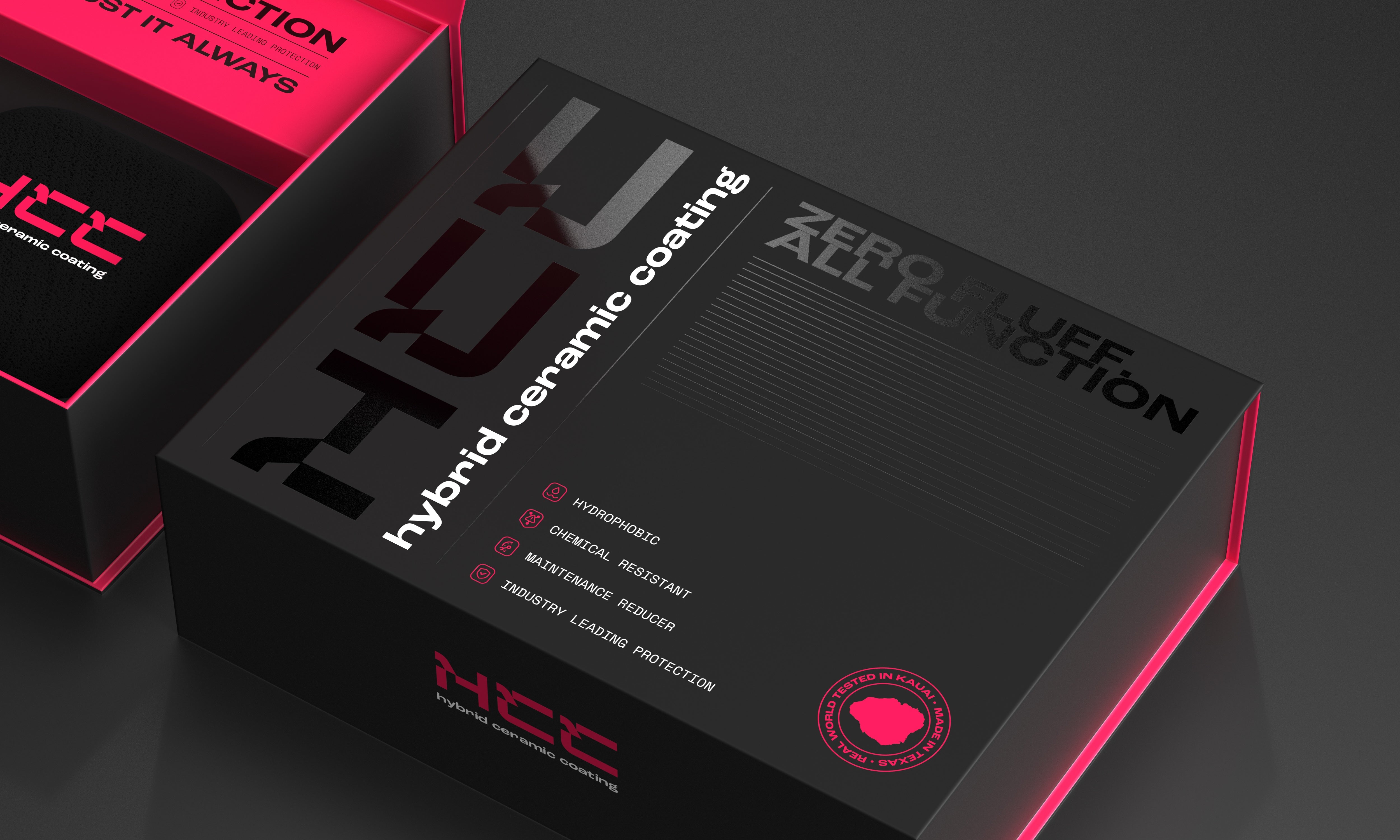
What we will tell you is what's in the product and how it behaves. HCC – Hybrid Ceramic Coating, our flagship for cars, boats, aircraft, and bicycles, is a high-solids coating built on a proprietary hybrid resin matrix that cures into a dense, crosslinked film. Every component is in the formula for function — no gloss boosters, thickening agents, or filler resins added for volume, and no graphene marketing. Our product page describes it as tested on real vehicles in Hawaii, California, Texas, Florida, Michigan, and New York rather than in a controlled lab, and we explicitly designed it to avoid the "my '3-year' coating died in 12 months" outcome — which is another way of saying we'd rather under-promise and let the film do the talking.
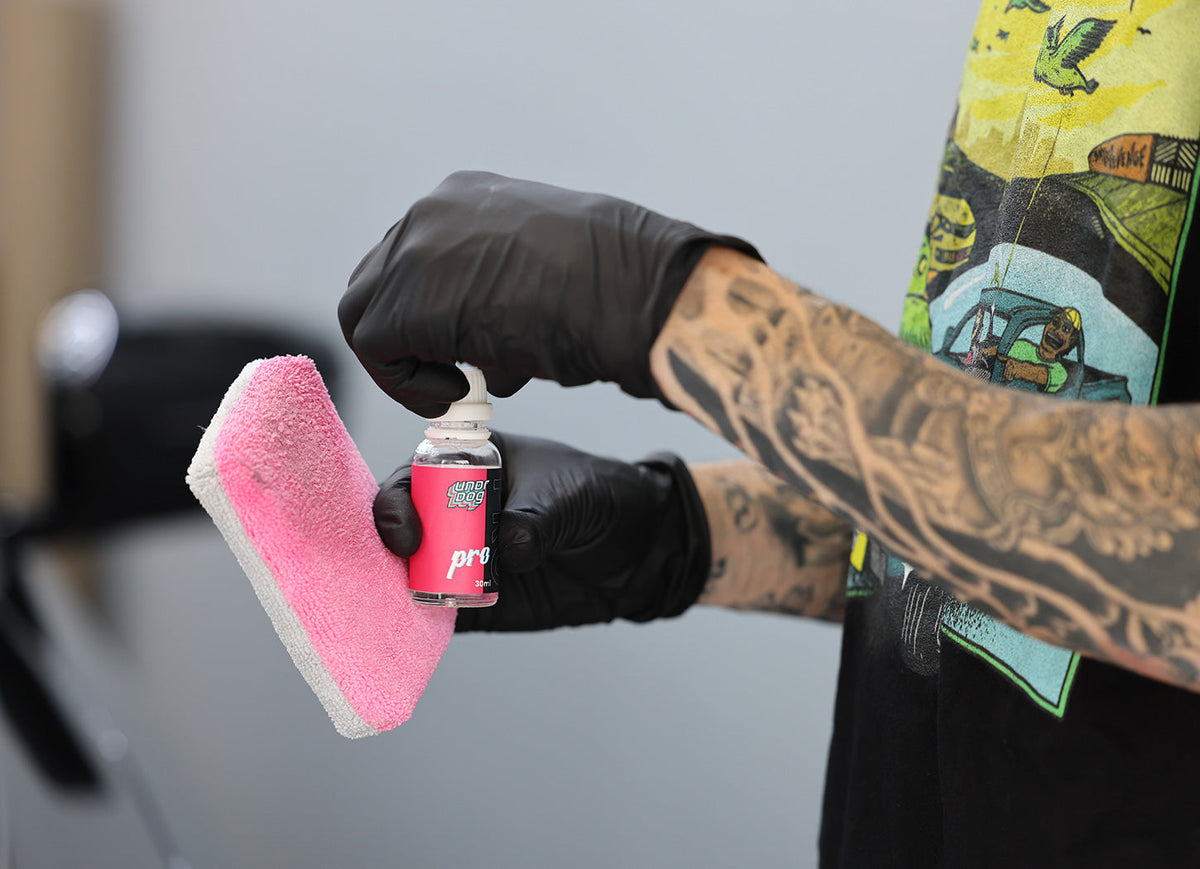
For those who prefer a faster, simpler install, Undrdog Pro is a PTFE, silicon, and paraffin blend with a 7–10 minute flash time, positioned — in our own words — on "real, measurable benefits" rather than buzzwords. Pro Plus is the professional-tier version with double Pro's chemical resistance, a 24-hour dry and 5-day cure. Different application styles, same philosophy.
And the detailers who install our coatings? They're our partners and customers, not a gate you have to pass through. If you'd rather have a pro handle the prep and application, we're glad you're paying them for their skill. If you'd rather do it yourself, you get the same product they do.
A coating that tells you what's in it, not how many years to expect.
HCC is a high-solids hybrid ceramic sold at one spec to pros and DIYers alike. No certification required, no annual fees to keep it "valid," no number on the bottle we can't back up.
Shop HCC →Frequently Asked Questions
How long does ceramic coating really last on a daily-driven car?
There's no single answer, and anyone who gives you one is guessing. Installer consensus puts professional-grade coatings at roughly two to five years of useful performance with good care, and consumer spray coatings at a few months to a year. Prep, climate, wash habits, and cure conditions move those numbers a lot in either direction.
Why do some coatings claim 7, 9, or 10 years?
Those figures typically reflect best-case or lab-style conditions — garaged storage, pH-neutral washes, annual decontamination, and near-perfect prep. The sources cited in this article describe them as marketing estimates rather than measured real-world outcomes.
Does "lifetime warranty" mean the coating lasts the life of the car?
Usually not in the way it sounds. At least one major brand's published warranty converts its lifetime tier to a five-year warranty if an annual inspection is missed. Read the specific document for the coating you're considering and look for what happens when a condition isn't met.
What does 9H hardness mean for durability?
Very little. 9H is a pencil-hardness rating, not a Mohs mineral rating, and it says nothing about UV resistance, chemical resistance, adhesion over time, or how the film handles heat cycling. Film build and crosslink density are better predictors of longevity.
Can a warranty require me to use the brand's own soap or maintenance products?
The FTC's warranty guide states that tie-in sales provisions generally aren't allowed unless the required item is provided free or the company has an FTC waiver, though a warrantor can disclaim damage caused by other products. Whether any specific warranty falls under an exception isn't something we can judge for you — but you should treat required purchases as part of the coating's total cost.
Why doesn't Undrdog put a year on its coatings?
Because no one knows how long a coating will last on your vehicle any more than a car manufacturer can guarantee how many miles your engine will run. Both depend on conditions and maintenance the manufacturer can't control. We'd rather tell you what's in the bottle and how to make it last than print a number we can't stand behind.
Is a professional install worth it if there's no year guarantee anyway?
Often, yes — for the prep and correction labor, not for a secret formula. A skilled detailer's decontamination and paint correction is the biggest single factor in coating longevity. If you're not going to do that work properly yourself, paying someone who will is money well spent.
How can I tell when my coating is actually done?
Watch performance, not the calendar. When water stops sheeting and beading even after a proper decon wash, the surface loses its slickness, and dirt starts bonding the way it does on bare paint, the film is depleted. A maintenance top-up can extend life; when that stops helping, it's time to strip and recoat.

Leave a comment
This site is protected by hCaptcha and the hCaptcha Privacy Policy and Terms of Service apply.