
You can't buy most "professional" ceramic coatings off the shelf because the brands that make them have decided you shouldn't be able to — the bottle is sold only to shops that have paid for the brand's training, agreed to its purchase minimums, and signed on to administer its warranty. Some of that is legitimate: coating chemistry that's hard to level and expensive to remove really does go wrong in untrained hands, and the prep work a good shop does before the coating ever touches paint is most of what you're paying for. But a lot of it is a distribution strategy, not a chemistry limitation, and the "pro-only" label tells you almost nothing about what's actually in the bottle. Here's how the model works, what it costs you, and how to evaluate a shop regardless of the logo on its wall.

What "Installer-Only" Actually Means
Start with what it doesn't mean. There is no government body that licenses ceramic-coating application. As one detailing-industry certification guide puts it: "There is no government-issued ceramic coating license. Anyone can apply ceramic coatings legally" (Luxe Wash Detailing, 2026 certification guide). "Certified installer," "authorized applicator," and "accredited detailer" are all private credentials issued by the coating manufacturer to shops that meet the manufacturer's terms.
Those terms are set by the brand and typically involve some combination of a training class (online or in person, a few hours to a few days), a fee, an initial product buy-in, ongoing purchase minimums, and an agreement to follow the brand's application and warranty procedures. In exchange the shop gets access to the "pro" product line, the right to sell the brand's multi-year warranty, and a listing on the brand's installer locator (LA Wrap and Tint School, 2026).
That's the whole mechanism. The coating isn't restricted because a regulator said so. It's restricted because restricting it is how the brand builds and controls a dealer network.
What Certification Programs Actually Require
Programs vary a lot, and it's worth reading a few in the brands' own words. Some are genuinely light-touch. Cerakote's applicator program states it is "Risk Free: No sign-up fees, and no minimum monthly purchases," and its criteria include a "Minimum of 2 years full-time professional detailing experience, including expertise in paint correction and surface preparation," operating "a legally registered business entity," and completing an online training course (Cerakote ProTeam program page). That's a program built around vetting experience, which is a reasonable thing to gate on.
Others are built around volume. Phoenix E.O.D.'s Kronos certification lists "A minimum purchase requirement of eight (8) 30ml Kronos Ceramic Clear Coat Protection OR four (4) 50ml… or two (2) 100ml," notes the requirement "can be bypassed if you receive in-person training from an authorized instructor," and explains the intent: "We want a certified installer to be competent in using Kronos and have enough exposure installing our ceramic coatings that they can 'troubleshoot' any problems they may encounter on multiple types of clear coat" (Phoenix E.O.D. certification page). A printed certificate and window decal cost extra.
Others are built around paid classroom time. CS-II's program describes a two-tier structure where "Authorized Installer" status comes from demonstrated installs, and the "Certified" tier "requires in-person training at our facility in Southern California" at "$950/person for a full day training class" covering "how to market our products, pricing, installation, fixing common problems, and advanced application methods," with classes "Limited to 5 students" (CS2USA certification page).
At the top end, third-party trade guides describe manufacturer programs with initial buy-ins in the low-to-mid four figures, quarterly purchase minimums, and starter kits of $700 or more, alongside multi-day training — with total installer investment in equipment, training, and facility commonly summarized in the $5,000–$15,000 range (Plyrium detailing-business guide; Luxe Wash certification guide). Notice what a shop is buying in those cases: not primarily chemistry knowledge, but the right to sell a warranty and appear on a map.

The Legitimate Reasons the Model Exists
Zero fluff cuts both ways, so here's the honest case for installer-only distribution.
Some pro formulas really are unforgiving. Detailer-forum consensus (and that's what it is — experienced-practitioner opinion, not a lab study) is that many pro-tier coatings have short, temperature-sensitive flash windows, cure very hard, and can't be polished off if you leave a high spot; you're sanding. One long-running r/AutoDetailing thread on exactly this question puts it bluntly: pro coatings are restricted "mostly because the application process is tougher for a first timer. They'd spend so much time dealing with complaints about high spots they'd never get anything else done," and "many require IR cure for proper curing and for any warranty" (r/AutoDetailing discussion). A brand that ships that chemistry to a first-timer in a humid driveway is buying itself a support problem.
Prep is the product. A coating bonds to whatever's underneath it. If that's oxidized, contaminated, swirled clear coat, the coating locks those defects in and bonds worse. Decontamination, paint-depth measurement, correction, and a clean panel wipe are the skilled labor in a professional install, and they're the reason a shop's result looks different from a rushed DIY job. Our four-step paint decontamination guide covers what that prep actually involves. Gating a product behind proof of that skill is defensible.
Brand control. If a coating fails on a customer's car, nobody asks whether it was applied at 95°F with the garage door open. They blame the brand. Restricting who applies it protects the brand's reputation — which is a business reason, but a real one.
None of that is an argument against professional detailers. Certified installers are skilled people doing hard, valuable work, and the good ones would produce a better result than most DIYers with any coating on the shelf. The question is whether the exclusivity is protecting the customer or protecting the margin structure — and in most programs, it's doing both.
What the Model Costs You
You can't evaluate the product on its own
When a coating is only available bundled with a shop's labor and a brand's warranty, you can't separate the three. Is the 5-year result coming from the chemistry, the 12 hours of correction, or the warranty's fine print that will replace it if it fails? You'll never know, because you can never buy just the bottle and test it. That's convenient for the brand.
The warranty is the product, and it's structured accordingly
One detailing-business guide states the incentive directly: "The warranty IS the customer's main reason to pay $2,500–$5,000 over a $200 DIY install. Without certification, you're competing on price; with certification, you're competing on warranty" (Plyrium). That warranty then commonly requires paid annual inspections at an authorized installer, brand-approved maintenance products, and no automatic washes to remain valid. One major brand's published aftercare document states that "Annual Inspections must be carried out by an approved applicator, within 30-days before the anniversary date of the last service to maintain the warranty" (published aftercare and warranty PDF). We broke down how those terms shrink a "10-year" claim in our post on how long ceramic coating really lasts.
For what it's worth, federal warranty law has an opinion on requirements like these. The FTC's guide to the Magnuson-Moss Warranty Act states: "Generally, tie-in sales provisions aren't allowed. These are provisions that state or imply that a consumer must buy or use an item or service from a particular company to keep their warranty coverage," using the example "Failure to have scheduled maintenance performed, at your expense, by the Great American Maintenance Company, Inc., voids this warranty." The same guide notes exceptions: a warrantor "can require a consumer to use select items or services if they're provided free of charge under the warranty or the warrantor receives a waiver from the FTC" (FTC Businessperson's Guide to Federal Warranty Law). We're not lawyers, and whether any specific coating warranty fits within those rules is a question for the brand and the regulator. But if a warranty requires you to pay a specific network for annual service to keep coverage, that FTC page is worth reading before you sign.
The margin stack
Every layer in an installer-only chain takes a cut: the manufacturer's price to the shop, the shop's certification and minimum-buy costs amortized into each job, the warranty administration, the locator listing, the marketing materials. You pay for all of it in the install price. Again — the labor and correction are worth real money. The brand licensing overhead is a cost you're carrying that has nothing to do with your paint.
"Pro-only" is not a spec
Here's the part that matters most. Installer-only tells you about a brand's distribution strategy. It does not tell you the coating's solids content, film build, crosslink density, chemical resistance, or how it was tested. Some installer-only coatings are excellent. Some retail coatings are excellent. Some of each are mediocre. The channel is not the chemistry, and you should not pay a premium for the channel thinking you're paying for the chemistry.

What the Claim Says vs. What to Ask
| What the shop or brand says | What it usually means | What to ask |
|---|---|---|
| "Professional-only coating" | Sold only through the brand's dealer program. Says nothing about chemistry. | What's the solids content and film build? Is there an SDS or technical sheet I can read? |
| "Certified installer" | Completed the brand's training and met its purchase terms. Often a few hours to a few days. | How many years have you been correcting paint? Can I see your prep process, not just finished photos? |
| "Backed by a 5-year manufacturer warranty" | Coverage that typically requires paid annual inspections and approved products to remain valid. | What does it cost per year to keep this warranty valid? What voids it? Is coverage prorated? |
| "You can't get this product anywhere else" | True by design — it's a distribution decision. | If I'm paying for the labor, why does it matter that I can't buy the bottle? |
| "DIY coatings don't last" | Some don't. Many failures are prep failures, not product failures. | What in this formula is different, specifically, from what I can buy? Show me, don't tell me. |
How to Judge a Shop Regardless of the Brand on the Wall
If you're hiring a professional — and for a lot of people that's the right call — the brand logo is the least useful thing to evaluate. Look at:
- Prep process, in detail. Ask them to walk you through decontamination, whether they measure paint depth before correcting, how many correction stages they plan for your paint condition, and how they do the final panel wipe. A shop that can explain this in plain language is a shop that does it.
- Correction before coating. Ask to see swirled-vs-corrected shots under a proper inspection light, not glamour shots in the sun. Coating over defects is the most common way an expensive install ends up disappointing.
- Environment. Indoor, dust-controlled, temperature-managed. Our application temperature guide covers why this matters for any coating.
- Straight answers on durability. A shop that says "depends on your environment and how you wash it, here's what to expect and here's how to maintain it" is being honest with you. One that quotes the brochure year as a guarantee is repeating marketing.
- Warranty terms, in writing, before you pay. Total cost to keep coverage. What voids it. Whether it's prorated. Who honors it if the shop closes.
A skilled detailer with a good process will get a great result out of a well-made coating whether or not a brand decided to make that coating exclusive. Pay for the skill and the process.
How Undrdog Does It
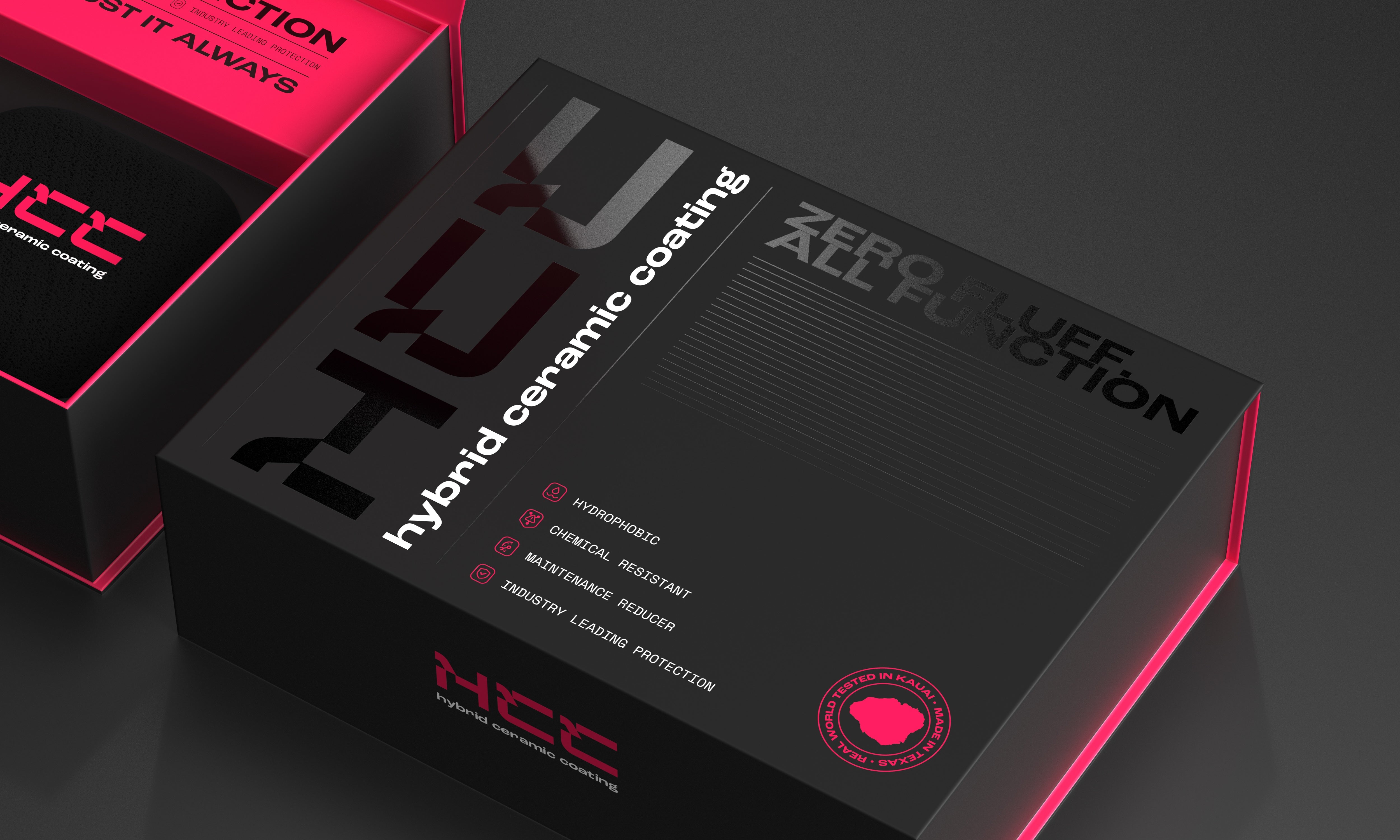
Undrdog Surface Products sells the same coatings to professional detailers and to DIYers. There's no certification class, no minimum buy, and no application fee to purchase HCC – Hybrid Ceramic Coating, Undrdog Pro, or Pro Plus. If a detailer coats your truck with HCC, it is the same bottle you could order yourself. That's deliberate: we'd rather you be able to evaluate the product on its own than take our word for it because it's locked in a cabinet.
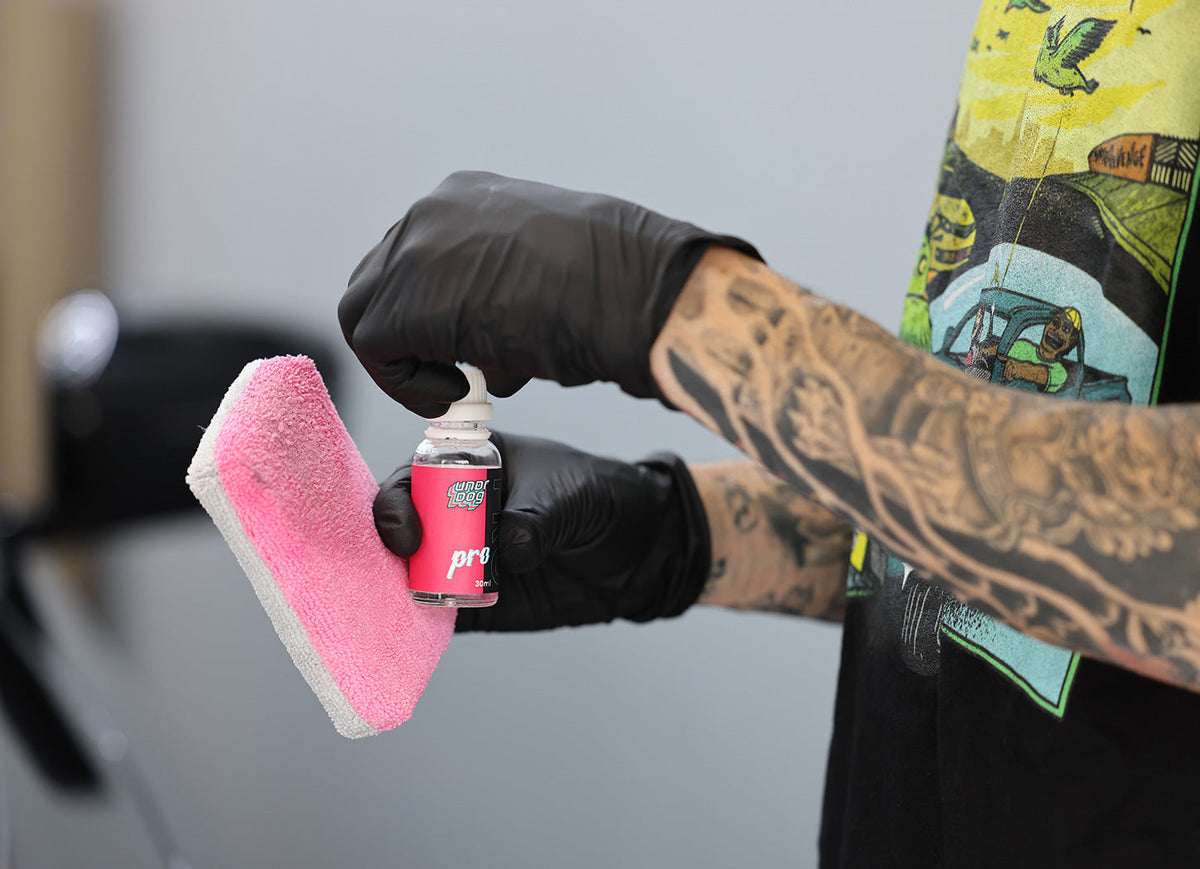
That doesn't mean we think professionals are optional. Undrdog supports a network of professional detailers who use and install our coatings — they're our partners and our customers, and the prep and correction they do is real value that a bottle can't replace. If you want the result without the labor, you can find a professional detailer near you who works with Undrdog. If you'd rather do it yourself, Pro's 7–10 minute flash window and HCC's tunable wipe window were designed so that's a realistic option. Our DIY vs. professional ceramic coating guide lays out when each path makes sense.
We also don't stamp a year on the bottle. We don't add years to coatings because no one knows how long a coating will last any more than a car manufacturer can tell you how many miles your engine is guaranteed to run. An engine's life depends on how it's driven and maintained; a coating's life depends on prep, environment, wash habits, and what it's exposed to. A year on a label is a marketing decision, not a measurement — and it's usually the thing the installer-only warranty is built around. We'd rather sell you a coating with high solids and strong chemical resistance, tell you exactly how to prep and maintain it, and let the result speak.
Same bottle for pros and DIYers. No gate.
HCC is the high-solids, crosslinked hybrid coating our professional network installs — and you can order it yourself. Or have an Undrdog pro do the prep and application for you.
Shop HCC → Find an Undrdog Pro →Frequently Asked Questions
Why can't I buy professional ceramic coating myself?
Because the manufacturer sells it only to shops in its installer program. There's no law restricting it — the brand chooses to distribute through trained, paying dealers to control application quality, administer its warranty, and build a network. Some retail brands, including Undrdog, sell the same coating to everyone.
Is "certified installer" a real qualification?
It's a private credential from the coating brand, not a government license. Requirements range from a few hours of online training to multi-day in-person classes, and often include fees, a product buy-in, or purchase minimums. It confirms the shop met the brand's terms; it doesn't by itself tell you how skilled they are at paint correction. Ask about experience and prep process directly.
Are professional-only coatings better than retail coatings?
Not by definition. "Pro-only" describes the sales channel, not the chemistry. Some installer-only coatings are excellent, some retail coatings are excellent, and the biggest driver of results with any coating is prep. Compare solids content, film build, chemical resistance, and application requirements rather than the label.
Is a professional ceramic coating install worth the money?
Often yes, if what you're paying for is skilled decontamination, paint correction, and a controlled application environment. That labor is real value. Be more skeptical when the premium is justified mainly by the brand's exclusivity or a multi-year warranty with expensive maintenance conditions.
Why do coating warranties require annual inspections?
Brands say inspections catch problems early and confirm maintenance. They also create recurring revenue for the installer network and give the warrantor a reason to deny claims if a visit is missed. Read the FTC's guidance on tie-in provisions and ask what it costs per year to keep coverage before you rely on a warranty.
Does the coating brand matter less than the detailer?
For most owners, yes. A skilled detailer with a disciplined prep process will get a better result from a good coating than an inexperienced applicator will get from any coating. Evaluate the person and process first, the product second, the logo last.
Can a DIYer get professional-level results?
With a forgiving coating, honest prep, and a controlled space, a careful DIYer can get very good results. The gap between DIY and pro is mostly correction skill and equipment, not access to secret chemistry. If your paint needs heavy correction, hiring a pro for that stage is usually the right call.
Does Undrdog have certified installers?
Undrdog works with a network of professional detailers who use and install its coatings, and you can find one near you on the Undrdog detailer page. There's no certification, class, or minimum buy required to purchase Undrdog coatings — pros and DIYers get the same product.


Leave a comment
This site is protected by hCaptcha and the hCaptcha Privacy Policy and Terms of Service apply.