

A self-healing ceramic coating claim is useful only when it identifies what recovers, which damage it addresses, and the conditions required. Self-healing is a real materials-research subject: a published study of waterborne polyurethane coatings measured recovery of mechanical and optical properties in its specific experimental materials (Mantala and Crespy, Macromolecules). That is not proof that an unspecified automotive coating repairs every scratch, restores damaged paint, or behaves the same way.
The right response is neither automatic belief nor automatic dismissal. Ask what the manufacturer means by “healing,” then match the answer to the problem you actually want solved. A promise about fine marks in a protective layer should not become a promise about restoring missing paint simply because both are described with the word “scratch.”
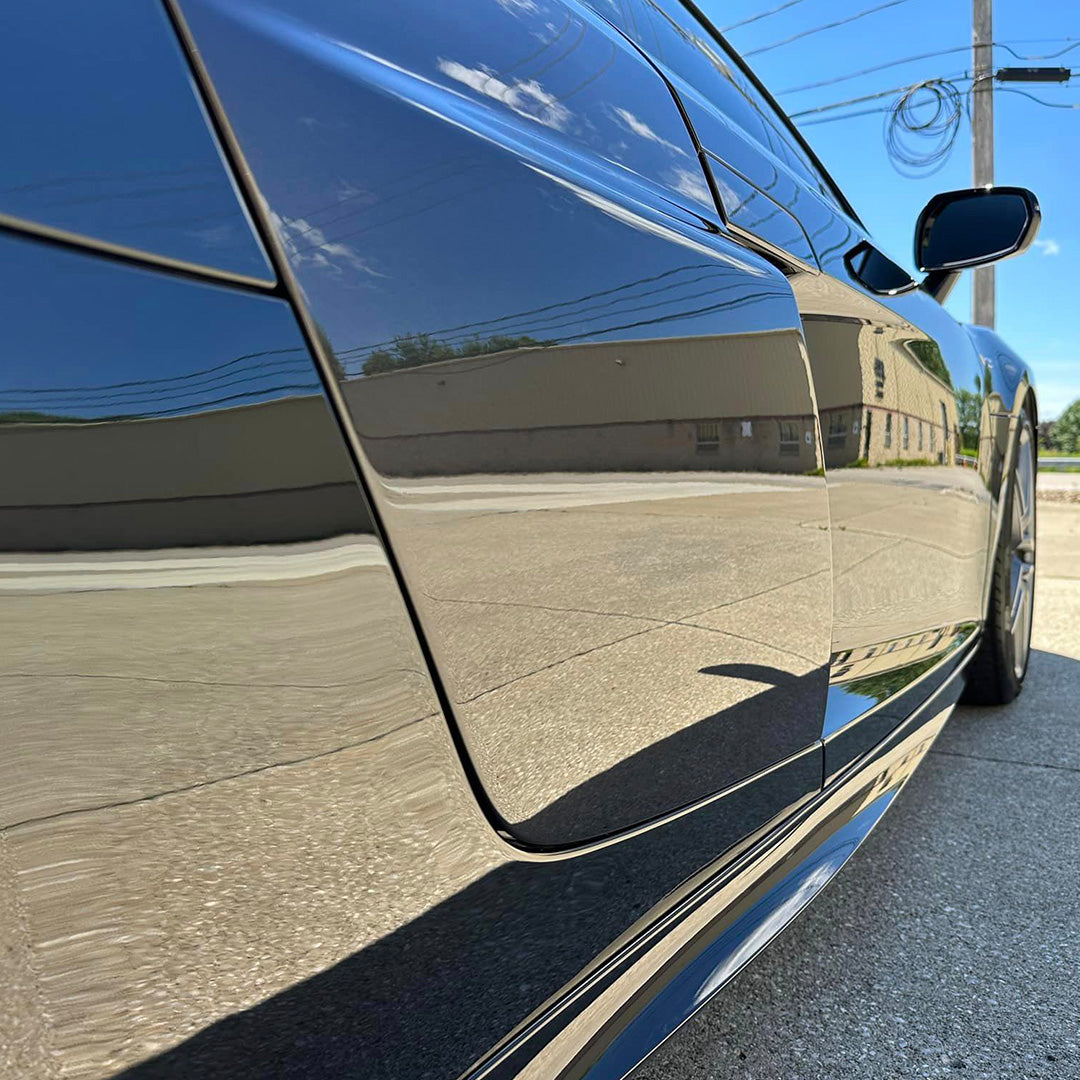
This is a buyer’s guide to interpreting the claim, not a home testing procedure. The photographs show ordinary Undrdog finish-care and application contexts; none is offered as evidence of self-healing.
What does a self-healing claim actually promise?
Start with the exact product statement rather than a shortened description from a social post. For example, FEYNLAB’s Self Heal Plus page states: “It repairs light scratches and wash-induced marring through heat activation.” (Manufacturer’s published description.)
Read the limits in that sentence: light scratches, wash-induced marring, and heat activation. Those words are part of the claim, not optional details to leave out when explaining it to a customer. The sentence does not specify a universal scratch depth, a guarantee of repairing every mark, or an outcome for every underlying paint condition.
A useful follow-up is: “Can you show me the product-specific evidence for that kind of mark, on that substrate, after the required installation and cure?” This asks for support without assuming that the product cannot work. It also gives a skilled installer room to explain where the effect is relevant and where it is not.
Keep the distinction between a published claim and a verified result. The quotation establishes what the manufacturer says; this article does not independently reproduce that product’s test or validate its performance. Do not turn an attributed statement into an Undrdog endorsement or a conclusion about another formula.
Which layer is supposed to recover?
Ask the seller to identify the material involved: the liquid-applied coating, a paint-protection film’s surface, or the vehicle’s paint system. Then ask whether the evidence concerns that same material. Avoid letting a demonstration on one kind of surface stand in for a demonstration on another.
Compatibility with an existing self-healing film is a different statement from a coating itself providing the recovery. For example, FEYNLAB’s PPF & Vinyl Ceramic page states: “The coating will not suppress the film’s response to heat, so the self-healing behavior continues to work as the manufacturer intended.” (Published film-compatibility statement.)
That wording points to the film’s response. Do not rewrite it as proof that the liquid coating independently repairs scratches on bare painted panels. The practical question is whether the proposed system preserves a function already associated with the film, adds a documented function of its own, or makes a different claim entirely.
Use a simple written prompt before buying: “The recovery claim applies to ______, over ______, after damage described as ______.” If those blanks cannot be filled, you do not yet have a clear basis for comparing the offering with another product. An unanswered question is a reason to request clarification, not a reason to accuse an installer of bad intent.
Appearance recovery and property recovery are different questions
The cited polyurethane study evaluated both mechanical recovery and optical behavior, including transmittance and haze after scratching (experimental research). Those are distinct things to measure, even when they are reported within the same research project.
Apply that distinction when reading a sales claim. If the evidence is a visual reduction in a mark, describe the demonstrated outcome as a visual reduction. If the claim is recovery of a particular protective or mechanical property, ask for the measurement of that property rather than treating the appearance result as a substitute.
A neat photograph may be useful as part of a documented demonstration, but do not ask it to answer questions it was not designed to address. What was the original defect? What was measured before and afterward? Was the same area shown under the same viewing conditions? Was any polishing, filling product, or other treatment used between images?
The point is not to demand every possible test for every purchase. It is to keep the conclusion the same size as the evidence. “The mark became less visible under these conditions” is a much more precise statement than “the entire protection system became as good as new.”

Translate the claim into questions you can check
Use this table to turn a broad description into a specific evidence request. These are suggested buying questions, not findings about every coating on the market.
| Claim or demonstration | What to ask | What not to assume |
|---|---|---|
| “Self-healing” | Which material and property recover? | That every layer underneath has been repaired |
| “Light scratches disappear” | How was the damage made, described, and measured? | That every mark called a scratch is equivalent |
| “Heat activated” | What surface temperature, exposure time, and approved procedure apply? | That any amount or method of heating is appropriate |
| A before-and-after video | Is it the same identified area, with a continuous record and consistent inspection? | That an appearance change proves every performance claim |
| “Preserves film self-healing” | Is this a compatibility claim about a named film system? | That the coating itself supplies the film’s recovery behavior |
| “Repeatable” | How many documented damage-and-recovery cycles were evaluated? | That one demonstration establishes unlimited repetition |
| “Long-lasting” | Was recovery evaluated after relevant aging or use, not only immediately after installation? | That initial recovery establishes a service life |
If a seller also cites a hardness rating, keep that question separate. Our guide to 9H hardness and rock-chip claims explains why a named measurement should not be stretched into a different type of protection promise. Apply the same discipline here: ask for the evidence that answers the actual recovery claim.
Save the response with the exact product name and version. A helpful answer should make your comparison clearer, even if it also tells you that some questions have not been tested. Do not fill an evidence gap with a guessed mechanism, a warranty duration, or a result from a different material.
Temperature and time belong in the claim
FEYNLAB’s Self Heal Plus FAQ gives a specific condition: “Heat. Surface temperatures need to reach approximately 140°F (60°C).” (Published activation statement.)
That quotation is product-specific information, not a universal temperature for ceramic coatings and not a DIY heating instruction. Ask the responsible installer for the complete approved procedure and the limits for the actual vehicle and installed system. Do not use the number above as permission to apply a heat gun, boiling water, or another improvised treatment.
Materials research also does not establish one universal activation rule: the cited waterborne-polyurethane study reports recovery at room temperature in its experimental materials (study abstract and results). Do not transfer that finding to a retail automotive bottle merely because both discussions use “self-healing.”
Before agreeing to a demonstration, ask how the required conditions will be recorded and whether they are relevant to your intended use. If the effect depends on conditions you cannot reasonably or safely provide, include that limitation in your purchasing decision. A benefit can be real under specified conditions and still be a poor match for your situation.
Read product evidence without borrowing results from research
The academic study describes deliberately prepared polyurethane materials and evaluates their recovery behavior; it is not a test of HCC or the retail automotive products quoted in this article (original research). Its value here is showing why the material, conditions, and measured property must be specified.
When a brochure links to a scientific paper, first ask whether the paper actually tested the marketed product. If not, treat it as background science rather than direct product validation. The next question is what connects the published research to the installed coating you are considering.
Use our lab-report verification guide when a seller supplies a report. For this particular claim, focus your reading on the tested material, substrate, cure, damage description, recovery conditions, comparison sample, measured endpoint, and any repeated or aged-sample evaluation.
Do not confuse “not provided” with “failed.” If a document does not include repeated-cycle results, say that repeatability has not been established by that document. If a report concerns appearance only, say that it does not answer a different property question. That is more accurate and fairer than either endorsing the whole claim or dismissing the whole product.
Decide what the feature is worth for your vehicle
Start with the problem, not the vocabulary. Are you trying to reduce the visibility of light marks, improve maintenance, evaluate protection over film, or deal with existing paint damage? Write that objective down before comparing packages.
Consider two hypothetical buyers. One wants a documented reduction in light surface marring and is comfortable with the specified conditions and maintenance. Another expects a product to restore a stone-damaged paint finish. They should not treat the same limited recovery statement as an answer to both needs; each should ask for evidence relevant to the intended result.
For a practical comparison, request a written description of the preparation, application, cure, aftercare, and claimed recovery benefit. Ask what happens if a visible mark remains and who should inspect it before any corrective treatment. Keep any warranty promise separate and obtain the applicable written terms rather than assuming that the word “healing” determines coverage.
Professional labor still deserves to be evaluated on its own merits. Ask the detailer to explain the inspection and preparation proposed for your vehicle, the finish standard you are agreeing to, and the safe handover instructions. Do not reduce the value of that work to whether one marketing term appears on the bottle.
Most importantly, do not deliberately scratch your car to settle an argument. Request existing product-specific evidence or a professionally controlled demonstration on a separate, appropriate test piece. If your installed finish already has an unexplained mark, document it and ask for an assessment before adding heat, abrasives, or another product.
How Undrdog does it
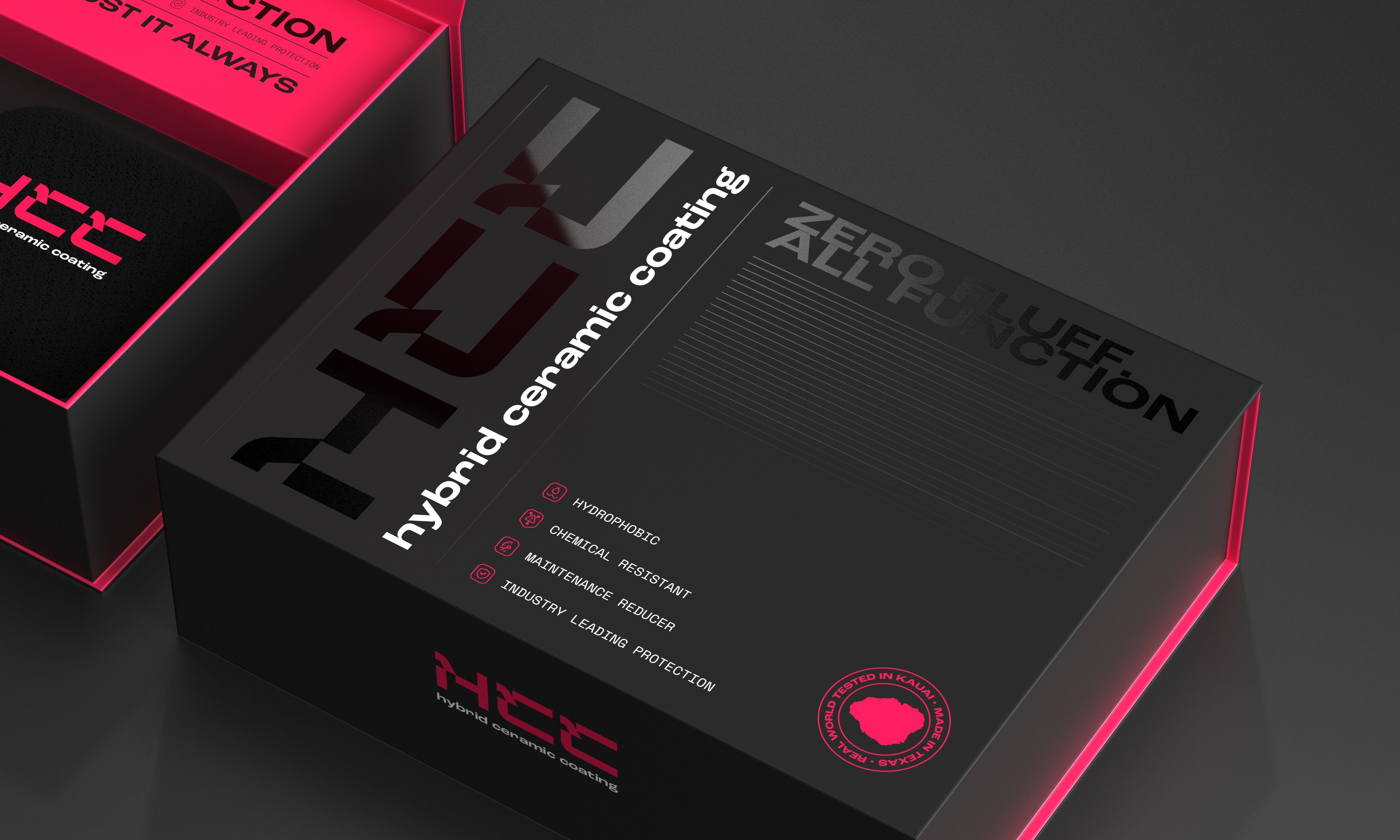
HCC Hybrid Ceramic Coating is Undrdog’s flagship all-surface coating for suitable projects involving cars, boats, planes, and bicycles. Its multi-year positioning is conditional on preparation, exposure, use, and maintenance rather than a fixed lifespan for every installation (HCC product information).
This article makes no self-healing claim for HCC. It does not present an Undrdog recovery test, infer a mechanism from the word “hybrid,” or suggest that HCC repairs damaged paint. Evaluate our product against its supported claims and the requirements of your actual project, using the same standard you apply to another coating.
If a new coating is appropriate, HCC is our first recommendation to evaluate after confirming the surface and preparation requirements. If the immediate problem is an unexplained mark or an existing installation that needs assessment, do not treat buying another coating as the diagnosis. Resolve that question first.
Read the current application and safety information before use; HCC’s published precautions include ventilation, protective equipment, and keeping the product away from ignition sources (ingredients and safety section). No recovery-related discussion in this guide overrides those directions or authorizes an improvised heat treatment.

Frequently asked questions
Is self-healing coating technology real?
Researchers have measured recovery in specific coating materials, including the mechanical and optical recovery reported in the cited polyurethane study (original research). That establishes the research result within its scope, not the performance of every automotive product using the term.
Does self-healing mean every scratch will disappear?
Do not assume that. Ask which material and damage type the product-specific claim covers, what conditions are required, and how recovery was evaluated. Do not extend a limited statement about light marring to every visible mark or to restoration of the underlying paint.
Is a coating that preserves PPF healing itself self-healing?
Do not infer one from the other. A compatibility statement about preserving the film’s response and a claim about recovery within the applied coating are different propositions. Ask which one is being made and request evidence for that exact proposition.
Does a before-and-after video prove full recovery?
Evaluate what the video actually documents. Ask for the same identified area, consistent inspection, the damage description, the treatments used, and the measured endpoint. Do not treat a visible improvement alone as proof that every mechanical or protective property has returned to its original state.
Should I heat my car to test a self-healing claim?
Do not improvise a heat test on your vehicle. Obtain the complete approved instructions for the exact installed product and surface, and consult the responsible installer. Request existing evidence or a controlled demonstration on a suitable separate test piece instead of deliberately damaging your car.
Does one successful demonstration prove years of healing?
No such conclusion follows from one demonstration alone. Ask whether the evidence includes relevant aging, repeated damage-and-recovery cycles, and the same measured endpoint after those conditions. If those results are not supplied, keep the conclusion limited to what was actually shown.
Is this article claiming that HCC is self-healing?
No. This article makes no self-healing claim for HCC and supplies no HCC recovery test. Consider it for a suitable coating project based on its supported product claims, preparation requirements, safety directions, and your intended use.
What is the most useful question to ask an installer?
Ask: “Which material and property recover, after what damage, under what conditions, and where is that documented for this product?” Then connect the answer to your vehicle and the written installation scope rather than relying on the label alone.
Choose protection by the job, not the buzzword
Review HCC’s supported claims, surface suitability, and preparation requirements before planning a new installation.
Shop HCC Hybrid Ceramic Coating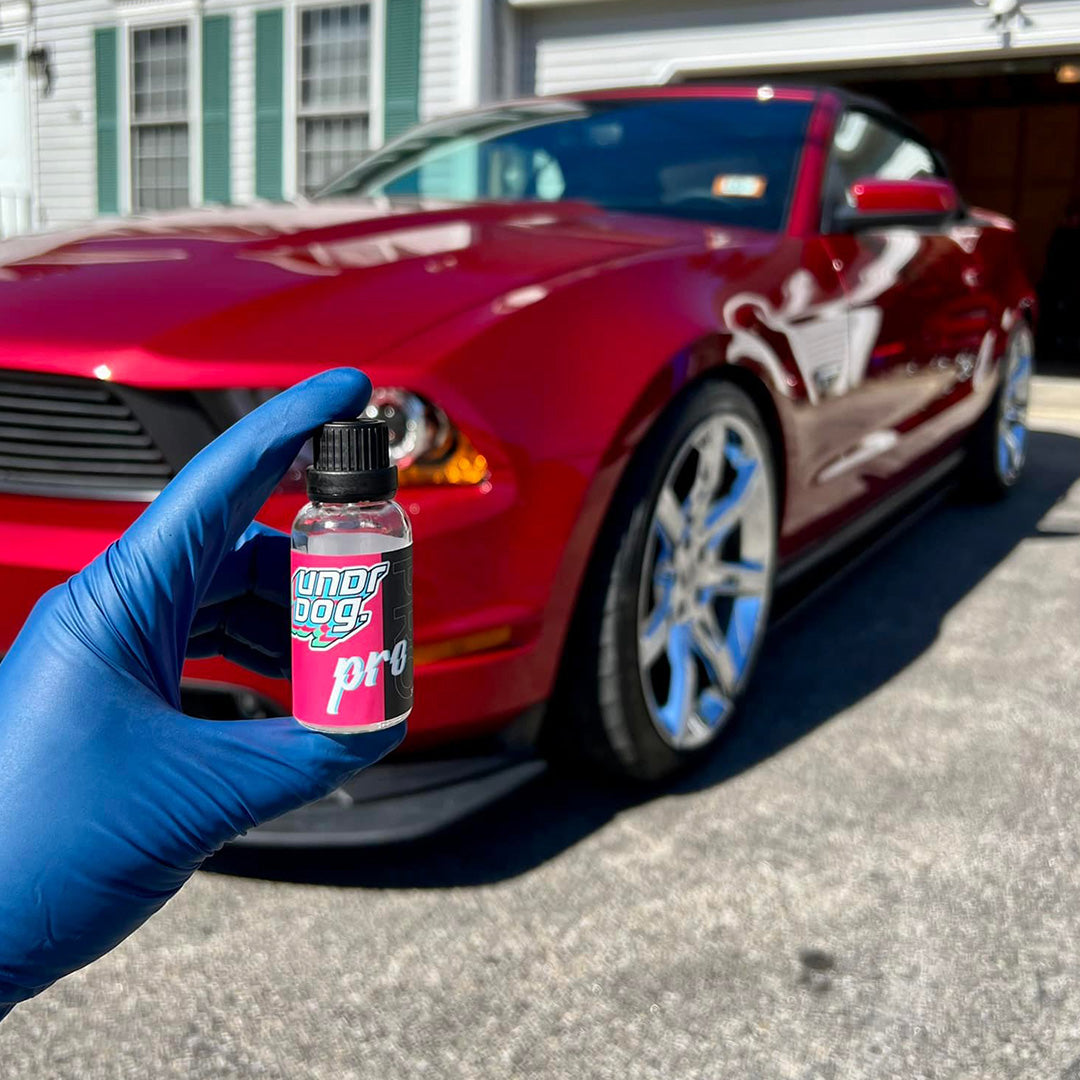

Leave a comment
This site is protected by hCaptcha and the hCaptcha Privacy Policy and Terms of Service apply.