

If your car has dull, cloudy rings that won't wash off, those are water spots — dried mineral deposits left behind when hard water, rain, or sprinkler runoff evaporates on your paint. The good news: most water spots come off safely without sanding or harsh rubbing if you treat them the right way and in the right order. Here's exactly how to remove them and stop them from coming back.
What causes water spots on car paint?
Water spots aren't actually stains in the paint — they're mineral residue (mostly calcium and magnesium) sitting on top of the clear coat. When water dries on a hot panel, the liquid evaporates and the dissolved minerals get left behind in a ring. Leave them long enough in direct sun and they can start to etch the clear coat, which is why fast treatment matters.
There are three common culprits:
- Hard tap water from washing and not drying the car.
- Sprinkler overspray — the worst offender, because it hits the same spots daily.
- Rain on a dirty or uncoated surface, which traps minerals and contaminants against the paint.
How to remove water spots from car paint (step by step)
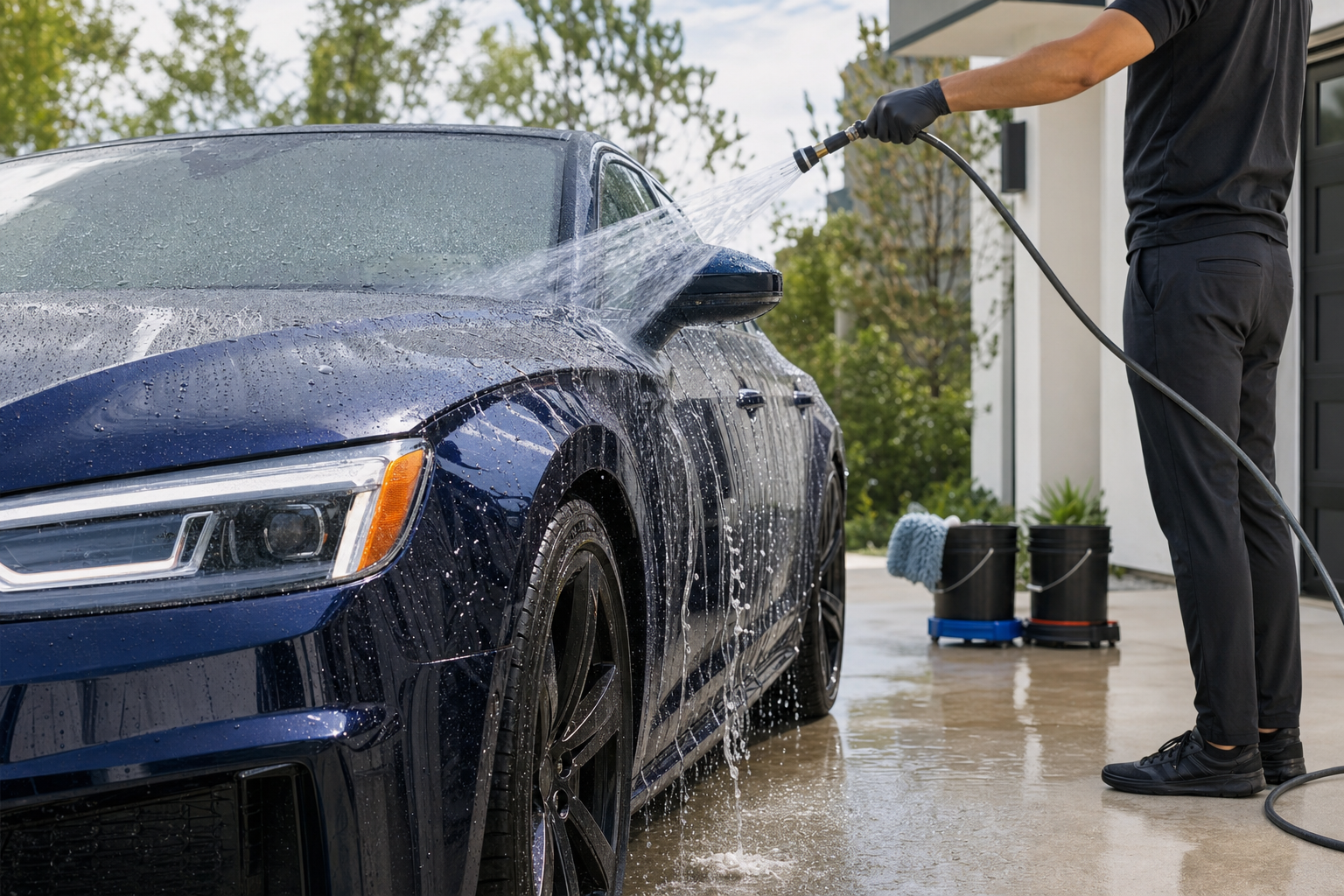
- Wash the car first. Use a pH-balanced car soap so you're not fighting grit while you work. Loose dirt will scratch the paint if you skip this. We use Undrdog Soap because it's slick and coating-safe.
- Try a dedicated water spot remover. For mineral spots that survive a normal wash, spray a product formulated to dissolve hard-water deposits, let it dwell, then wipe with a clean microfiber. A purpose-built water spot remover cuts the minerals without you scrubbing.
- Hit stubborn fallout with an iron remover. If the "spots" are rusty orange flecks, that's iron fallout, not water minerals. An iron and fallout remover like The Purps dissolves them chemically — you'll literally see it turn purple as it works, no scrubbing needed.
- Clay or decontaminate if it still feels rough. Run your hand over the panel after washing. If it feels gritty, the surface is contaminated and needs a decon step before anything else will stick.
- Polish only if the spots etched the clear coat. If a mark stays after all of the above, the water has lightly etched the clear coat and needs a light machine polish to level it out.
How to stop water spots from coming back
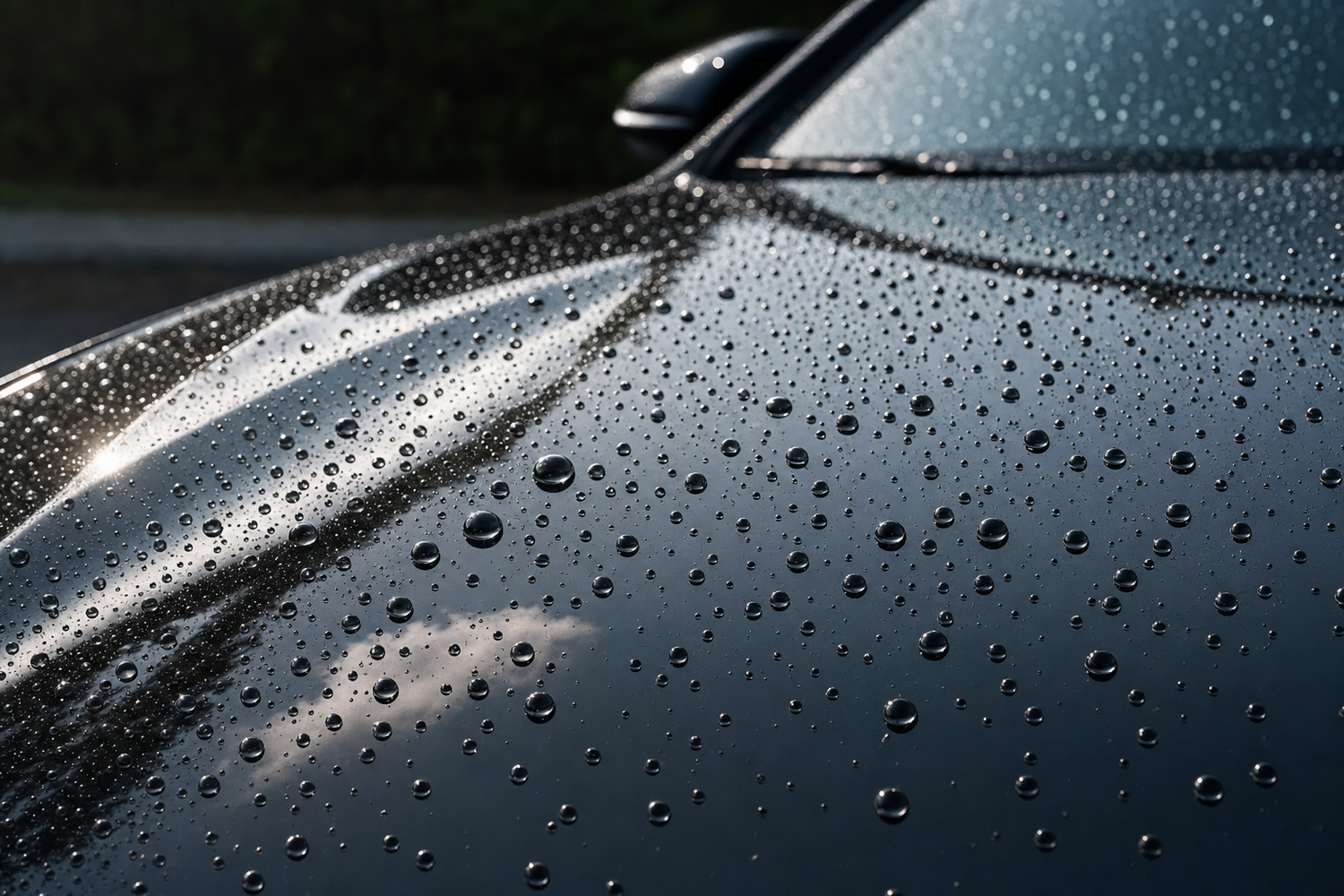
Removing spots is only half the job. The reason they keep returning is that bare or worn paint lets water cling and sit. The fix is a hydrophobic protective coating that makes water sheet off instead of pooling.
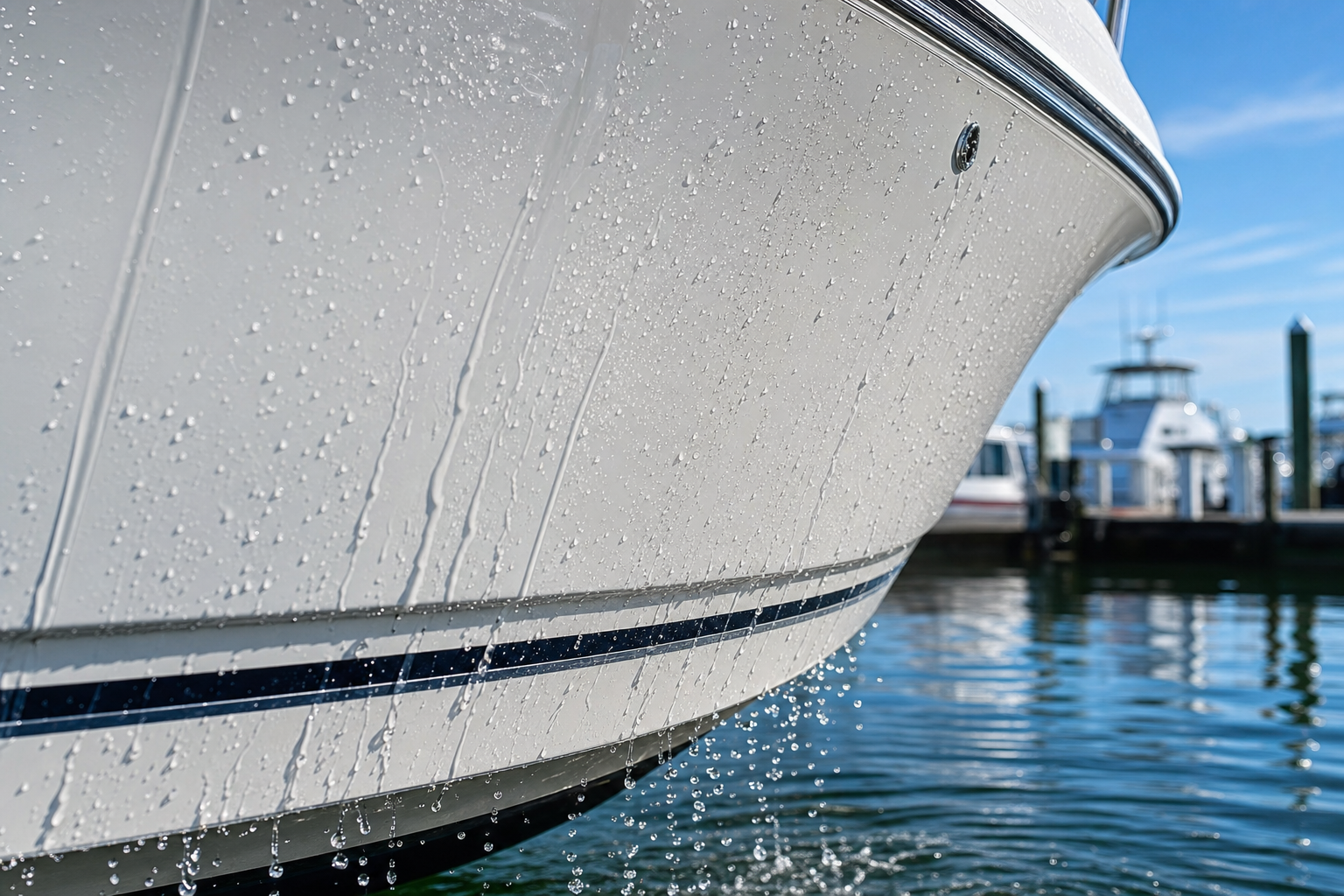
A coating like Undrdog Pro creates a slick, water-repelling barrier on the clear coat. Instead of flat puddles that dry into rings, water rolls off in tight beads and carries minerals with it. That means fewer spots, faster drying, and far less time fighting deposits every week. For the longest-lasting protection, our top-tier HCC (Hybrid Ceramic Coating) takes it even further. For boats and watercraft dealing with constant hard water and spray, Undrdog Marine does the same job on gelcoat and fiberglass.
Two habits make the protection last:
- Dry the car after every wash and rain — even a coated surface spots if mineral water is left to evaporate on it.
- Move sprinklers so they're not hitting your parked car daily.
What you'll need
- pH-balanced car soap (Undrdog Soap)
- Water spot remover for mineral deposits (Water Spot Remover)
- Iron and fallout remover (The Purps) for rusty specks
- Clean microfiber towels
- A hydrophobic coating to prevent future spots (Undrdog Pro)
Frequently asked questions
Will water spots damage my paint permanently?
Not usually, if you treat them early. Surface mineral deposits wipe off. Only spots left to bake in direct sun for a long time etch the clear coat, and even those can typically be polished out.
Can I use vinegar to remove water spots?
A diluted vinegar solution can dissolve light mineral spots in a pinch, but it's acidic and risky on coated or delicate finishes. A dedicated, pH-controlled water spot remover is safer and won't strip wax or coatings.
Does a ceramic coating prevent water spots?
It dramatically reduces them. A hydrophobic coating makes water bead and roll off instead of pooling, so far fewer minerals get left behind. You still need to dry the surface, but the coating does most of the work.
How do I get water spots off glass and windows?
Glass holds mineral deposits hard. Use a water spot remover made for glass, then keep it clean with an ammonia-free glass cleaner. A coating on the glass will make future spots wipe off easily.
Ready to stop fighting water spots for good? Protect your paint with a hydrophobic coating from Undrdog and let water do the work for you.

Leave a comment
This site is protected by hCaptcha and the hCaptcha Privacy Policy and Terms of Service apply.