

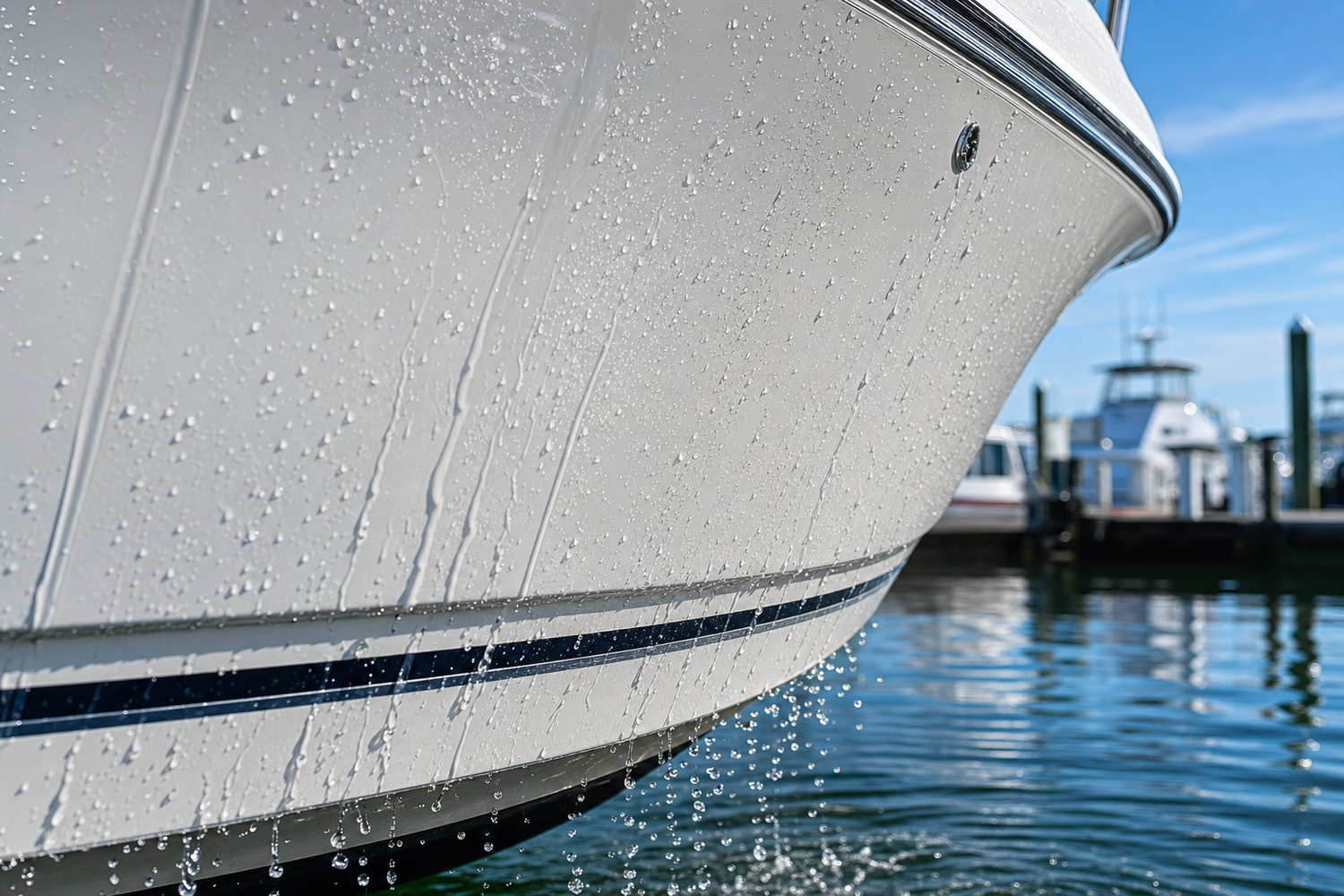
To remove water spots from a boat hull, wash the hull with a marine-safe soap, treat the mineral and salt deposits with a dedicated water spot remover, then seal the gelcoat with a hydrophobic coating so spots stop forming. Water spots on a boat are dried mineral and salt residue left on the gelcoat after water evaporates — and on a boat they build up fast because the hull is constantly wet. Here's how to get them off safely and keep them gone.
What causes water spots on a boat hull?
Water spots on gelcoat are deposits left behind when hard water, lake water, or saltwater dries on the surface. Unlike a quick rinse on a car, a boat hull deals with this constantly — at the waterline, from spray, and every time it sits wet on the trailer or in the slip. Left alone, those deposits harden, dull the gelcoat, and can etch into it.
The usual sources:
- Saltwater — leaves heavy mineral and salt crust, especially at the waterline.
- Hard fresh water from lakes, rivers, and washdowns.
- Sitting wet on a trailer or lift, where droplets bake in the sun.
How to remove water spots from a boat hull (step by step)
- Rinse and wash the hull first. Flush off loose salt and grit, then wash with a boat-safe, pH-balanced soap so you're not grinding deposits into the gelcoat. Undrdog Soap is slick and coating-safe, so it lifts grime without stripping protection.
- Treat the mineral deposits. For spots that survive a wash, work a dedicated water spot remover over the area, let it dwell, and wipe with a clean microfiber. This dissolves the hardened minerals chemically instead of you scrubbing the gelcoat.
- Knock out rust and fallout staining. Orange or brown staining near hardware and the waterline is usually iron and rust fallout, not water minerals. An iron remover like The Purps dissolves it on contact — you'll see it turn purple as it reacts, no aggressive rubbing required.
- Check the surface by feel. Run a clean hand over the gelcoat. If it still feels rough or gritty, it's contaminated and needs decontamination before any coating will bond properly.
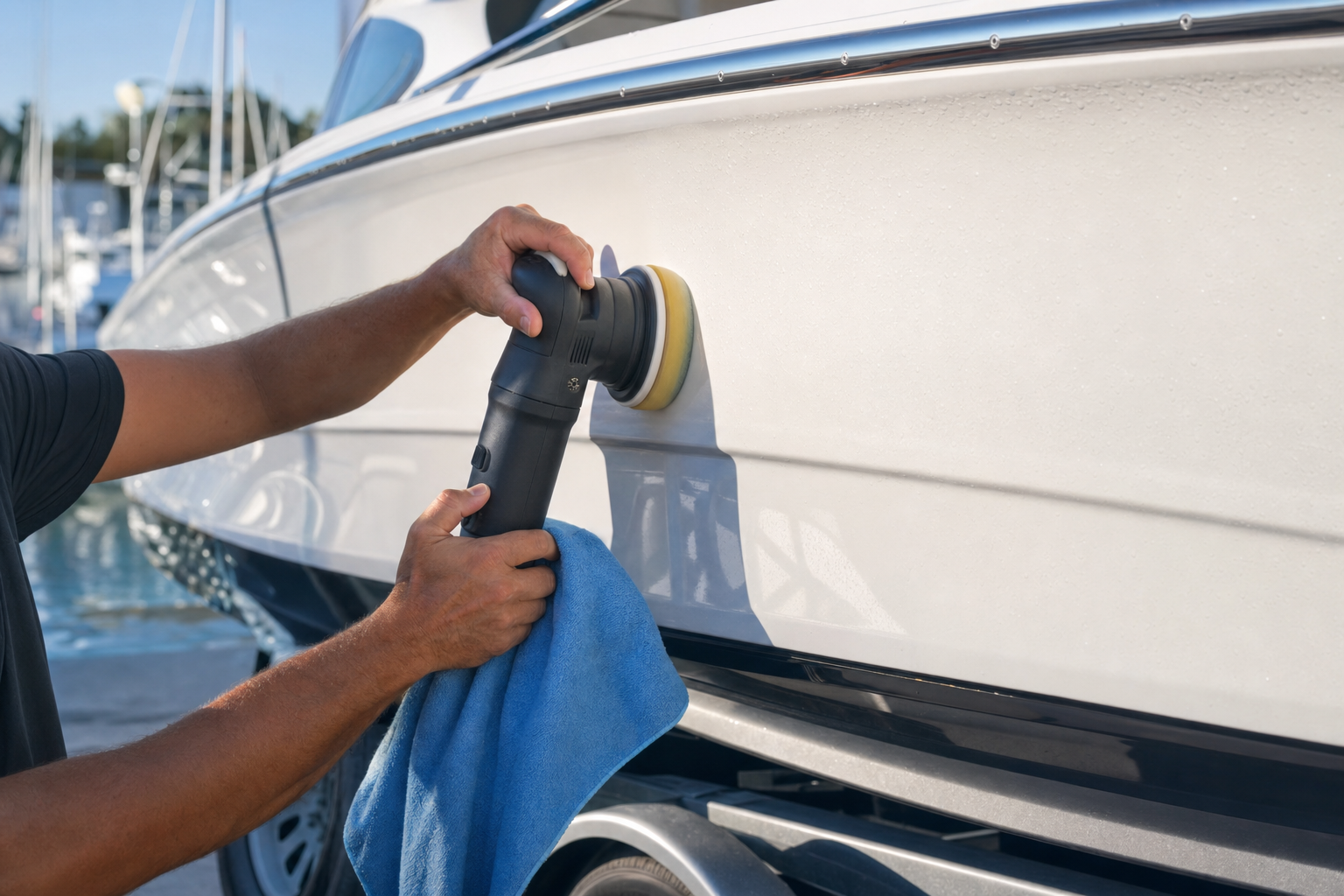
- Polish only if it's etched. If a spot or dullness remains after all of the above, the deposits etched the gelcoat. A light machine compound or polish will level it and restore clarity before you seal it.
How to stop water spots from coming back
Cleaning is only half the battle on a boat — bare or oxidized gelcoat is porous and grabs onto every mineral the water leaves behind. The fix is a hydrophobic coating that makes water sheet and bead off instead of clinging and drying in place.
A marine coating like Undrdog Marine seals the gelcoat with a slick, water-repelling barrier built for constant water exposure, salt, and UV. Water rolls off in tight beads and carries minerals with it, so you get far fewer spots, easier washdowns, and protection against oxidation and fading. For boats that take a beating in saltwater or see heavy seasonal use, Undrdog Marine Plus steps up the durability and gloss. For the highest level of protection on a hull, Undrdog HCC (Hybrid Ceramic Coating) is our top-tier coating for boats and cars alike — the most durable, longest-lasting option, professional-grade yet still DIY-friendly.
Two habits make it last:
- Rinse with fresh water and dry after every outing — even a coated hull will spot if mineral-heavy water is left to evaporate on it.
- Don't let it sit wet on the trailer or lift in direct sun longer than you have to.
What you'll need
- Marine-safe, pH-balanced boat soap (Undrdog Soap)
- Water spot remover for mineral and salt deposits
- Iron and fallout remover (The Purps) for rust staining
- Clean microfiber towels
- A marine hydrophobic coating to prevent future spots (Undrdog Marine)
Frequently asked questions
Will water spots ruin my gelcoat?
Not if you treat them early. Surface mineral deposits wipe off with the right remover. Only spots left to bake in the sun for a long time etch the gelcoat, and even those can usually be polished out and then sealed.
Can I use vinegar to remove water spots on a boat?
Diluted vinegar can dissolve light mineral spots in a pinch, but it's acidic and risky on coated or oxidized gelcoat. A pH-controlled marine water spot remover is safer and won't strip your coating.
Does a marine ceramic coating stop water spots?
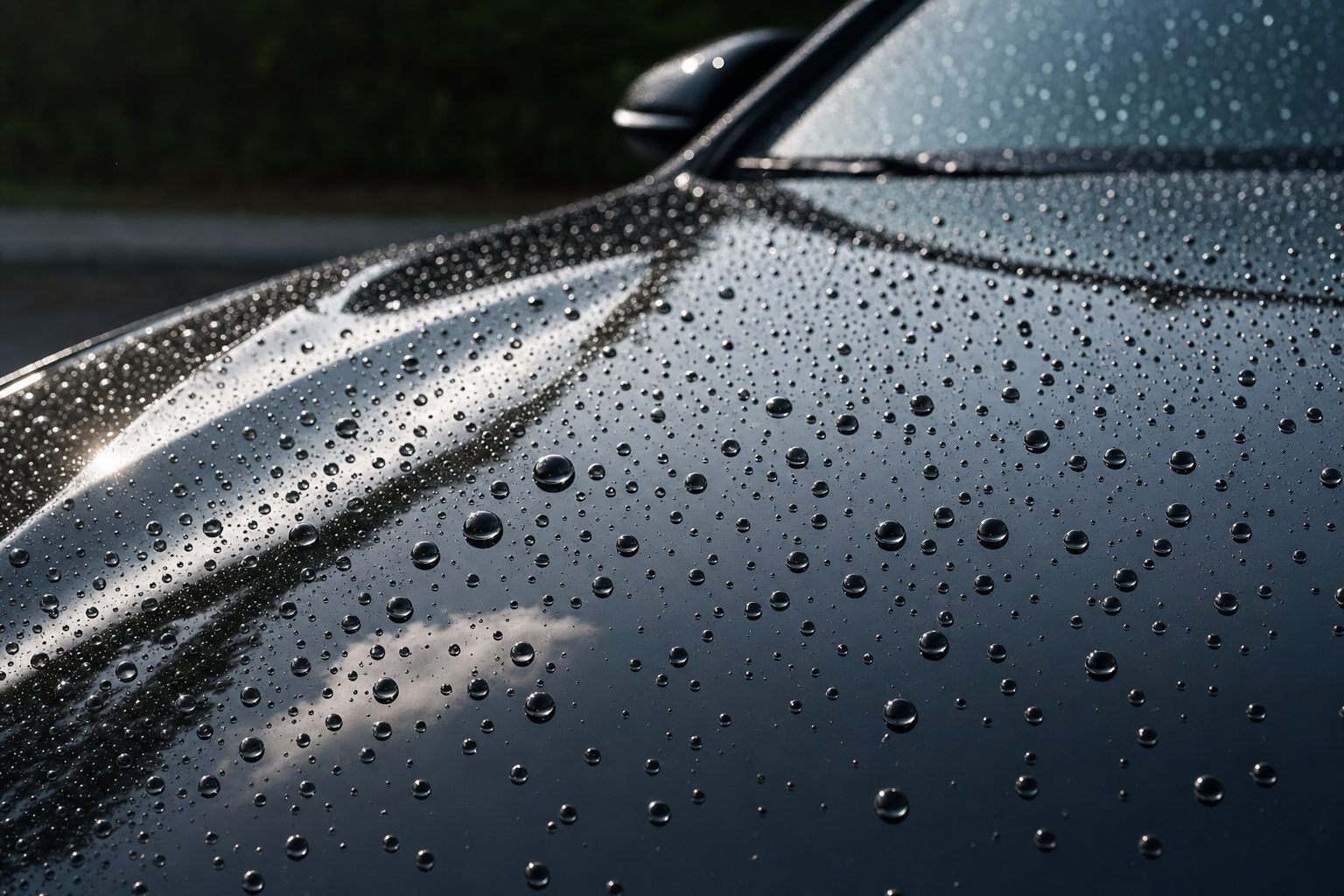
It dramatically reduces them. A hydrophobic coating makes water bead and roll off instead of pooling, so far fewer minerals get left behind. You still rinse and dry, but the coating does the heavy lifting.
How often should I reapply a coating on my boat?
It depends on use and water conditions, but a quality marine coating lasts a full season or more. Maintain it with proper washing and a periodic top-up product to extend the protection.
Tired of scrubbing the same spots every weekend? Seal your hull with a marine coating from Undrdog and let the water do the work.

Leave a comment
This site is protected by hCaptcha and the hCaptcha Privacy Policy and Terms of Service apply.