

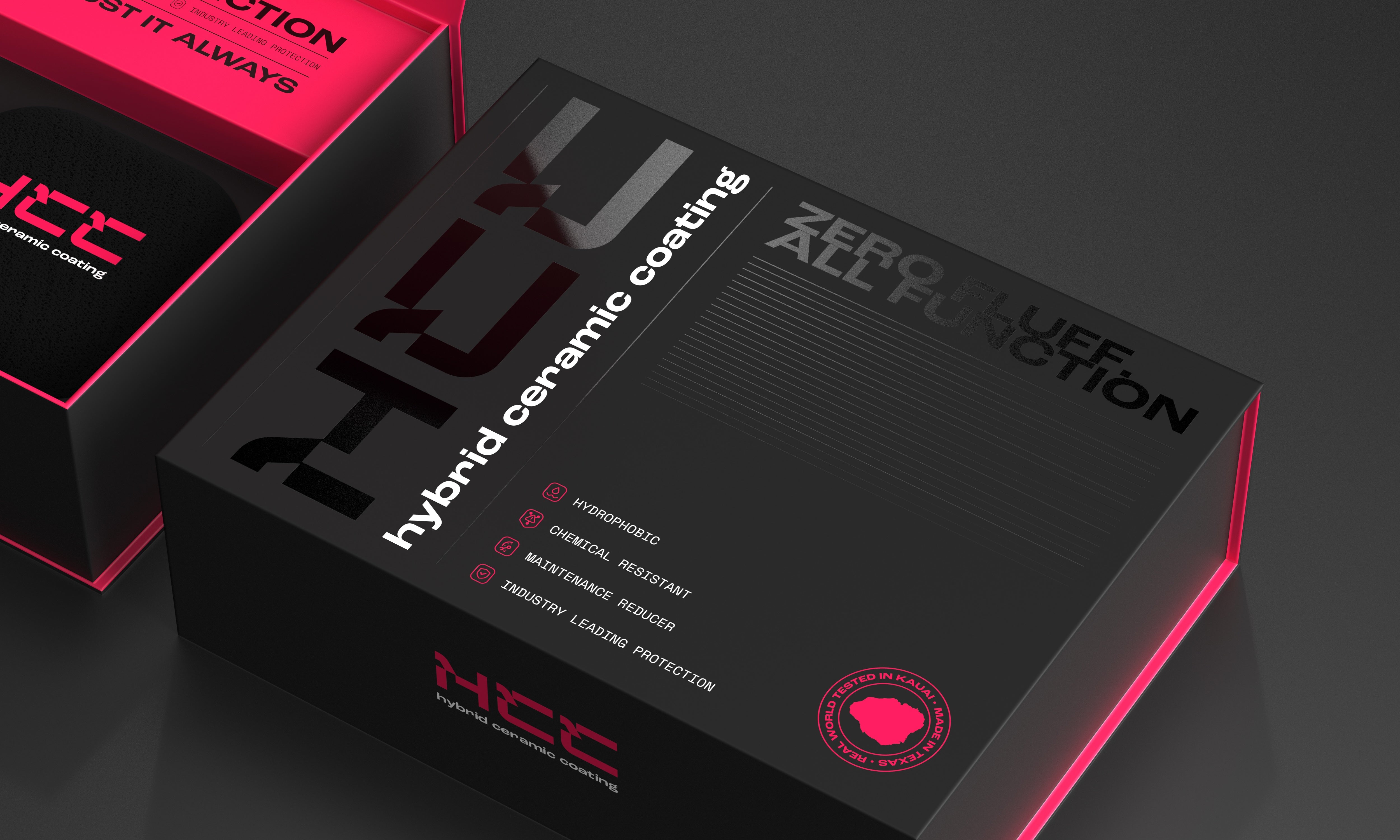
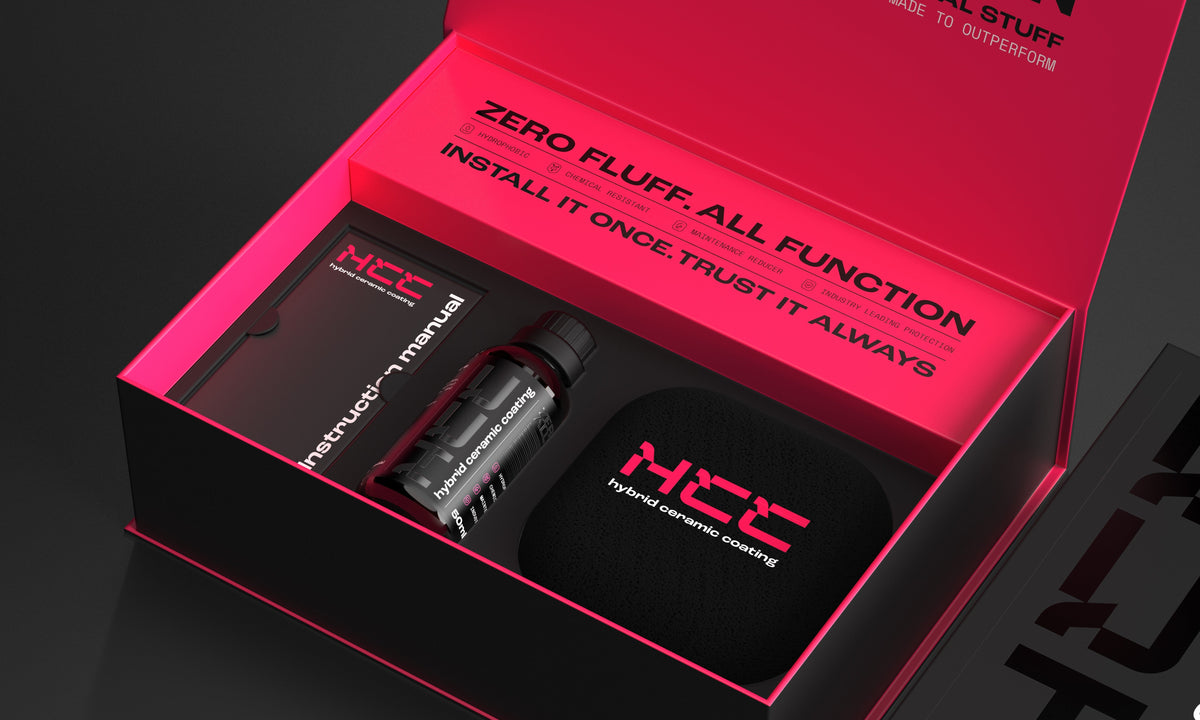
HCC (Hybrid Ceramic Coating) is Undrdog's flagship all-surface ceramic — a single formula built to bond to car paint, boat gelcoat, aircraft paint, and bicycle frames, so you don't need a different bottle for every surface you own. It cures dust-free in about 4 hours, reaches full chemical resistance in 5 to 7 days, and realistically holds strong protection for roughly 2 to 3 years with proper prep and maintenance — not "forever," but long enough to change how often you're thinking about paint protection at all. Below is the full breakdown: the chemistry, where it actually works, how long it lasts, and how to prep for it correctly.

What Makes HCC "Hybrid," and Why That Matters
Most consumer ceramic coatings lean almost entirely on silica (SiO2) chemistry to form a hard, glassy shell on top of your clear coat. That shell looks great in a bottle test, but glass-heavy films can be brittle — they resist scratching from soft contamination but can shear or micro-crack under abrasion and thermal cycling over time. HCC uses a hybrid resin matrix instead: a crosslinked network that bonds into the clear coat or gelcoat rather than just sitting on top of it, giving you flexibility that moves with the panel instead of a rigid shell that eventually gives up. That's the practical difference between "hybrid" and plain silica marketing — it's about how the film behaves under stress over months and years, not just how dramatically it beads water on day one.
Independent breakdowns of coating durability back up why formulation quality matters more than the word "ceramic" on a label. According to a 2026 durability analysis from LA Wrap and Tint School, consumer-grade coatings with lower SiO2 concentration and thinner application typically deliver 6 to 12 months of real protection before performance drops to roughly wax-equivalent levels, while professional-grade, high-solids coatings applied correctly can hold strong protection for 2 to 3 years, with multi-layer systems stretching further under consistent maintenance. Where a coating lands in that range comes down to film build, resin quality, and surface prep — not hype copy. For the general chemistry comparison across categories, see our breakdown of ceramic coating vs wax vs sealant.
Where HCC Actually Works — Beyond the Car
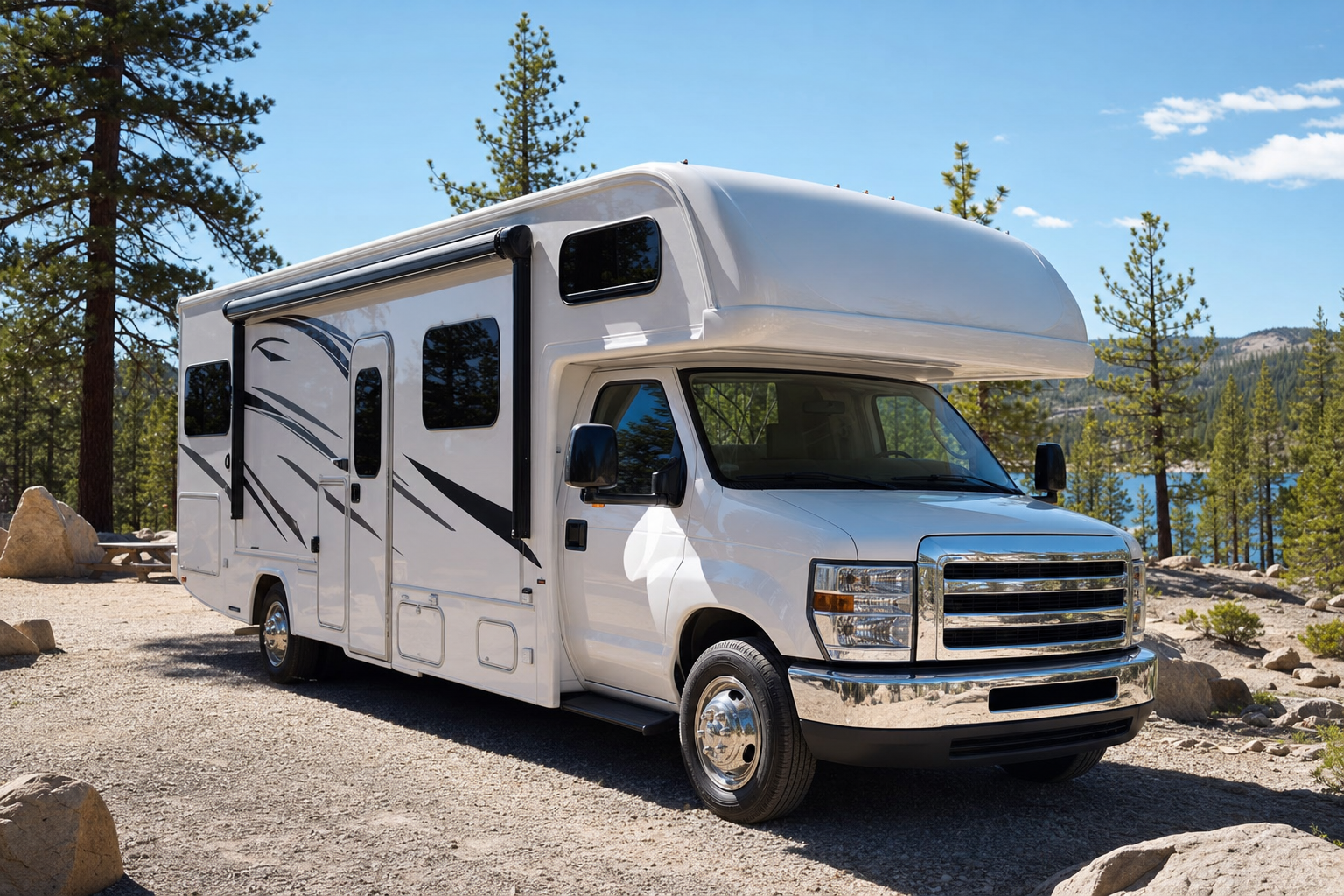
Because HCC bonds to paint, gelcoat, metal, and glass, it's built to be genuinely cross-surface rather than automotive-only with a marine sticker slapped on. That's why it's the default recommendation whenever ceramic coating comes up, no matter what's being coated:
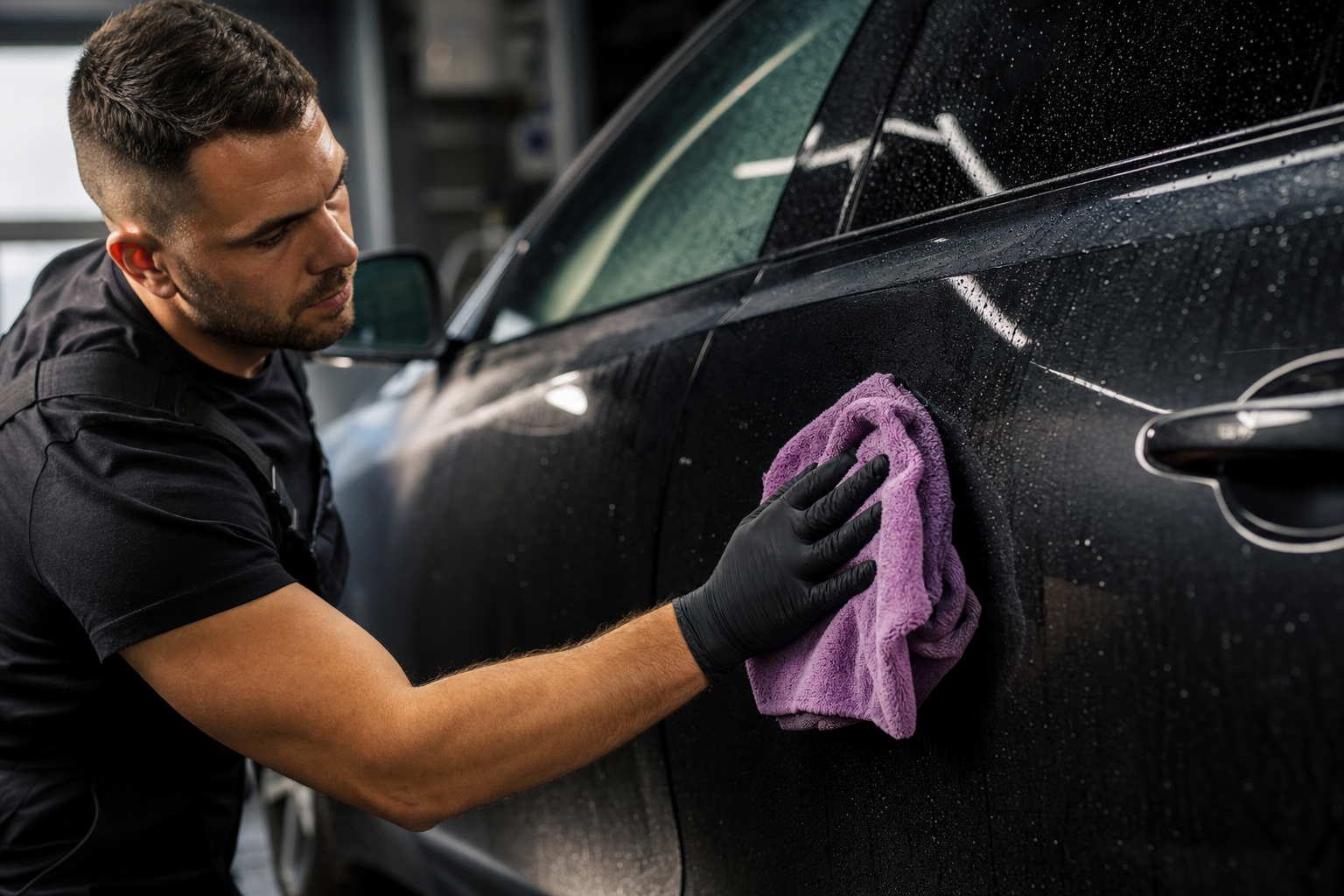
- Cars — clear coat, glass, PPF, and vinyl wraps all take HCC, so the whole exterior gets covered with one product instead of three.
- Boats — gelcoat is porous and prone to oxidation; HCC's chemical resistance (rated for a pH range of roughly 2 to 13) helps it stand up to saltwater, fuel splashes, and marine-grade cleaners.
- Planes — general aviation paint and polished metal both benefit from a coating that tolerates heat cycling and resists fuel and hydraulic fluid contact around the areas where it's applied. See our aircraft ceramic coating guide for GA-specific considerations.
- Bicycles — carbon, aluminum, and painted steel frames pick up sweat, chain lube overspray, and constant UV exposure; a thin, flexible ceramic layer makes wipe-downs faster without changing the frame's feel. Full detail in our bicycle ceramic coating guide.
The common thread across all four: a surface exposed to UV, moisture, and chemical contact that needs to stay easier to clean between deeper details.

Realistic Durability and Cure Times
HCC cures dust- and tack-free in about 4 hours, but full chemical resistance takes 5 to 7 days — that curing window matters because washing the surface or exposing it to rain too early can compromise the bond before it's fully hardened. Film thickness lands around 1 to 1.5 microns per layer, and thicker, well-prepped applications tend to hold up longer. As with any ceramic coating, don't expect a "set it and forget it" outcome: gloss retention and hydrophobic behavior taper gradually with UV exposure, wash chemistry, and how well the surface was decontaminated before application. Regular maintenance washes and the occasional topper extend the window, but no coating eliminates the need for care altogether.
HCC at a Glance
| Property | What to Expect |
|---|---|
| Chemistry type | Hybrid resin matrix (bonds into surface, not just topical silica shell) |
| Surfaces compatible | Paint/clear coat, gelcoat, metal, glass, PPF, vinyl, trim |
| Dust-free cure | ~4 hours |
| Full chemical cure | 5–7 days |
| Film thickness per layer | ~1–1.5 microns |
| Chemical resistance range | ~pH 2–13 |
| Realistic durability | ~2–3 years with proper prep and maintenance |
| Best-fit surfaces | Cars, boats, planes, bicycles — one formula across all four |
Prep Basics Before You Apply
Coating performance is decided before the bottle ever comes out. A rushed or dirty surface is the single biggest reason coatings underperform their potential:
- Wash thoroughly with a pH-neutral soap to remove loose grime before anything else touches the panel.
- Strip bonded contamination with an iron and fallout remover like The Purps — embedded brake dust and rail dust block proper bonding if left behind.
- Clay or chemically decon the surface so it's glass-smooth to the touch.
- Polish if needed to correct swirls, since the coating will lock in whatever finish is underneath — flaws and all.
- Wipe down with a panel prep/IPA solution right before application to remove any oils from the polishing stage.
Skip any of these steps and you're not really testing HCC's limits — you're testing how well a coating bonds to a dirty surface, which isn't a fair fight for any product. Our guide to the correct paint decon order before coating walks through this sequence step by step.

HCC vs a Straight Silica Ceramic: What Actually Differs
| Factor | Straight SiO2 Ceramic | HCC Hybrid |
|---|---|---|
| Bonding behavior | Sits as a harder, more glass-like topical shell | Crosslinked hybrid matrix that bonds into the surface |
| Flexibility under stress | Can micro-crack under thermal cycling and abrasion | More flexible film that moves with the panel |
| Cross-surface use | Often marketed narrowly (auto-only or marine-only) | Same formula works on paint, gelcoat, metal, glass |
| Typical durability | Varies widely by SiO2 concentration and application quality | ~2–3 years with proper prep and maintenance |
Maintaining HCC Once It's On
A coated surface still needs regular care — HCC reduces how aggressively dirt and contamination bond, it doesn't eliminate the need to wash. Stick to a pH-neutral soap, avoid harsh degreasers and dish soap, and use The Purps periodically for iron fallout that builds up regardless of coating status. A Quick Detail spray between washes helps refresh beading and slickness without a full recoat. For the complete maintenance routine, see how to maintain a ceramic-coated car for maximum longevity.
Frequently Asked Questions
Can I really use the same bottle of HCC on my car and my boat?
Yes. HCC is formulated to bond to both paint/clear coat and marine gelcoat, along with metal, glass, PPF, vinyl, and trim, so one product can realistically cover most hard exterior surfaces you own.
How long will HCC actually last?
It depends heavily on surface type, climate, and maintenance, but well-prepped, professionally applied ceramic coatings in this category commonly hold strong protection in the range of a couple of years, tapering gradually rather than failing all at once. Treat any specific timeframe as a guideline, not a guarantee.
Do I need to be a professional detailer to apply it?
No, but prep quality matters more than experience level. If you take the decon and polish steps seriously and work in a controlled environment, an enthusiast can get a solid result. Rushing prep is what causes disappointing outcomes, not lack of a business license.
Is HCC the same thing as a paint sealant?
No. Sealants sit as a topical layer and typically need reapplication every few months; HCC bonds into the surface and is built for multi-year service life. See our full HCC vs traditional paint sealant comparison for the cost and durability breakdown.
Will HCC make my paint scratch-proof?
No coating makes paint immune to scratching. HCC adds a layer of chemical and light abrasion resistance and makes the surface easier to clean, but rock chips, key scratches, and aggressive contact will still mark the surface underneath.
Can I apply HCC over an existing wax or sealant?
No — old wax or sealant residue blocks proper bonding. The surface needs to be fully stripped and decontaminated down to bare, clean paint or gelcoat before HCC goes on.
Does HCC need a separate topcoat or booster?
No. HCC is a complete coating on its own. A hydrophobic spray topper afterward is optional maintenance, not a required second step for the coating to function.
What's the biggest mistake people make applying HCC themselves?
Rushing prep — applying over a surface that still has embedded iron, wax residue, or swirls. The coating locks in whatever is underneath it, flaws included, so the prep sequence matters more than the application technique itself.
If you've got more than one type of surface to protect — a car, a boat, a bike, or all three — HCC is built to be the one coating that follows you across all of them instead of buying a different bottle for every surface in the garage.

2 comments
wearvele
Google ADS
Matthewcit
It seems like there’s a lot of knowledgeable people here, so I decided this would be the best place to start this discussion. I’d like to hear all of the good things and the downsides because every solution comes with some trade-offs. Real experiences always make it easier for everyone else who are trying to decide.
https://southwestspro.livejournal.com/366.html
difficult is replacing a control panel?[/url] 5fc71b9Leave a comment
This site is protected by hCaptcha and the hCaptcha Privacy Policy and Terms of Service apply.