
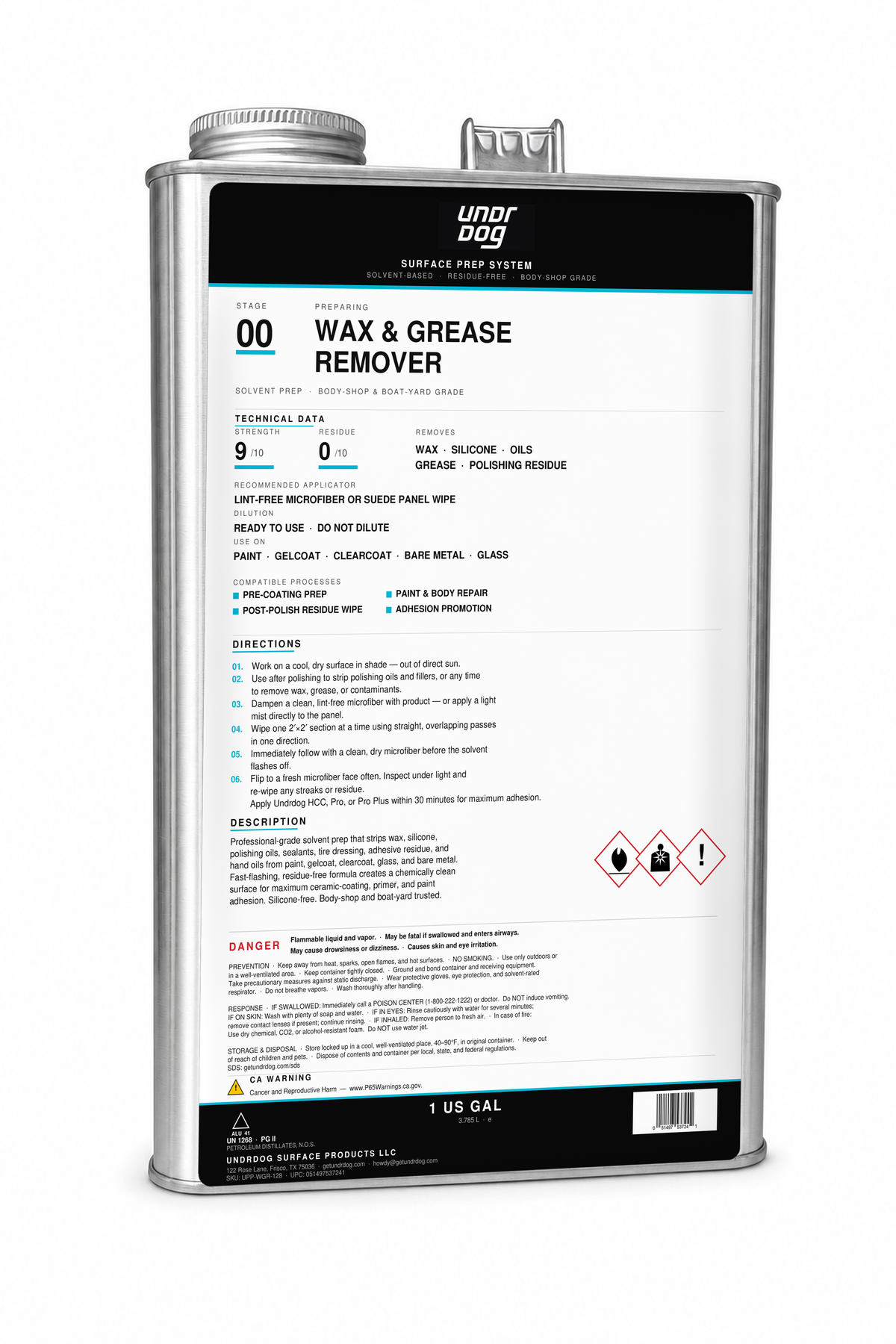
Undrdog Wax & Grease Remover is a ready-to-use solvent for the final surface-preparation stage before coating, with current directions that place it after washing and paint correction. Work on a cool, dry, compatible surface out of direct sun, wipe a small section with product, then immediately follow with a separate clean, dry microfiber before the solvent flashes. It is not a maintenance shampoo or a protective coating, and its surface restrictions and flammability warnings matter as much as the wiping technique.
The useful question is not whether you can add one more chemical to a detailing cart. It is whether this product fits the actual surface, residue, and next step in your project. This guide focuses on that decision and the current Undrdog directions rather than inventing a universal preparation recipe.
What Wax & Grease Remover is designed to do
Undrdog positions this product as a panel-preparation solvent for wax, grease, silicone, oils, and polishing residue, formulated without dyes, scents, or foaming agents (product description and directions). Think of its role as cleaning the surface for the next process, not adding a finishing layer.
That distinction changes when you reach for it. If your goal is a routine maintenance wash, start with the appropriate wash procedure. If your goal is a new coating installation and you have completed the necessary cleaning and correction, review the specified final-prep step. Do not use the word “cleaner” to make those two jobs interchangeable.
The product is described as residue-free, but that does not remove the need to inspect your work or follow the two-towel method (current product instructions). A dirty cloth, missed section, or unresolved surface issue is a reason to stop and reassess, not to assume the label has finished the job for you.
Keep the claim within its scope. This guide does not promise that one wipe removes every existing cured coating, corrects scratches, or makes an unidentified finish ready for another product. Determine what is already on the surface and what your chosen coating requires before starting removal or preparation work.
Where it fits in a coating-preparation workflow
The current Wax & Grease Remover directions place it after the final wash and paint correction, immediately before coating (when-to-use guidance). Treat that as its place in a planned workflow, not permission to skip unresolved washing, contamination, or finish-condition questions.
Before opening the can, decide whether the vehicle is actually at that stage. Visible soil, unexplained roughness, damage, and an unknown prior treatment are different problems. If you are still deciding how to address contamination, our iron remover versus clay bar guide covers those earlier decisions without treating every vehicle as though it needs every possible step.
| Current task | Decision to make | What not to assume |
|---|---|---|
| Routine cleaning of a vehicle you are maintaining | Choose a suitable maintenance wash and inspection process | That a pre-coating solvent belongs in every wash |
| Bonded contamination or uncertain surface condition | Identify the problem and appropriate treatment first | That panel prep replaces every decontamination or repair step |
| Completed correction before a planned coating | Check the specified final wipe and exact surface compatibility | That a glossy appearance proves preparation is complete |
| Existing coating you intend to preserve | Confirm the maintenance procedure for that system | That a product intended to remove residues is the right maintenance choice |
Write down what remains before coating: inspection, approved final wipe, clean application tools, and a workable application and aftercare plan. That short list prevents a final-prep product from becoming a substitute for the rest of the job.
Check surface restrictions before the first wipe
The current product FAQ lists paint, clear coat, gelcoat, bare metal, and glass, while specifically saying the product is not intended for rubber, unsealed plastics, vinyl wrap, or leather (surface-compatibility FAQ). Preserve those restrictions rather than interpreting broad panel-prep language as approval for everything on a vehicle.
Identify the material and its condition, including adjacent trim, seals, films, and repairs. For an unfamiliar finish, recent repaint, or surface with its own care restrictions, ask the responsible manufacturer or repair professional before use. The product FAQ also advises an inconspicuous test when in doubt; do not treat a test as permission to ignore an explicit exclusion.
Plan how you will keep the product on the intended area. The directions allow dampening a cloth rather than misting the panel, which gives you an application option to discuss when nearby materials need to be avoided (application options). If you cannot control contact or cannot identify the surface, pause instead of improvising a broader use.
Do not extend the paint-and-glass list into an interior-cleaning recommendation. This article is not a procedure for leather seats, touchscreens, rubber components, or wrapped panels. The next coating's compatibility and the prep solvent's compatibility are separate checks.
Set up safely before handling the solvent
The product page identifies Wax & Grease Remover as a flammable solvent and directs use in a well-ventilated area away from heat, sparks, and open flames, with nitrile gloves and eye protection (safety and handling directions). Read the current container label and obtain the product's Safety Data Sheet before use, especially if you need clarification about your work area, protective equipment, storage, or cleanup.
An SDS is organized to help you find those answers: Section 7 covers handling and storage, while Section 8 covers exposure controls and personal protection (OSHA's SDS section guide). That reference explains where to look; it is not a substitute SDS for this particular product.
The product FAQ permits decanting into a chemical-resistant spray bottle and says not to add water or alcohol (ready-to-use and dispensing instructions). Use a compatible, properly identified container; do not put detailing chemicals into a drink bottle or an unlabeled container that someone else could mistake for another product.
Plan for used cloths, spills, and storage before you begin. Follow the label, SDS, and applicable local disposal requirements rather than putting solvent-contaminated materials straight into an ordinary laundry routine. Keep the work area and product inaccessible to children and pets.
If swallowed, the product's instructions say not to induce vomiting and to contact a poison control center or doctor immediately (first-aid warning). The complete current label and SDS, not this article's summary, govern emergency handling.
Use the two-towel wipe, one small section at a time
The current directions specify a cool, dry surface out of direct sun, a clean lint-free microfiber, straight overlapping passes across a roughly two-foot-by-two-foot section, and an immediate follow-up with a clean, dry microfiber before the solvent flashes (published application method). Set up both cloths before applying the product so the second wipe is ready when needed.
- Confirm readiness: Verify the surface, work conditions, safety precautions, and next coating step.
- Apply as directed: Dampen a clean lint-free microfiber with the ready-to-use product, or use the permitted light mist on the panel.
- Work a manageable area: Follow the current straight, overlapping-pass method rather than wetting the entire vehicle at once.
- Follow immediately: Use the separate clean, dry microfiber before the solvent flashes.
- Change cloth faces and inspect: Follow the product's directions to use fresh towel faces and check the section under strong light.
Keep the cloth roles obvious. One applies and works the prep product; the other performs the immediate dry follow-up. Replace a contaminated cloth instead of making its last clean-looking corner cover another large section.

Do not substitute the later coating-leveling routine for this solvent wipe. Our coating applicator versus microfiber towel guide explains the separate tools used when you move from preparation to applying and leveling a coating.
Inspect the result without inventing a cleanliness test
The product directions call for inspection under strong light and re-wiping streaks (inspection step). Treat a persistent mark as a question to resolve, not a reason to keep scrubbing indefinitely or add an unrelated stronger chemical.
Review the basics first: the intended surface, the specified conditions, the cloth's cleanliness, the section size, and whether you completed the immediate dry wipe. If the finish reacts unexpectedly, stop and seek product or surface-specific guidance before coating over it. Do not use a coating to hide an unresolved preparation problem.
A glossy photograph is not a measurement of residue removal. Likewise, this guide does not offer a touch test, smell test, or water-beading test as proof that every previous treatment is gone. Use the required process, inspect carefully, and ask for help when the surface history remains uncertain.

Move from preparation to the right coating
The current Wax & Grease Remover directions recommend applying the specified Undrdog coating within 30 minutes (coating handoff recommendation). That is not a universal solvent drying time or the coating's cure time. Follow both products' current instructions, and do not rush onto an unresolved or still-wet preparation surface merely to meet a clock.
If your work is interrupted, reassess the surface and instructions before proceeding. Avoid making a whole-vehicle prep sprint the goal when your application plan is organized differently. Resolve the sequence beforehand, including how you will keep completed areas from being handled or recontaminated.
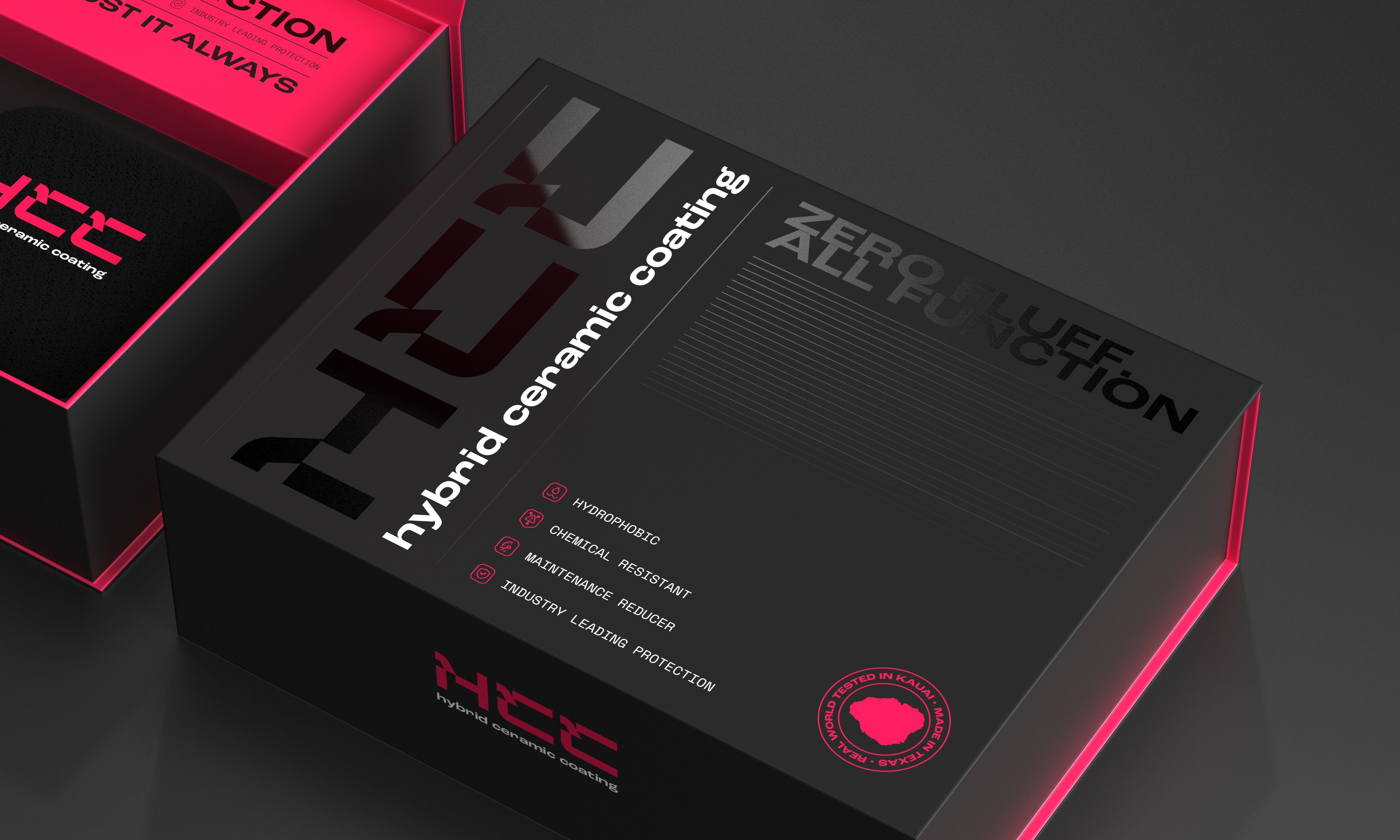
For a suitable new coating project, HCC is Undrdog's all-surface flagship for cars, boats, planes, and bicycles. Its multi-year positioning depends on preparation, exposure, use, and maintenance, not a fixed lifespan promise. Confirm suitability for the exact surface and keep its application and aftercare instructions separate from this preparation-solvent guide.
The productive finish line is straightforward: correct material, appropriate preparation, inspected surface, and a clear next step. Wax & Grease Remover has a defined job within that sequence; it does not replace the rest of it.
Frequently asked questions
When should I use Undrdog Wax & Grease Remover?
Use it at the specified final-preparation stage after washing and correction, before a planned coating on a compatible surface. The current product directions govern the sequence; it is not a substitute for resolving dirt, damage, or an unknown prior treatment.
Should I dilute it with water or alcohol?
No. The current product FAQ describes it as ready to use and specifically says not to add water or alcohol (dilution instructions). Use a compatible dispensing container if needed rather than altering the formula.
Can I use it on rubber, vinyl wrap, or leather?
The product FAQ says it is not intended for rubber, unsealed plastics, vinyl wrap, or leather (surface restrictions). Do not extend approval for paint or glass to neighboring materials or use a spot test to override an explicit exclusion.
Why do I need a second microfiber towel?
The specified method calls for a clean, dry microfiber immediately after the application wipe, before the solvent flashes (two-towel application method). Have both cloths ready and keep the application and follow-up roles separate.
Will it remove every existing ceramic coating?
Do not assume that. Identify the existing treatment and obtain its removal or recoating guidance before starting. This guide does not treat a final prep wipe, a glossy appearance, or a change in water behavior as proof that every previous cured coating has been removed.
Is it a replacement for an IPA wipe?
It is a purpose-built ready-to-use prep product, but choose the preparation method specified for your surface and coating. Do not assume every alcohol mixture and panel-prep solvent is interchangeable, and do not mix products to create your own alternative.
Does the 30-minute recommendation mean the coating is cured?
No. The product's recommendation concerns the handoff from surface preparation to coating application (current directions). The coating's flash, water exposure, washing, and cure requirements are separate instructions.
What safety information should I read first?
Read the current label and product SDS, including ventilation, ignition-source precautions, protective equipment, storage, cleanup, and first aid. The product page identifies a flammable solvent and calls for nitrile gloves and eye protection; a blog summary is not a complete safety procedure.
Make the final prep step deliberate
Check the surface restrictions and current directions, then add Wax & Grease Remover to a suitable pre-coating workflow.
Shop Wax & Grease Remover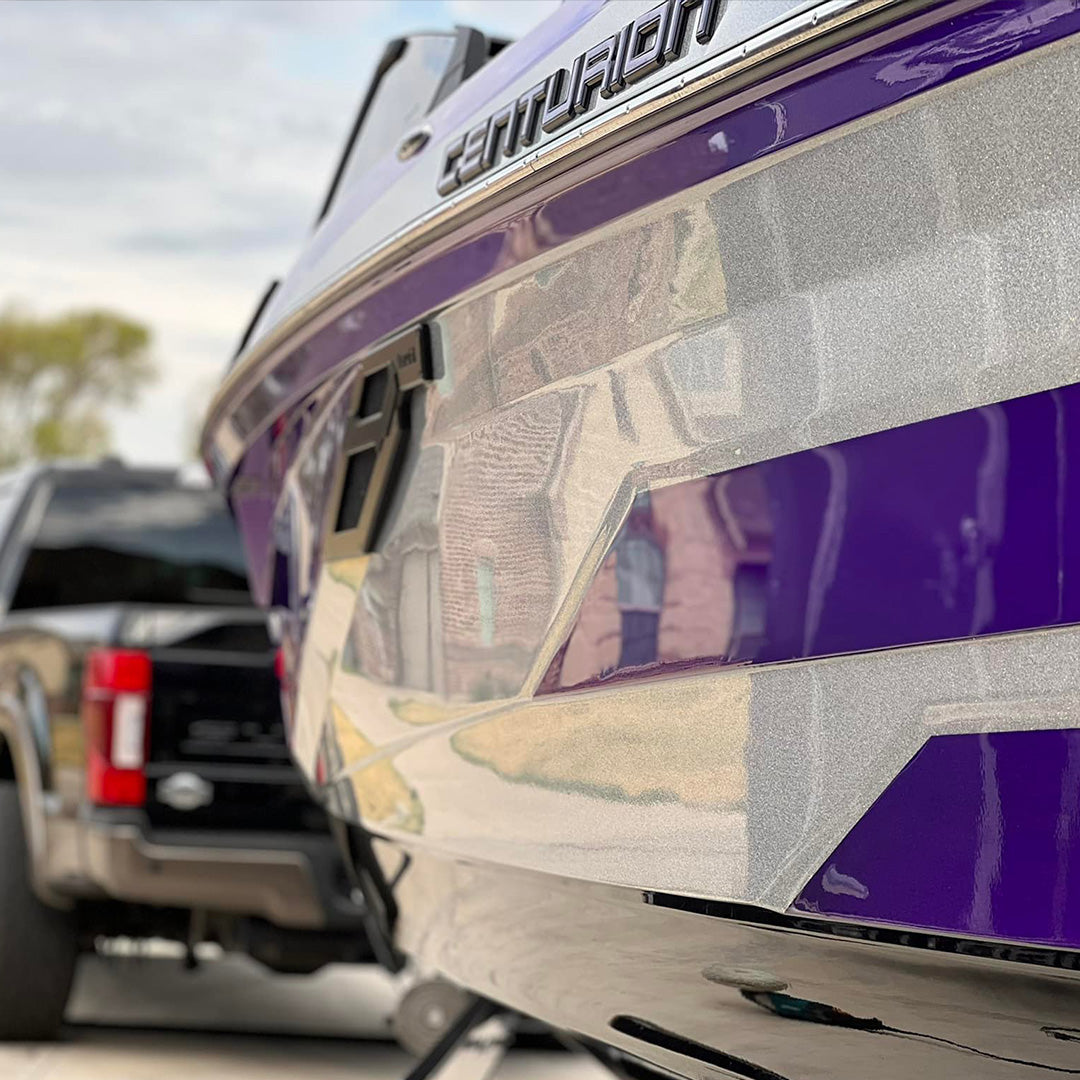

Leave a comment
This site is protected by hCaptcha and the hCaptcha Privacy Policy and Terms of Service apply.